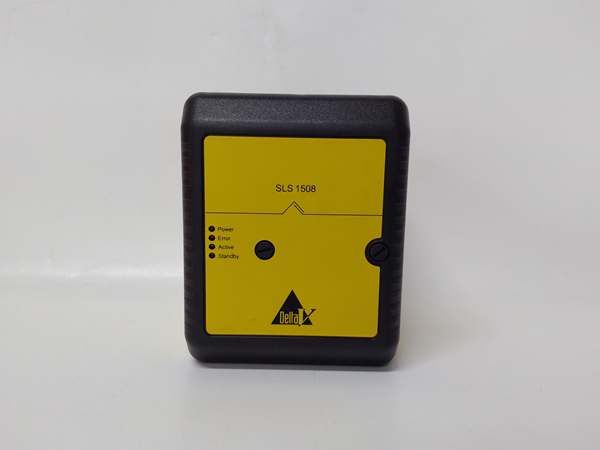
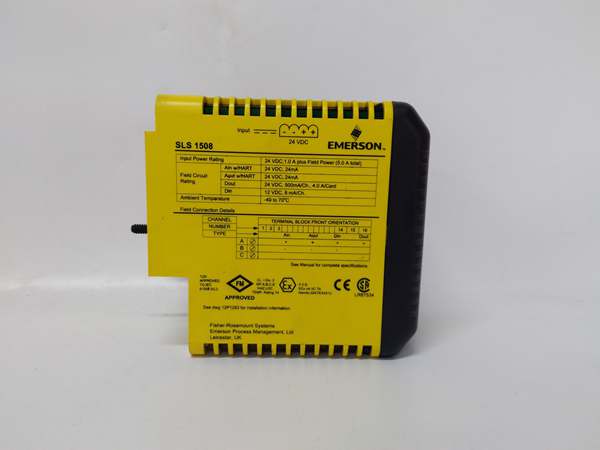
Description
Key Technical Specifications
-
Model Number: SLS1508
-
Manufacturer: Emerson Automation Solutions
-
Port Count: 8 x 10/100/1000BASE-T (RJ45) ports
-
Switching Capacity: 16 Gbps
-
Forwarding Rate: 11.9 Mpps
-
Redundancy Protocols: Rapid Spanning Tree (RSTP), Ring Redundancy (MRP), Dual Homing
-
Operating Temperature: -40°C to 75°C (-40°F to 167°F) for SLS1508-002; 0°C to 60°C for base model
-
Power Supply: 24V DC redundant inputs (18V-36V DC)
-
Protection Rating: IP30 (rack-mount), IP67 (with optional enclosure)
-
Management: Web interface, CLI, SNMP v3, Emerson AMS Device Manager
-
PoE Support: Up to 30W per port (PoE+), 190W total (SLS1508-001 only)
-
EMC Compliance: IEC 61000-4-2 (ESD), IEC 61000-4-4 (EFT), IEC 61000-4-6 (EFT)
-
Mounting: 1U rack-mount, DIN-rail compatible

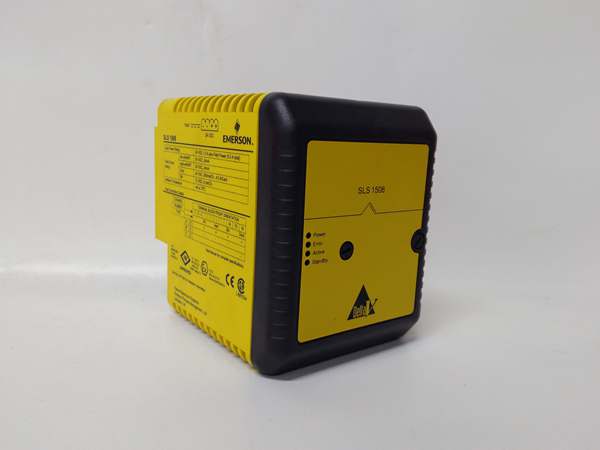
Emerson SLS1508
Field Application & Problem Solved
Industrial control networks can’t afford the downtime that comes with consumer-grade switches. I was called to a Wyoming coal plant in 2023 where a $200 office switch failed, taking down the boiler control HMI and forcing a 4-hour unit shutdown—$120k in lost generation. The problem? The switch couldn’t handle the plant’s voltage spikes and temperature swings. The SLS1508 solves this: it’s built for the dirt, noise, and variability of industrial environments, with redundancy features that keep control data flowing even if a port or power supply fails.
You’ll find this switch at the core of small to mid-sized control networks: DeltaV DCS I/O racks in refineries, turbine control HMIs in power plants, and sensor networks in chemical facilities. At a Midwest ethanol plant, we replaced three consumer switches with two SLS1508s (configured for ring redundancy) to connect their fermentation tank sensors and control valves. A month later, a lightning strike took out one port—but the MRP ring rerouted traffic in 20ms, and production didn’t skip a beat. Unlike office switches, it integrates with Emerson’s AMS software, so control engineers can monitor switch health alongside process data.
Its core value is “network resilience.” Industrial networks don’t just need to move data—they need to move it reliably, even when things go wrong. The SLS1508’s redundant power inputs mean a failed DC supply won’t take it down, and its redundancy protocols prevent single-point failures. For maintenance teams, it eliminates the “black box” problem of consumer switches—you can troubleshoot port errors, monitor bandwidth, and set up alerts for issues like high temperature or low voltage. It’s not just a network component; it’s a critical part of the control system’s safety net, which is why it’s compliant with ISA-95 and IEC 62443.
Installation & Maintenance Pitfalls (Expert Tips)
Redundancy Setup: Don’t Skip MRP Configuration
Rookies install the SLS1508 but leave redundancy disabled, wasting its biggest strength. A Texas refinery did this— a loose cable on the main port took down their tank level monitoring system. The SLS1508 supports Media Redundancy Protocol (MRP), which creates a loop-free network with automatic failover. Configure two ports as ring ports (e.g., Port 7 and 8) and set the ring manager to “automatic.” Test it monthly by unplugging a ring cable—traffic should reroute in under 50ms, and the AMS alert should trigger within 1 second. For critical systems, pair it with dual homing (two switches) for full redundancy.
PoE Power Budget: Don’t Overload the Switch
The PoE+ variant (SLS1508-001) has a 190W total power budget—rookies forget this and plug in 8x30W cameras, causing the switch to shut down PoE ports. A Florida water treatment plant made this mistake, taking down their security and sensor cameras. Calculate your power needs upfront: 24V DC sensors use ~5W, IP cameras use 15-30W, HMIs use 20W. Use the web interface to set power limits per port—e.g., cap non-critical cameras at 15W. Enable “priority PoE” so critical devices (like DCS HMIs) get power first if the budget is exceeded.
Network Segmentation: Use VLANs to Block Unwanted Traffic
Running all devices on a single VLAN lets unwanted traffic (like maintenance laptop updates) slow down control data. I saw this at a Pennsylvania chemical plant— the SLS1508 was flooded with file transfer traffic, causing DeltaV I/O delays. Create separate VLANs for control (VLAN 10), HMI (VLAN 20), and maintenance (VLAN 30). Use the switch’s access control lists (ACLs) to block traffic between VLANs except for necessary DCS communication. For example, allow VLAN 30 (maintenance) to read data from VLAN 10 (control) but not write to it—this prevents accidental configuration changes.
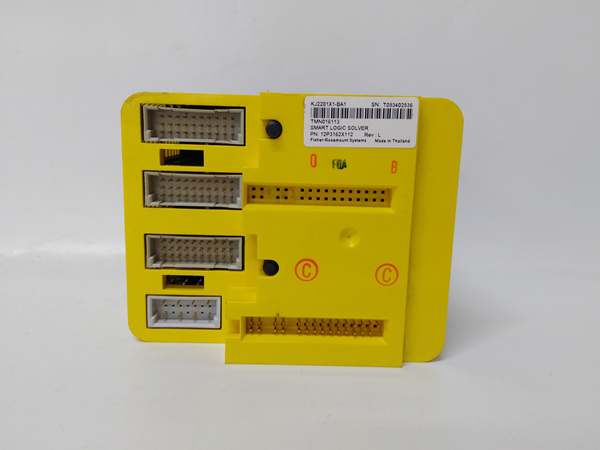
Emerson SLS1508
Technical Deep Dive & Overview
The SLS1508 is a Layer 2 managed switch built for industrial control, not office networks. It uses a dedicated application-specific integrated circuit (ASIC) for packet forwarding, which ensures deterministic latency (less than 50µs per packet)—critical for time-sensitive DCS communication. Unlike consumer switches, it prioritizes control traffic (via QoS) over non-essential data, so a large file transfer won’t delay turbine speed signals.
Its industrial design sets it apart: the rugged metal housing dissipates heat without fans (reducing dust buildup), and the redundant 24V DC inputs accept the voltage fluctuations common in plant power systems. The EMC protection handles the electrical noise from VFDs and motor starters that crashes consumer switches. It stores configuration backups locally, so you can restore settings in minutes if the switch fails. The web interface is designed for control engineers, not IT admins—no jargon, just clear options for redundancy, VLANs, and PoE.
Integration with Emerson’s ecosystem is a key advantage. You can monitor the switch’s health (port status, temperature, power) in AMS Device Manager, alongside your transmitters and valves. It supports SNMP v3 for secure communication with plant SCADA systems, so you get centralized alerts for network issues. The hot-swappable power supplies (on some variants) let you replace a faulty supply without taking down the switch—critical for 24/7 operations. It’s not the flashiest switch, but it’s the one you can trust to keep your control network running when a storm hits or a cable fails.