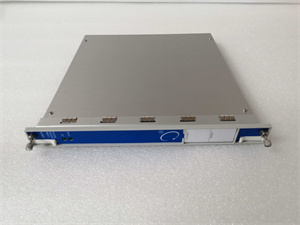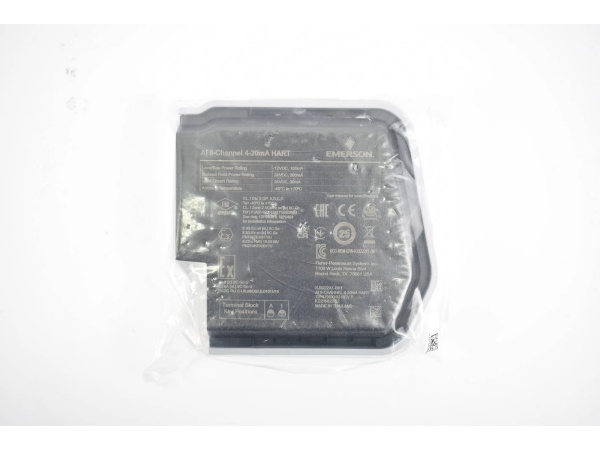
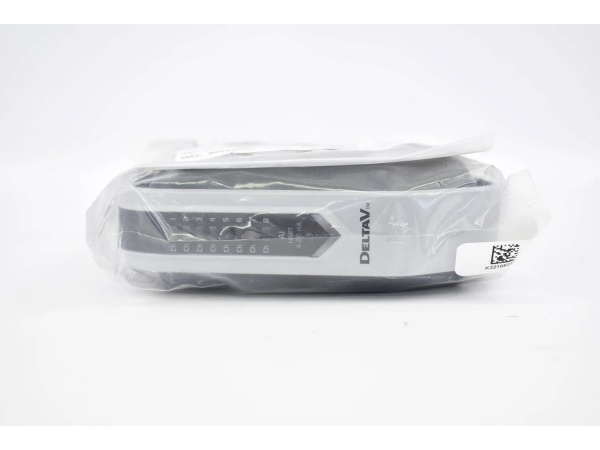
Description
Hard-Numbers: Technical Specifications
- Input Channels: 8 channels (individually configurable)
- Signal Type: 4-20mA DC (full range 1-23mA supported), HART protocol overlay (Bell 202 FSK, 1200/2200 Hz)
- Resolution: 14-bit ADC
- Accuracy: ±0.25% FS (-40°C to +60°C), ±0.4% FS (+60°C to +70°C)
- Isolation:
- Channel-to-system: 1500 VDC (standard) / 3100 VDC (AI-Plus variant)
- Channel-to-channel: Not isolated (common ground)
- Optical isolation for communication
- Sampling Rate: Configurable (5-100 Hz per channel typical)
- Local Bus Power: 12 VDC at 100 mA max
- Field Circuit Rating: 24 VDC at 5 mA/channel max (loop-powered devices)
- Environmental Operating Temperature: -40°C to +70°C (-40°F to 158°F)
- Storage Temperature: -40°C to +85°C
- Relative Humidity: 5% to 95% non-condensing
- Shock Resistance: 10g, half-sine wave, 11 ms
- Vibration Resistance: 1mm peak-to-peak from 5-16 Hz; 0.5g from 16-150 Hz (AI-Plus variant: 1mm P-P 5-13.2Hz, 0.7g 13.2-150Hz)
- Protection Class: IP20
- Airborne Contaminants: ISA-S71.04-1985 Class G3 compliant
- Terminal Block Key Position: A1 (standard terminal block)
- Dimensions: Compatible with DeltaV S-series I/O carrier form factor (approx. 107mm H x 41mm W x 105mm D per terminal block)
- Certifications: CE (EN 61326-1), FM 3600/3611, CSA C22.2 No.213/1010-1, ATEX II 3G Ex ec IIC T4 Gc (with appropriate installation), IECEx, Class I Division 2 (FM)
- Compatibility: Requires DeltaV SQ/SX controllers; DeltaV v13.3 or higher recommended for full AI Plus features; supports 1:1 redundancy with matching spare card
- Maintenance: User-serviceable parts: none (module replacement only); calibration not required (factory calibrated)
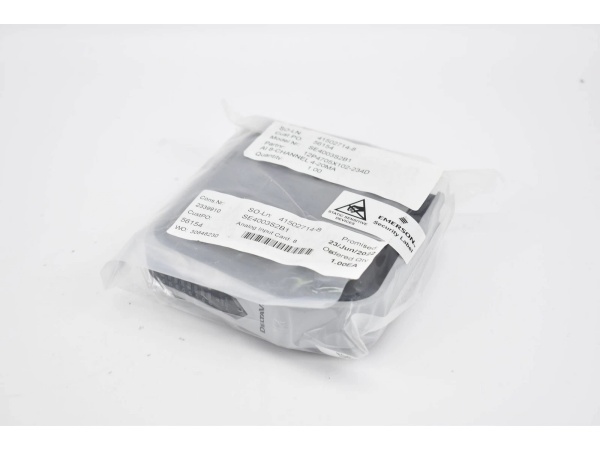
Emerson SE4003S2B1
The Real-World Problem It Solves
Traditional 4-20mA analog input cards can only read the loop current, limiting operators to a single process variable measurement—when a pressure transmitter drifts, the operator sees the wrong pressure value but has no visibility into the transmitter’s internal diagnostics or configuration parameters. The SE4003S2B1 solves this by overlaying HART digital communication on the same 4-20mA loop, allowing the DeltaV system to simultaneously read the analog process value AND access the transmitter’s digital diagnostics (sensor health, temperature, secondary variables) and reconfigure the device without interrupting the analog signal. This dual-path capability is critical in loop maintenance—if a transmitter shows an erratic reading, the operator can pull up the HART diagnostics to identify whether the issue is sensor drift, power supply instability, or communication fault, reducing troubleshooting time and preventing unnecessary transmitter replacement.
Where you’ll typically find it:
- Chemical Plants: Reading pressure transmitters on reactor vessels with HART diagnostics for health monitoring
- Oil & Gas Pipelines: Flow rate measurement from coriolis meters with secondary variables (density, temperature) via HART
- Power Generation: Steam temperature/pressure transmitters where redundancy and HART-based configuration changes are required during turbine startup
- Water/Wastewater Treatment: pH and conductivity analyzers with HART output for alarm threshold configuration and sensor aging diagnostics
- Pharmaceutical: Cleanroom pressure monitoring where HART-enabled transmitters provide FDA-compliant audit trails for sensor calibration
Bottom line: The SE4003S2B1 is a DeltaV S-series analog input card that reads 4-20mA with HART diagnostics—get process variables AND smart transmitter digital data on the same twisted pair.
Hardware Architecture & Under-the-Hood Logic
The SE4003S2B1 is a plug-in I/O card designed for DeltaV S-series carriers, featuring a front-panel connector for the terminal block (CE4003S2B1) and backplane communication with the controller via the DeltaV LocalBus. Each channel includes a precision sense resistor, a 14-bit sigma-delta ADC, and a HART modem circuit that extracts the digital FSK signal superimposed on the 4-20mA analog current. The card is keyed for terminal block type A1 to prevent misinstallation, and the terminal block can be pre-wired while the card is removed—wiring stays connected to the terminal block when the module is pulled, allowing hot-swap without disrupting field devices. The card supports hot insertion/extraction when powered, provided the system DC/DC power supply meets energy-limiting requirements (open circuit voltage ≤12.6 VDC, inductance ≤23 μH) and field power is de-energized for non-sparking circuits.
-
Signal Conditioning: The incoming 4-20mA loop current from the field transmitter flows through a precision sense resistor on each channel, converting the current to a low-level voltage signal. A low-pass filter removes high-frequency noise and EMI, while a HART bandpass filter extracts the 1200/2200 Hz FSK digital signal superimposed on the analog waveform. The conditioning circuit includes overvoltage protection (up to 250 VAC transient) and current limiting to prevent damage from loop power surges or wiring faults. Each channel’s front-end circuitry is individually buffered before ADC conversion to prevent crosstalk between adjacent channels.
-
Analog-to-Digital Conversion: A 14-bit sigma-delta ADC digitizes the conditioned analog signal at a configurable sample rate (typically 50-100 Hz per channel). Oversampling and digital filtering improve measurement accuracy and reject 50/60 Hz power line interference. The raw ADC values are scaled by the module’s microprocessor to engineering units (e.g., psi, GPM, °C) based on calibration coefficients stored in non-volatile memory. The ADC’s high resolution ensures that the full 4-20mA range is mapped to over 16,000 discrete values, providing better than 0.01% resolution for precise loop monitoring.
-
HART Modem: Each channel includes a Bell 202 FSK modem that demodulates the HART digital signal (1200 Hz = logic 1, 2200 Hz = logic 0) from the loop current. The modem is shared across all channels—only one channel can be actively communicating via HART at any given time, but the remaining channels continue to read analog values without interruption. The DeltaV controller polls HART devices via the LocalBus using the HART protocol stack (master-slave), sending commands to read diagnostics, change configuration, or read secondary variables. The modem circuit includes carrier detect logic to sense when a HART transaction is in progress and temporarily increases the sample rate for that channel to capture the digital data without corrupting the analog reading.
-
Isolation and Protection: The SE4003S2B1 provides optical isolation between the field circuits and the backplane. The standard variant offers 1500 VDC channel-to-system isolation, while the AI-Plus variant (identified by different part numbers) provides 3100 VDC isolation for applications requiring higher ground potential differences (e.g., floating battery-powered transmitters). All channels share a common ground reference—channel-to-channel isolation is NOT provided, so avoid connecting transmitters with significant ground potential differences on the same module. Input protection includes surge suppression (TVS diodes) for transient spikes and current limiting to prevent damage from accidental short circuits to 24 VDC power.
-
Backplane Communication: The card communicates with the DeltaV controller via the LocalBus on the carrier. The backplane provides 12 VDC power to the card and carries bidirectional digital data including analog channel values, HART responses, diagnostics, and configuration parameters. The card’s microprocessor continuously updates the process image in the controller’s memory, with typical latency <5 ms from field signal change to controller visibility. Redundant configurations use a “bumpless transfer” strategy—the secondary card synchronizes with the primary card’s process image and takes over automatically if the primary card fails or is removed.
-
Diagnostics and Self-Test: The card performs continuous self-tests including ADC health check, memory integrity verification, and power supply monitoring. Each channel individually detects open circuit (loop current <3.6mA), short circuit (excessive current detected), and overrange (loop current >21mA). Fault conditions are reported to the DeltaV event log via the LocalBus and indicated by the card’s front-panel LED status. The card also monitors its own operating temperature and will trigger a warning if the ambient temperature exceeds 60°C for extended periods, as accuracy degrades to ±0.4% FS in the 60-70°C range.

Emerson SE4003S2B1
Field Service Pitfalls: What Rookies Get Wrong
Ignoring Terminal Block Keying and Mismatched Wiring
Technicians plug an SE4003S2B1 card into a carrier with a terminal block configured for a different card type (e.g., a DI card with key position B2), assuming the card will work anyway because the physical connector fits. The terminal block keying system is designed to prevent this mismatch, but if forced or if the wrong terminal block is installed, the field wiring connections may not align with the card’s pinout—4-20mA loop connections end up on digital input circuits, potentially damaging the transmitter (applying 24 VDC to the current output) or the card (exceeding voltage limits on digital input pins). The card fails to initialize, the DeltaV system reports “module not detected,” and the technician spends hours tracing wiring to discover the mismatch.
- Field Rule: Always verify the terminal block key position matches the I/O card type before installation—SE4003S2B1 requires key position A1 on the terminal block. Check the DeltaV Explorer I/O configuration to confirm the terminal block part number matches the card (CE4003S2B1 for SE4003S2B1). Never force a card into a keyed carrier slot—if resistance is felt, 终止 and verify the key alignment. Pre-installation verification prevents damage and reduces commissioning time.
Mixing AI and AI-Plus Cards in Redundant Pairs
Engineers configure a redundant pair with one standard SE4003S2B1 card and one AI-Plus variant (different part number but same physical form factor), assuming DeltaV will automatically reconcile the difference. The AI-Plus card provides 3100 VDC isolation and enhanced vibration resistance, while the standard card provides 1500 VDC isolation. During operation, the cards report different self-test results and calibration coefficients to the controller, causing a “configuration mismatch” alarm in DeltaV. The redundant pair fails to synchronize, and the system drops to single-card operation—redundancy is lost just when a failure event occurs (e.g., voltage transient), increasing safety risk and causing unplanned shutdown when the active card faults.
- Quick Fix: Always use identical part numbers for both cards in a redundant pair—including the revision level if available. Verify the card labels match before installation (e.g., both “SE4003S2B1 Rev 02”). If replacing one card in an existing redundant pair, confirm the existing card’s part number matches the replacement. DeltaV will automatically detect mismatched cards and prevent redundancy activation—addressing the mismatch before commissioning ensures redundancy is available when needed.
Attempting Hot-Swap Without Meeting Energy-Limiting Requirements
Techs remove or insert the SE4003S2B1 card with system power energized but ignore the requirement for an energy-limiting power supply on the LocalBus. The system uses a standard bulk power supply without the ≤12.6 VDC open circuit voltage and ≤23 μH inductance limits specified in the manual. When the card is removed, the inductive kick from the LocalBus causes a voltage spike that travels through the backplane and damages other cards in the carrier (digital inputs, analog outputs). The damaged cards show “fault” LEDs, and the DeltaV system reports multiple module failures simultaneously—technicians assume a power surge event from the utility and spend hours diagnosing the wrong root cause.
- Field Rule: Hot-swap is only permitted with a certified energy-limiting power supply (KJ1501X1-BK1 System DC/DC Power Supply or equivalent) or when system power is completely de-energized. Verify the power supply’s energy-limiting specifications match the manual’s requirements before performing hot-swap. For critical applications, consider de-energizing the carrier before card removal—even if hot-swap is supported, it adds risk during maintenance windows. Always confirm that only one unit at a time is removed when system power is energized.
Forgetting to Disable HART Polling During Loop Maintenance
Instrument techs perform a 4-20mA loop calibration on a transmitter by injecting a precision current source (e.g., 12 mA) to verify the DeltaV system reads the expected value. However, the DeltaV controller continues to poll the transmitter via HART during the calibration—since the current source doesn’t speak HART, the HART modem sees silence and reports “communication lost” for that channel. The DeltaV system logs a diagnostic alarm and may switch the channel to a fail-safe value (e.g., last good value), causing the operator to see an inconsistent reading compared to the calibrator. The tech assumes the card is defective and initiates a card replacement, only to discover the issue was HART interference after wasting hours.
- Quick Fix: Before performing loop calibration with an external current source, disable HART communication for the affected channel in DeltaV Explorer (right-click on the channel, select “HART Configuration,” and set polling to “Disabled”). Alternatively, disconnect the field wiring at the terminal block and inject the test signal directly at the card terminals—this ensures HART traffic is isolated from the calibration loop. Re-enable HART polling after calibration completes and verify normal operation.
Overloading the Field Circuit Rating with Multiple Devices
Installers connect multiple 4-20mA transmitters in series on a single SE4003S2B1 channel, assuming the card can drive the loop. The SE4003S2B1 is an input card—it provides no power to the loop and relies on the field transmitter to source the current. However, the card’s field circuit rating is 24 VDC at 5 mA/channel max, which is the leakage current limit for the card’s input protection circuitry. If the installer mistakenly applies external loop power to the card terminal (e.g., trying to power the transmitter from the card), the overcurrent protection trips, and the channel reports “short circuit.” In extreme cases, the protection diodes fail, and the card must be replaced.
- Field Rule: The SE4003S2B1 is designed for loop-powered transmitters where the transmitter provides the 4-20mA current—the card only reads the current. Never connect an external loop power supply to the card’s input terminals. Verify that the transmitter’s power supply is separate and does not backfeed into the card. If using 2-wire transmitters, ensure the power supply is connected to the transmitter’s positive terminal, not the card. For 4-wire transmitters (separate power and signal), use an appropriate external power supply and connect only the signal loop to the card.
Neglecting to Remove Fuses for Non-Sparking Circuits
In hazardous area installations, techs remove the SE4003S2B1 card with field power energized but forget to pull the fuses on fused terminal blocks. The manual explicitly states that terminal block fuses may NOT be removed with field power energized for non-sparking circuits—this creates an arcing hazard that could ignite flammable gases in Zone 2/Division 2 environments. The tech pulls the fuse, a spark occurs, and an emergency shutdown is triggered by the gas detection system. Production is lost, and an incident report is filed—all because the fuse wasn’t removed before de-energizing field power.
- Quick Fix: Always de-energize field power at the terminal block before removing any fuses. Follow the hot-work permit procedures for hazardous areas—verify gas detection readings are below LEL (Lower Explosive Limit) before performing any work that could generate sparks. Use spark-proof tools when removing fuses, and wear appropriate PPE including flame-resistant clothing. The manual’s warning is there for a reason—ignoring it risks safety incidents and regulatory violations.
Please note: The listed price is for reference only and is not binding. Final pricing and terms are subject to negotiation based on current market conditions and availability.