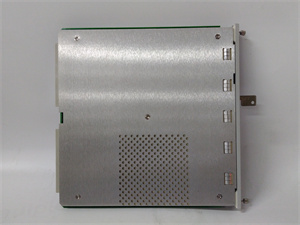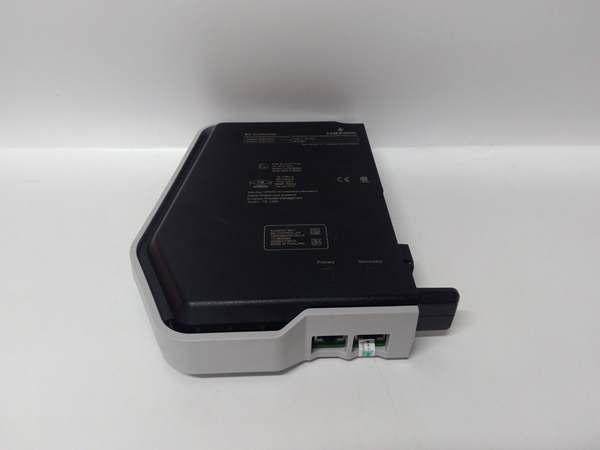
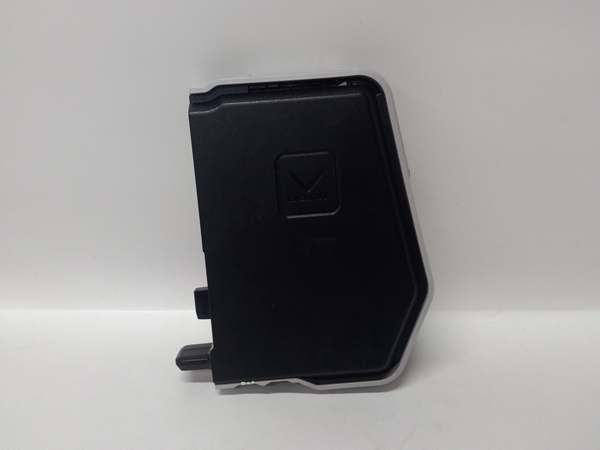
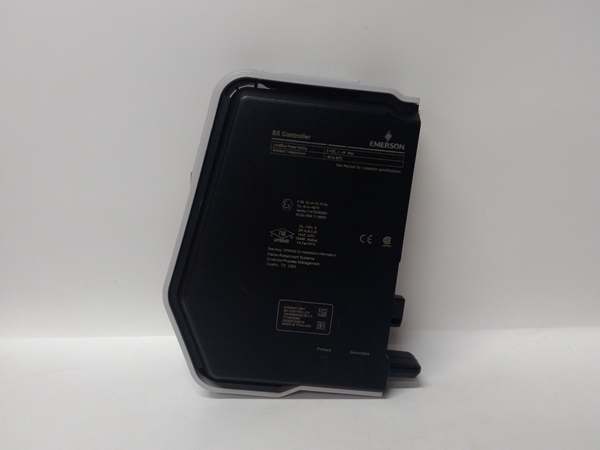
Description
Key Technical Specifications
-
Model Number: SE3007
-
Manufacturer: Emerson Automation Solutions
-
Memory: 96MB user memory; 1500 Device Signal Tags (DSTs); 3200 SCADA tags
-
Data Throughput: 4000 values transmitted/sec; 500 values received/sec
-
Redundancy: 1:1 hot-standby support; automatic failover < 100ms
-
Power Consumption: 5.0W typical; 7.0W maximum
-
Power Protection: Built-in 3.0A non-replaceable fuse
-
Operating Temperature: -40°C to 60°C (-40°F to 140°F)
-
Environmental Rating: 5-95% RH (non-condensing); 10g shock resistance
-
Integration: DeltaV CHARM (Characteristics Module) compatible; AMS Device Manager support
-
Communication: DeltaV backplane; Modbus TCP/RTU; OPC UA
-
Mounting: 3U rack-mount; tool-less (no screws required)

Emerson SE3007
Field Application & Problem Solved
In batch chemical plants and refineries, controller downtime or slow failover costs millions. I saw a Pennsylvania pharmaceutical plant lose a $200k batch in 2021 because their legacy controller took 2 seconds to switch to backup—too slow for the reaction’s tight temperature window. The SE3007 fixes this: its sub-100ms failover and CHARM integration eliminate single points of failure, keeping processes stable even when hardware glitches.
You’ll find this module in DeltaV DCS racks powering continuous and batch processes: petrochemical reactor controls, food and beverage filling lines, and power plant boiler feedwater systems. At a Texas refinery’s FCC unit, we installed two SE3007s in redundant pairs to manage catalyst injection. When a power surge fried the primary unit, the backup took over in 80ms—no process upset, no lost production. Unlike older controllers, it works with existing DeltaV strategies, so we didn’t rewrite 200+ control loops during the upgrade.
Its core value is “uninterrupted control.” Batch processes can’t tolerate even a 1-second gap in regulation, and continuous systems like turbines need consistent data flow. The SE3007’s 96MB memory handles complex batch recipes without lag, while redundancy means maintenance can swap a faulty module mid-batch without shutdowns. For engineers, it’s the difference between scrambling to recover a failed batch and trusting the system to self-heal.
Installation & Maintenance Pitfalls (Expert Tips)
Redundancy Wiring: Don’t Share Power Rails
Rookies wire primary and backup SE3007s to the same DC power rail. A Louisiana refinery did this— a short circuit took out both controllers, shutting down the alkylation unit. Run each controller on a separate power feed: primary to Plant UPS, backup to the emergency generator. Use the DeltaV redundancy logic (not external relays) to manage failover—this ensures the backup only activates when it receives a clear “fault” signal from the primary, avoiding false switches.
CHARM Configuration: Match Electronic Marshalling to Tags
Skipping CHARM-to-DST mapping checks causes “phantom” I/O faults. A Florida water treatment plant had SE3007s showing “bad” signals for pH sensors—turns out the CHARM modules were assigned to the wrong tags in DeltaV Explorer. After wiring, cross-verify each CHARM’s serial number with the tag database. Use the SE3007’s auto-I/O detection to scan for mismatches: if the controller sees a 4-20mA input but expects a digital signal, it flags the error immediately. Label CHARM slots with DST names to avoid mix-ups during maintenance.
Firmware Updates: Never Skip the Backplane Compatibility Check
Updating the SE3007 firmware without checking the rack backplane version bricks modules. A Wyoming power plant killed two SE3007s by installing v14 firmware on a v12 backplane. Always use Emerson’s Compatibility Matrix tool first—enter the backplane P/N (e.g., KJ4001X1-BA1) and SE3007 model to confirm supported firmware. Update the backplane first if needed, then the controller. Backup the controller’s configuration to a USB drive before updating—restoring takes 5 minutes if the update fails, vs. 4 hours to rebuild from scratch.
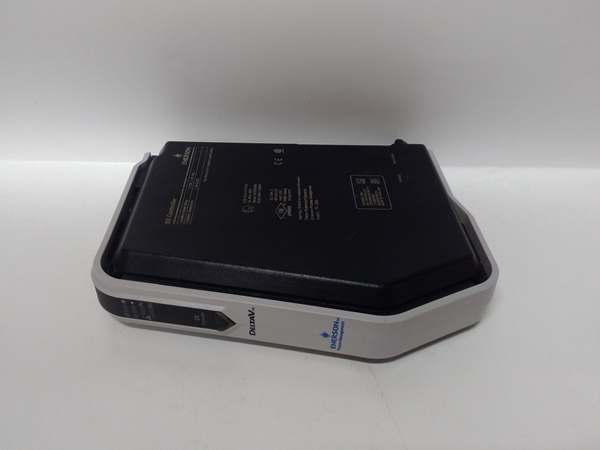
Emerson SE3007
Technical Deep Dive & Overview
The SE3007 is the brain of mid-sized DeltaV SX systems, built around a 32-bit RISC processor optimized for process control. It executes control loops, manages batch recipes, and communicates with field devices via CHARM electronic marshalling—no more hard-wiring each sensor to the controller. The CHARM interface simplifies wiring and isolates signals, so a shorted sensor in one slot doesn’t affect the entire I/O rack.
Redundancy is baked into its design: primary and backup modules sync data in real-time via the DeltaV backplane. If the primary detects a fault (e.g., power loss, memory error), the backup takes over within 100ms—faster than most processes can deviate from setpoints. The 96MB user memory stores complex batch sequences and historical data, while the 3200 SCADA tags feed data to plant-wide HMIs without overloading the processor.
Tool-less installation cuts rack assembly time by 40%—slide the module into the slot, and it locks in place. Self-addressing eliminates manual DIP switch settings, and auto-I/O detection reduces commissioning errors. Unlike legacy controllers, it integrates with AMS Device Manager, so you can monitor module health (temperature, power draw) and run diagnostics remotely. It’s not flashy, but it’s the kind of workhorse that keeps batches on track and refineries running—even when the environment gets ugly.