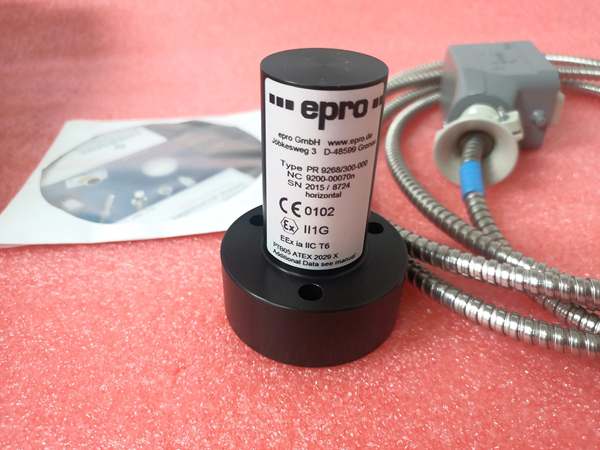
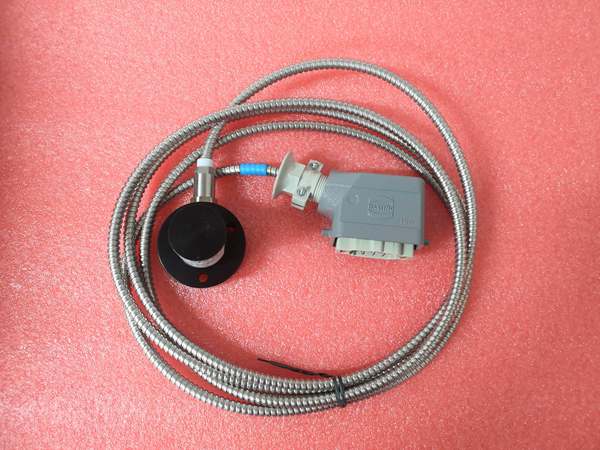
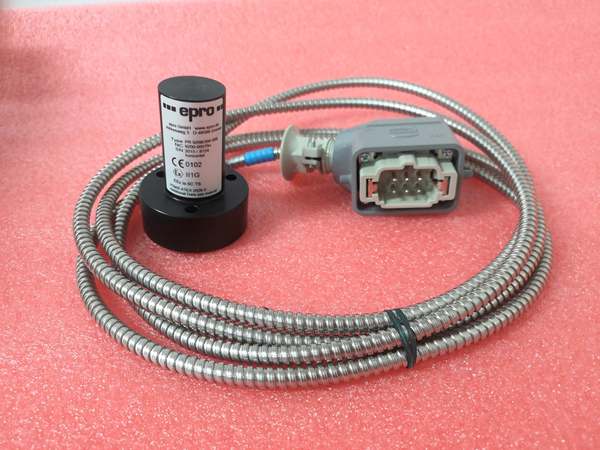
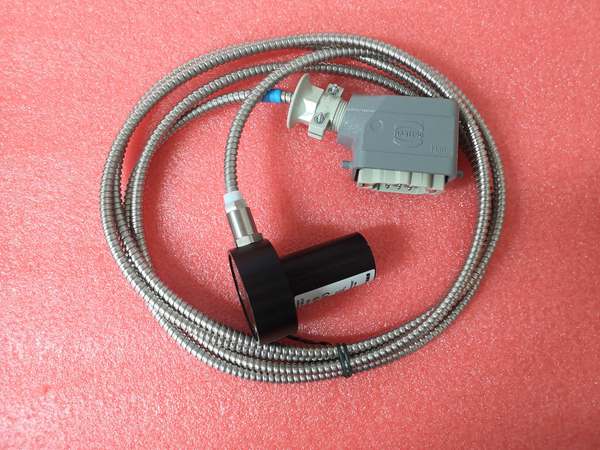
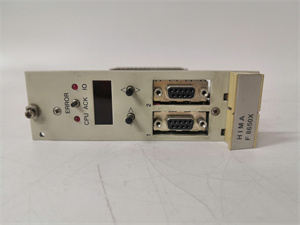
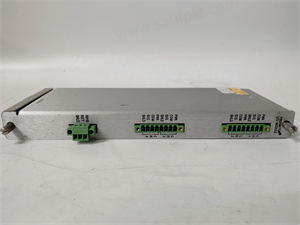
Manufacturer: Modules Part number: Emerson PR9268/017-100
Our extensive Modules catalogue, including
: Emerson PR9268/017-100
, is available now for dispatch to the worldwide.
Brand: EMERSON
The listed price is not final; the actual selling price is negotiable based on current market conditions.
Cable: 10 m standard, stainless steel armor, Harting connector
Compliance: VDI 2059, API 670, CE, ATEX Zone 2
The Real-World Problem It Solves
Rotating machines lose balance, develop bearing wear, or loosen foundations—long before bearing temperature spikes. Contact probes wear out; eddy-current probes need power and target conductivity. This sensor delivers true absolute casing vibration with no external power, no target prep, and no direction lock.
Centrifugal compressors (hydrocarbon, air separation)
Large boiler fans, ID/FD fans, induced draft fans
Critical pumps and gearboxes (high vibration, limited access)
Bottom line: It gives you early mechanical fault detection without the wiring and maintenance headaches of powered sensors.
Emerson PR9268/017-100
Hardware Architecture & Under-the-Hood Logic
This is a passive electrodynamic pickup—no electronics, no power, just physics.
Sealed stainless housing holds a spring-mass-coil assembly.
Machine vibration moves the housing; the mass lags due to inertia.
Relative motion between coil and permanent magnet induces voltage proportional to velocity.
Output is a low-impedance AC voltage (28.5 mV per mm/s vibration velocity).
Omni-directional design means it responds equally in X/Y/Z axes—no careful alignment needed.
4 Hz natural frequency ensures accurate measurement above ~10 Hz (typical machine fault frequencies).
Field Service Pitfalls: What Rookies Get Wrong
Mounting on Soft/Thin Brackets
Techs bolt it to thin, flexy brackets or loose casing lugs. Bracket resonance distorts readings—false high vibration, missed real faults.
Field Rule: Mount directly to stiff, thick casing or solid foot; avoid brackets thinner than 6 mm. Torque M10 stud to 35–40 Nm.
Confusing with Eddy-Current Probes
Rookies wire it like PR642x eddy probes (24V power, 4–20 mA loop). This sensor is self-powered—applying 24V will burn the coil.
Quick Fix: No supply voltage. Route twisted shielded pair to monitor input; shield ground at monitor end only.
Ignoring Cable Bend Radius & Chafing
Installers pull too tight, bend sharply (<50 mm radius), or run cable unprotected near hot pipes. Armor breaks, shield frays, intermittent noise.
Field Rule: Min bend radius ≥50 mm; clamp cable every 0.5 m; keep clear of >120°C surfaces. Use metal conduit for high-chafe areas.
Commercial Availability & Pricing Note
Please note: The listed price is for reference only and is not binding. Final pricing and terms are subject to negotiation based on current market conditions and availability。