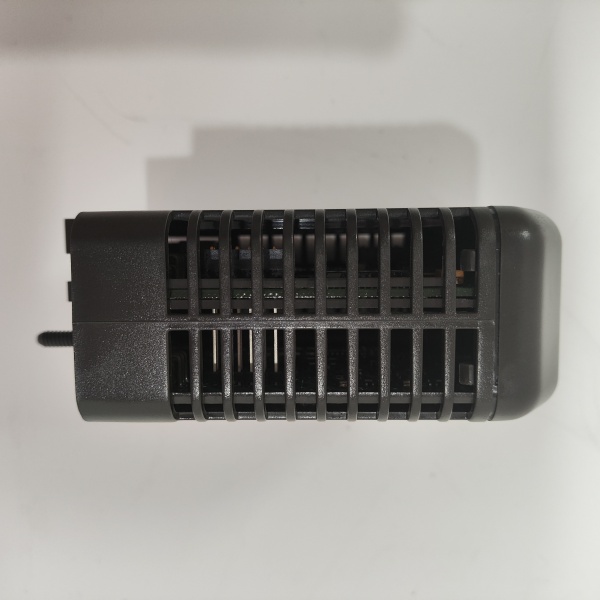
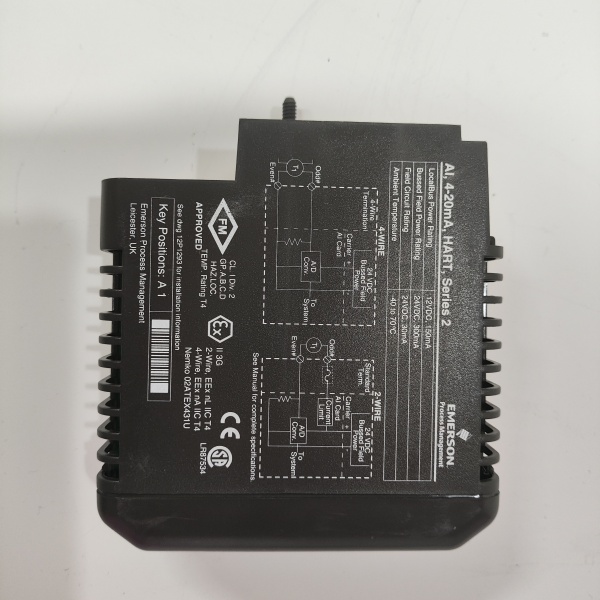
Description
Key Technical Specifications
-
Model Number: KJ4110X1-BA1
-
Manufacturer: Emerson Automation Solutions (Ovation Division)
-
Protocol Support: Ovation Backplane Protocol, Modbus TCP/IP, DNP3.0, IEC 61850, Ethernet/IP
-
Ports: 2x 10/100/1000BASE-T Ethernet Ports, 1x Redundant Sync Port, 1x Ovation Backplane Interface
-
Data Rate: Up to 1Gbps (Gigabit Ethernet), Latency <5ms (Deterministic Communication)
-
Operating Temperature: 0°C to 60°C (32°F to 140°F), Humidity: 5-95% Non-Condensing
-
Isolation: 2500V DC Ethernet-to-Backplane, 1500V DC Port-to-Port Isolation
-
Power Consumption: 15W Typical, 20W Maximum (From Ovation Chassis)
-
Redundancy: 1:1 Hot-Standby Redundancy, Automatic Failover <10ms, Data Synchronization
-
Certifications: UL 61010-1, CSA C22.2 No. 61010-1, IEC 61010-1, CE, IEC 61850-3
-
Compatibility: Ovation v3.5+, Ovation Controller Series, Ovation I/O Modules
-
Mounting: Ovation Controller Chassis (1U Slot), Hot-Swappable, Tool-Less Latching

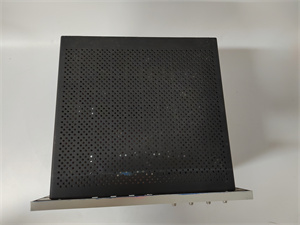
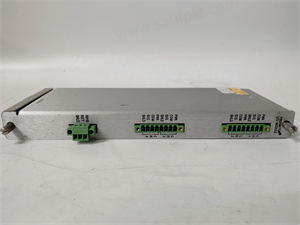
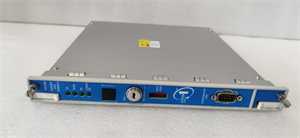
Emerson KJ4110X1-BA1
Field Application & Problem Solved
In modern power plant DCS systems, outdated communication modules create data bottlenecks and single points of failure—slow data rates, limited protocol support, and lack of redundancy lead to delayed control signals, lost data, and unplanned system outages. A Southeast combined-cycle plant in 2024 faced this crisis: their legacy 100Mbps comm modules couldn’t handle the data load from 5000 I/O points and 800 PID loops, causing 200ms delays in turbine control signals. During a routine network switch failure, the non-redundant modules triggered a 2-hour plant shutdown, costing $1.2M in lost generation. Additionally, the modules lacked native IEC 61850 support, requiring costly gateways to integrate new smart substation equipment. The KJ4110X1-BA1 solved these issues with its gigabit Ethernet ports and redundant design—data rates jumped to 1Gbps, cutting control signal delays to <5ms. Pairing it with KJ4111X1-BA1 redundant partners eliminated single points of failure, and native IEC 61850 support removed the need for gateways, saving $180k in integration costs. I replaced 12 legacy modules with KJ4110X1-BA1 units, integrating them into the plant’s Ovation DCS and substation automation system.
This module is the “data backbone” of Ovation DCS—you’ll find it enabling communication in every critical plant network: controller-to-I/O chassis communication, DCS-to-SCADA integration, substation automation links (via IEC 61850), and data historian connections. At a Midwest nuclear plant, we installed 16 KJ4110X1-BA1 modules to support their Ovation safety and control systems. The plant needed to separate safety-related and non-safety data flows to meet NRC requirements, and the module’s dual Ethernet ports made this seamless—one port handled safety-critical turbine and reactor control data, while the other managed non-critical HMI and maintenance traffic. During a simulated port failure, the redundant module took over in 8ms, with no data loss or control upset. The module’s deterministic communication also proved vital for the plant’s reactor protection system, ensuring that trip signals reached actuators within the required 100ms window.
Its core value is high-speed, reliable data communication with built-in redundancy. Power plants are moving toward digitalization, generating more data than ever from smart sensors, controllers, and analytics tools—they need communication modules that can handle this data flood without compromising control performance. The KJ4110X1-BA1’s gigabit ports provide 10x the bandwidth of legacy modules, supporting up to 10,000 I/O points per module. Its 1:1 redundancy ensures 99.999% communication availability, a requirement for NERC CIP and NRC-compliant systems. Unlike generic industrial Ethernet modules, it’s engineered to work seamlessly with Ovation’s backplane protocol, eliminating compatibility issues that cause erratic data transmission. The support for multiple protocols (Modbus TCP, DNP3, IEC 61850) makes it a future-proof solution, letting plants integrate new equipment without replacing communication hardware. For control engineers, the low latency ensures that real-time control signals are transmitted without delay, maintaining process stability. For IT teams, the module’s security features (port isolation, protocol filtering) help protect the DCS from cyber threats.
Installation & Maintenance Pitfalls (Expert Tips)
Redundancy Setup: Sync Redundant Partners Before Commissioning
Rookies skip synchronizing redundant KJ4110X1-BA1 modules, leading to failed failovers and data desynchronization. A West Coast wind farm installed a primary KJ4110X1-BA1 and standby KJ4111X1-BA1 but didn’t configure the sync port, resulting in a “redundancy mismatch” alarm and lost data during a primary module failure. The fix involves three key steps: first, connect the redundant sync ports of both modules using a shielded twisted-pair (STP) cable—this enables real-time data synchronization. Second, use Ovation Studio’s “Communication Module Configurator” to set the primary module to “Active” and the standby to “Standby,” ensuring they use the same IP address and protocol settings. Third, run the “Redundancy Test” tool to simulate a primary failure—verify that the standby takes over in <10ms and that Ovation HMI shows no data gaps. Always update both modules to the same firmware version (v4.0+ recommended for full IEC 61850 support) before setup—mismatched firmware is a common cause of sync failures. After proper configuration, the wind farm’s redundant pair successfully handled 3 primary module outages with no data loss.
Network Segmentation: Use Dual Ports to Separate Critical and Non-Critical Traffic
Using both Ethernet ports for the same network wastes the module’s fault-tolerance and security capabilities. A Northeast hydro plant connected both ports to the same LAN, leading to network congestion that delayed turbine governor control signals. The solution is to implement network segmentation: assign Port 1 to the “Control Network” (critical traffic like controller-to-I/O data, turbine trip signals, and safety interlocks) and Port 2 to the “Monitoring Network” (non-critical traffic like HMI displays, data historian logs, and maintenance tools). Configure separate VLANs for each port on the plant’s Ethernet switches, and enable port isolation on the KJ4110X1-BA1 to prevent cross-traffic. Use Ovation’s “Protocol Filtering” feature to restrict Port 1 to only Ovation backplane protocol and IEC 61850, blocking non-essential traffic. After segmentation, the hydro plant’s control network latency dropped from 50ms to 3ms, and governor control became far more stable. Never use a single network for both control and monitoring—segmentation is critical for real-time performance and cyber security.
Firmware & Security: Keep Firmware Updated and Enable Security Features
Outdated firmware and disabled security features leave the module vulnerable to cyber threats and performance issues. A Texas gas plant ran KJ4110X1-BA1 modules with 3-year-old firmware, which lacked patches for known Ethernet vulnerabilities and had limited IEC 61850 functionality. This made the DCS susceptible to a phishing-induced network scan that disrupted communication for 45 minutes. The fix is to establish a semi-annual firmware update schedule using Emerson’s “Ovation Firmware Manager”—always use firmware versions certified by Emerson for compatibility with your Ovation system (v4.5 is the latest stable release). Enable the module’s built-in security features: disable unused protocols (e.g., Modbus TCP if not needed), enable MAC address filtering to restrict access to authorized switches, and use port authentication (802.1X) if supported by the plant’s network. Regularly run Ovation’s “Security Scan” tool to check for misconfigurations. After updating firmware and enabling security features, the Texas plant’s DCS passed a NERC CIP audit with no findings related to communication modules.
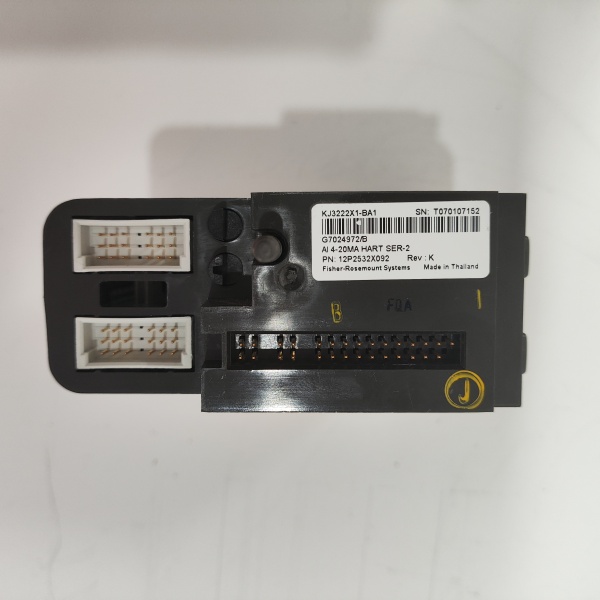
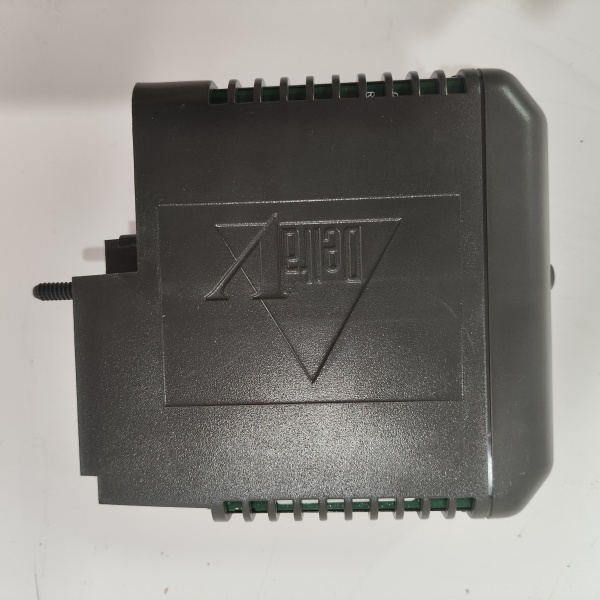
Emerson KJ4110X1-BA1
Technical Deep Dive & Overview
The KJ4110X1-BA1 is Emerson’s flagship communication module for Ovation DCS, designed to handle the high-bandwidth, low-latency demands of modern power plants. It uses a dual-core 800MHz processor dedicated to communication tasks—one core manages Ethernet packet processing, while the other handles backplane communication and redundancy sync, ensuring neither task bottlenecks the other. The module’s gigabit Ethernet transceivers support 10/100/1000BASE-T speeds, auto-negotiating with network switches to match the plant’s infrastructure. A key hardware feature is the redundant sync port, which uses a high-speed serial link to transmit real-time data between primary and standby modules, ensuring the standby is always in lockstep with the primary.
Its 2500V Ethernet-to-backplane isolation protects the Ovation controller from electrical transients and network-induced noise, a common issue in industrial environments with high-voltage equipment. The 1500V port-to-port isolation prevents faults on one Ethernet port from affecting the other, enhancing reliability. The module’s front-panel LEDs provide clear status: solid green for active mode, blinking green for standby, amber for Ethernet activity, and red for fault. A built-in self-diagnostic feature continuously monitors Ethernet link status, backplane communication, and redundancy sync, sending alerts to Ovation HMI if issues are detected. The hot-swappable design allows technicians to replace a faulty module during peak load without shutting down the control system, and the module retains its configuration in non-volatile memory, eliminating the need for reconfiguration after replacement.
What makes it indispensable is its role as a bridge between Ovation’s control layer and the plant’s wider network infrastructure. Power plants need communication modules that don’t just transmit data, but ensure that data is delivered quickly, reliably, and securely—this module delivers on all three. Its support for IEC 61850 makes it essential for smart grid and substation automation projects, letting Ovation integrate with modern protective relays and smart meters. The redundancy design ensures that communication failures don’t lead to control system outages, a requirement for mission-critical power generation. Unlike third-party communication modules, it’s fully integrated with Ovation’s diagnostics and alarm system, making it easy for operators to troubleshoot issues. For plant digitalization efforts, it provides the bandwidth needed to stream real-time process data to analytics platforms like Emerson’s Plantweb Insight. In short, the KJ4110X1-BA1 isn’t just a communication module—it’s the lifeline that keeps Ovation DCS connected, responsive, and secure in the face of growing data demands and evolving industrial networks.