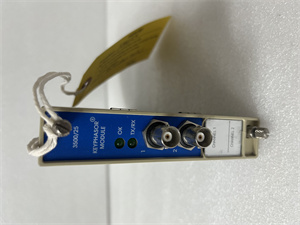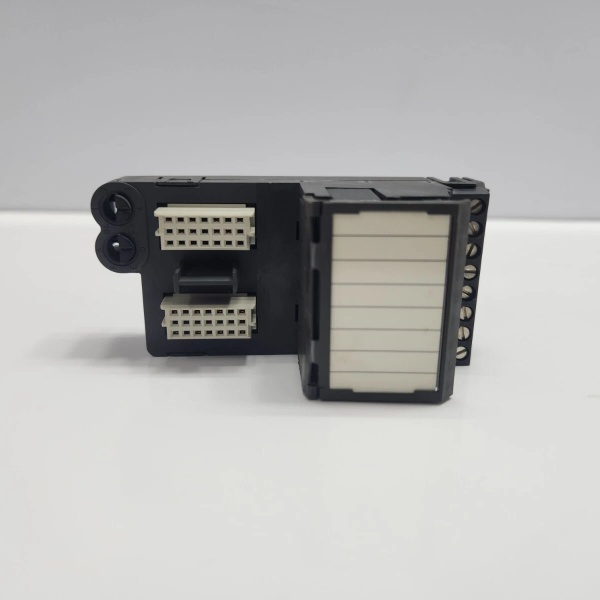
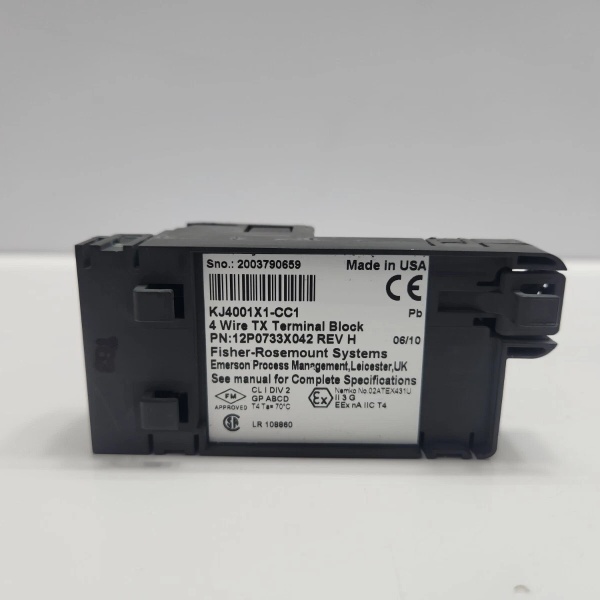
Description
Component Snapshot At-a-Glance
- Model: KJ4001X1-CC1
- Alt. P/N: 12P0733X032
- Product Series: DeltaV M-Series Standard I/O
- Hardware Type: Passive 4-Wire I/O Terminal Base
- Key Feature: Mechanical key coding prevents mismatched I/O card insertion
- Primary Field Use: Terminate full 4-wire powered analog transmitters to matching DeltaV input/output modules across process plant control cabinets
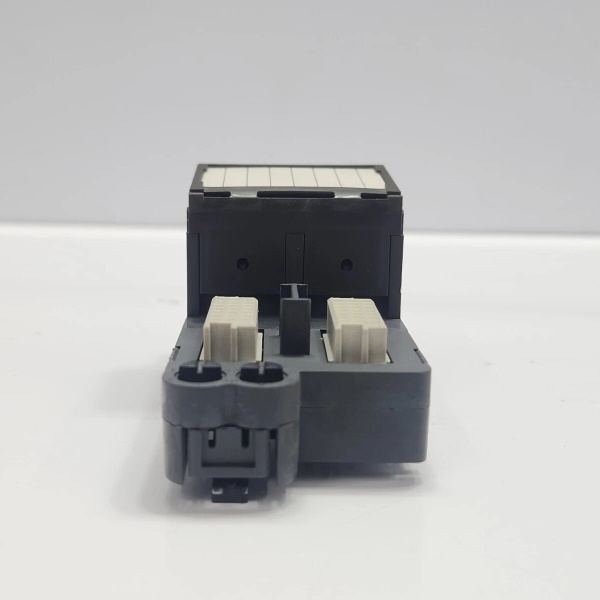
Emerson KJ4001X1-CC1
Hard-Numbers: Technical Specifications
- Protocol Support: Passive hardwired; compatible with HART 5/7 over field wiring
- Port Count: 8 channel terminal set matching corresponding 8-point I/O card footprint
- Max Field Voltage: 30 VDC continuous per field circuit
- Single Channel Current Limit: 1 A continuous per individual channel
- Operating Temperature: -40°C to +70°C ambient cabinet range
- Isolation Rating: 1500 VAC dielectric isolation between field wiring and backplane side
- Power Draw: 0 mA, fully passive with no onboard powered circuitry
- Wire Gauge Compatibility: 14 AWG up to 22 AWG solid/stranded copper conductor
- Certification Rating: Class I Div 2, ATEX II 3G for hazardous location cabinet installs
The Real-World Problem It Solves
Field techs regularly fought miswired loops and costly card burnout from mismatched terminal bases forced onto incompatible I/O hardware before this coded base entered service. Unmarked generic terminals also created endless hunt-and-verify work during emergency shutdown repair calls.
Where you’ll typically find it:
- Petrochemical refinery DCS cabinets housing 4-wire RTD and external-powered process transmitters
- Fossil power plant feedwater control rack analog input marshalling panels
- Offshore platform utility module local control junction cabinets
It eliminates unplanned downtime caused by accidental cross-wiring and wrong-card/base pairing during rushed field replacement work.
Hardware Architecture & Under-the-Hood Logic
This unit contains no onboard CPU or processing chips; it is a passive mechanical and conductive routing block that physically separates field wiring from DeltaV’s LocalBus backplane signals via rated isolation barriers.
- Field-side screw terminals route incoming 4-wire positive/negative power and signal leads into internal copper trace paths.
- Internal isolated traces carry field signals straight through to the gold-plated backplane edge connector on the top side of the terminal base.
- Built-in plastic key tabs lock the base exclusively to its matching DeltaV I/O card, blocking physically incompatible card seating entirely.
- Shield drain paths tie cable shielding to designated chassis ground terminal points per DeltaV marshalling standards.
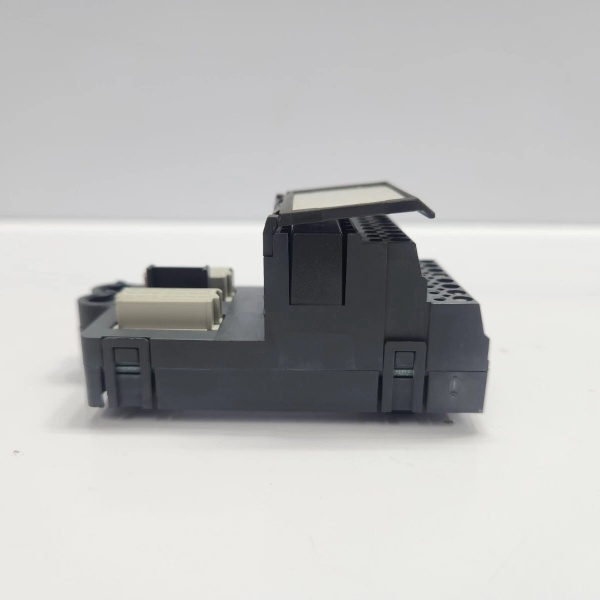
Emerson KJ4001X1-CC1
Field Service Pitfalls: What Rookies Get Wrong
Improper Key Coding Alignment
New technicians skip checking existing key position before swapping a replacement unit and set the coding wheel randomly. This locks the base against the correct installed I/O card or lets incompatible cards slide into place.
- Field Rule: Snap photos of the original base’s coded wheel position before removal and duplicate the exact notch location on new hardware prior to rack installation.
Oversized Wire Crimp Into Terminals
Installers force 12 AWG oversized wiring into terminals rated for 14–22 AWG range, leading to loose terminal screw torque and intermittent open signal faults after thermal cabinet cycling.
- Quick Fix: Trim oversized conductors back and use correct AWG pigtail jumpers to match terminal wire limits before securing terminal screws at 0.9 Nm specified torque.
Uncontrolled Shield Ground Multiple Termination
Junior crew grounds field cable shield at both the field device and the terminal base ground lug, creating ground loop induced 60 Hz noise that corrupts 4–20mA analog readings.
- Field Rule: Single-point shield grounding only at the terminal base chassis terminal; leave field device end shield floating ungrounded per DeltaV wiring best practice.
Commercial Availability & Pricing Note
Please note: The listed price is for reference only and is not binding. Final pricing and terms are subject to negotiation based on current market conditions and availability.