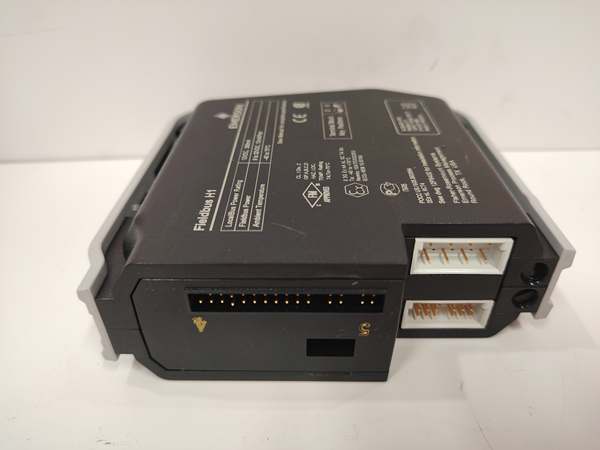
Description
Key Technical Specifications
-
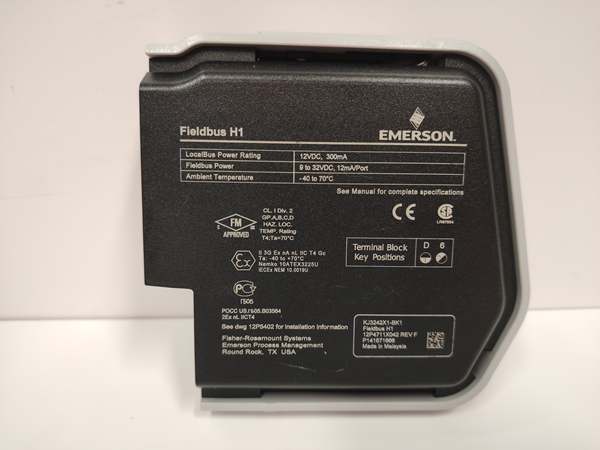
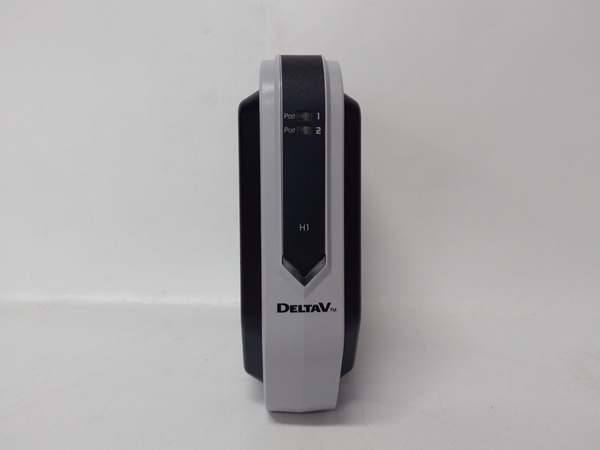
Model Number: KJ3242X1-BK1
-
Manufacturer: Emerson Automation Solutions
-
Protocol Support: Foundation Fieldbus H1 (IEC 61158-2), DeltaV Native Backplane Protocol
-
Ports: 2x FF H1 (M12 connectors), 1x DeltaV S-Series Backplane Connector
-
Data Rate: 93.75 kbps (fixed, FF H1 Standard)
-
Operating Temperature: -40°C to 70°C (-40°F to 158°F)
-
Isolation: 2500V DC Port-to-Backplane, 1500V DC Port-to-Port
-
Power Consumption: 4W Typical, 6W Max (from DeltaV Chassis)
-
Max Cable Length: 1200m (3937ft) per H1 Segment
-
Intrinsic Safety: ATEX Zone 2, IECEx Ex nA IIC T4 Ga
-
Redundancy: Supports 1:1 Redundancy with KJ3242-AR1
-
Mounting: DeltaV S-Series I/O Chassis (3U Slot)

Emerson KJ3242X1-BK1
Field Application & Problem Solved
In refineries and chemical plants, the biggest headache with legacy analog I/O is the “one wire, one signal” bottleneck. You’d run 10 cables to a reactor skid just to monitor temperature, pressure, and level—each needing terminations, calibration, and troubleshooting. This module solves that by turning two H1 wires into a network that connects up to 32 field devices. I used it at a Gulf Coast refinery in 2022 to replace 4 analog I/O cards with two KJ3242X1-BK1s—cutting wiring labor by 70% and slashing calibration time from 8 hours to 45 minutes.
You’ll find this module wherever DeltaV runs FF H1 devices: petrochemical reactor control loops, pharmaceutical batch systems, and power plant boiler feedwater skids. At a Pennsylvania paper mill, we installed four of these to link 96 pressure transmitters and control valves to the DeltaV DCS. The mill had been fighting intermittent analog signal noise—ground loops that caused valve hunting. The KJ3242X1-BK1’s differential signaling and isolation eliminated the noise, stabilizing the paper thickness control within 24 hours.
Its core value is consolidated reliability. Analog cards fail one channel at a time; this module lets you diagnose a entire H1 segment from the DeltaV operator station. When a sensor goes offline, you get a device-specific fault—no more tracing wires to find a bad transmitter. For 24/7 operations, its hot-swappable design means you can replace a failed module without shutting down the skid. In critical loops (like a hydrocracker’s pressure control), pairing it with the KJ3242-AR1 creates a redundant path that keeps data flowing even if the primary module fails.
Installation & Maintenance Pitfalls (Expert Tips)
H1 Segment Termination Is Non-Negotiable
Rookies skip the 120-ohm terminator at the end of the H1 segment—this causes signal reflections that corrupt data. A Texas chemical plant had this issue: their reactor level transmitters would “fluctuate” by 10% because the segment wasn’t terminated. Always install the terminator (Emerson P/N 08002-0100-0001) at the last device on the segment, not at the module. Use a multimeter to check resistance between the H1+ and H1- wires at the module—you should see 60 ohms (two 120-ohm terminators in parallel) for a redundant segment, 120 ohms for a single segment.
Shield Grounding: One Point, Not Multiple
Grounding the H1 cable shield at both the module and the field device creates a ground loop—noise that triggers false “communication timeout” faults. I fixed this at a Wyoming gas plant where three KJ3242X1-BK1s were throwing faults every shift. Ground the shield only at the module’s M12 connector (use the chassis ground lug on the DeltaV I/O rack). Strip 1/2 inch of shield, crimp a ring terminal, and bolt it to the rack’s ground bar. Cut the shield flush at field devices—no exposed strands.
Redundant Pair Sync: Match Firmware First
Pairing a KJ3242X1-BK1 with a KJ3242-AR1 without matching firmware causes failover delays. A Florida power plant learned this the hard way: their boiler feedwater control loop dropped out for 2 seconds during a failover. Before installing, check firmware versions in AMS Device Manager—both modules must be v6.1 or higher for DeltaV v15+. Use the “Firmware Sync” tool in AMS to push the same version to both; never mix versions. After sync, test failover by pulling the primary module’s power—switchover should take <50ms, with no device disconnects.
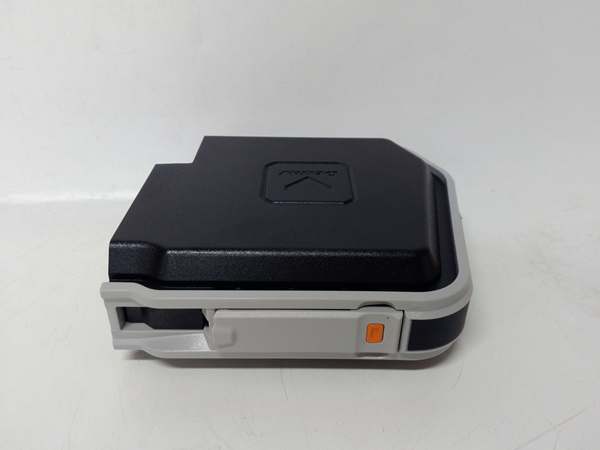
Emerson KJ3242X1-BK1
Technical Deep Dive & Overview
The KJ3242X1-BK1 is an intelligent interface that acts as a translator between DeltaV controllers and FF H1 field devices. It has a dedicated 32-bit microprocessor that handles all H1 network management—polling devices, collecting process data, and sending control signals—so the DeltaV CPU isn’t bogged down with low-level communication tasks. The processor uses a store-and-forward architecture: it buffers data from the backplane, formats it into FF H1 packets, and transmits it to the segment, then reverses the process for field data.
Its two H1 ports can be configured as independent segments or a single redundant segment. In redundant mode, the module mirrors data to the KJ3242-AR1, and both monitor segment health. If the primary port detects a fault (signal loss, CRC errors), the redundant port takes over seamlessly. The module’s isolation circuitry protects the DeltaV backplane from transient voltages—critical in refineries where lightning strikes or motor starts can send 1kV surges down field wires.
Unlike analog I/O, it supports device-level diagnostics: you can pull a transmitter’s temperature drift or a valve’s stroke time directly from the module via AMS. This means you fix problems before they cause process upsets—like replacing a valve with sticky internals after seeing its response time slow down. It’s not just a communication module; it’s a window into the health of your field devices, designed to turn reactive troubleshooting into proactive maintenance.