Description
Key Technical Specifications
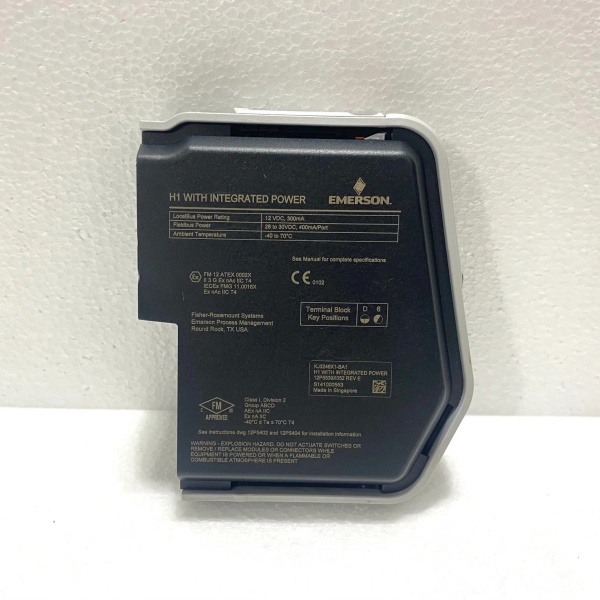
- Model Number: KJ3225X1-BA1
- Manufacturer: Emerson Automation Solutions
- Input Voltage: 100-240V AC (Dual Inputs), 50/60Hz
- Output Voltage: 24V DC ±0.5V (Regulated)
- Output Current: 25A Continuous, 30A Peak
- Redundancy: 1:1 Hot-Standby, Automatic Failover <2ms
- Load Sharing: 50/50 Split Between Redundant Pair
- Operating Temperature: 0°C to 60°C (32°F to 140°F)
- Humidity Range: 5-95% Non-Condensing
- Protection Features: Overvoltage, Overcurrent, Short-Circuit, Over-temperature, Reverse Polarity
- Diagnostics: LED Status Indicators, Backplane Fault Reporting, Input/Output Voltage Monitoring
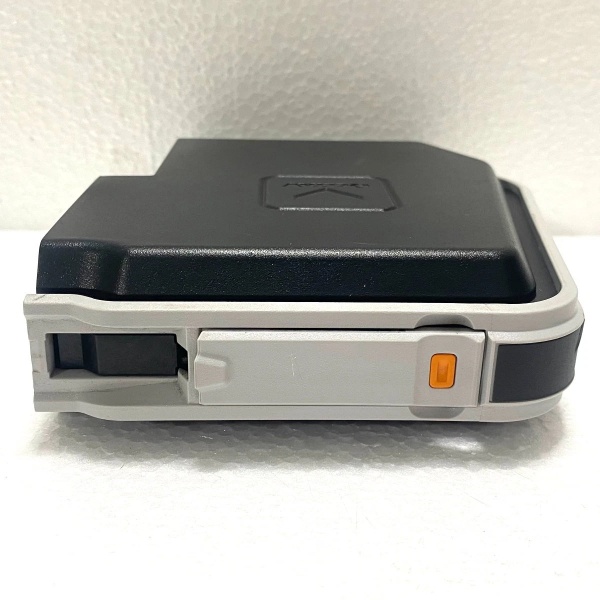
- Mounting: Ovation I/O Chassis Dedicated Power Slot (Slot 1/2), Tool-Less Latching
- Compatibility: Ovation 16-Slot/32-Slot I/O Chassis, 1C31 Series I/O Modules, KJ4000 Series Controllers
- Certifications: UL 61010-1, CSA C22.2 No. 61010-1, IEC 60950-1, CE, RoHS
- Physical Dimensions: 5.9” (L) x 4.1” (W) x 1.8” (H), 2.8kg (6.2 lbs)

EMERSON KJ3225X1-BA1
Field Application & Problem Solved
In Ovation DCS systems—power plant turbine control racks, refinery emergency shutdown (ESD) chassis, chemical reactor safety instrumented system (SIS) I/O banks—power supply failure is a catastrophic single point of failure. Legacy non-redundant power supplies could take down an entire chassis (and hundreds of process points) with a single component burnout, costing millions in downtime. Worse, single-input designs meant a utility power glitch or wiring fault would disable the chassis, even if the power supply itself was functional. Plants also lacked visibility into power supply health, with no way to detect degradation (e.g., capacitor wear) before failure.
This redundant power supply eliminates those risks. It’s designed as the “power backbone” of Ovation I/O chassis, with dual AC inputs and 1:1 hot-standby redundancy that ensures no single failure (input power loss, component burnout) disrupts operation. You’ll find it in every critical Ovation I/O chassis: boiler control systems in coal-fired plants, HRSG (Heat Recovery Steam Generator) I/O racks in CCGT facilities, and SIS chassis in refineries. I installed 36 of these (paired with KJ3226X1-BA1 redundant partners) at a Midwest nuclear plant where a single power supply failure caused a 3-hour shutdown of a secondary cooling system; post-installation, the plant went 5 years without a power-related chassis outage. The dual inputs let the plant connect to two separate utility feeds, ensuring chassis power even if one feed fails.
Its core value is fault-tolerant power delivery with full visibility. Industrial DCS systems can’t afford power gaps—this module’s redundant design and dual inputs provide layers of protection, while built-in diagnostics alert technicians to issues (e.g., input voltage drift, over-temperature) before they cause failure. Unlike generic redundant power supplies, it’s fully integrated with Ovation’s backplane, sending real-time status to the HMI. For maintenance teams, it turns power supply troubleshooting from reactive to proactive; for plant managers, it eliminates power-related downtime; for operators, it ensures continuous chassis operation. It’s not just a power supply—it’s the reliable foundation that keeps Ovation I/O systems running 24/7.
Installation & Maintenance Pitfalls (Expert Tips)
- Redundant Pair Matching Is Mandatory: Rookies mix KJ3225X1-BA1 with incompatible redundant partners (e.g., generic power supplies), breaking load sharing. A Gulf Coast refinery learned this the hard way—when the primary failed, the standby didn’t take over, causing a 2-hour ESD chassis shutdown. Always pair KJ3225X1-BA1 with its dedicated redundant partner (KJ3226X1-BA1) and verify firmware versions match (use Ovation Studio’s Device Manager). Ensure both modules are installed in the chassis’ dedicated power slots (Slot 1: Primary, Slot 2: Standby).
- Dual Input Wiring to Separate Feeds: Connecting both AC inputs to the same utility feed defeats the dual-input design. A Texas power plant did this, so a single transformer trip took down 8 I/O chassis. Wire Input 1 to Plant Main Power and Input 2 to Emergency Backup Power (e.g., generator feed). Install separate circuit breakers (15A minimum) for each input and label them clearly—this prevents a single wiring fault from disabling both inputs.
- Load Calculation Prevents Overloading: Overloading the 25A continuous output (e.g., populating a 32-slot chassis with high-power AO modules) causes thermal shutdown. A chemical plant had this issue, with the power supply tripping during peak load. Calculate total chassis load: sum the power consumption of all I/O modules (check Emerson’s datasheets) and stay under 20A (80% of 25A) for safety. Use Ovation’s power monitoring diagnostics to track real-time load.
- Capacitor Aging Inspection: Power supply capacitors degrade over time (5-7 years) but show no obvious signs of failure. A Northeast refinery ignored this, and 4 modules failed within 6 months due to swollen capacitors. Inspect modules annually: remove the cover (per Emerson’s service manual) and check for bulging/leaking capacitors. Replace modules every 6 years as preventive maintenance—this avoids unplanned failures in critical applications.
EMERSON KJ3225X1-BA1
Technical Deep Dive & Overview
The KJ3225X1-BA1 is a purpose-built redundant power supply engineered to deliver reliable power to Ovation I/O chassis in harsh industrial environments. At its core is a dual-stage power conversion design: first, the AC inputs are rectified to DC, then a regulated switching converter delivers stable 24V DC to the chassis backplane. The switching topology ensures high efficiency (up to 92%), minimizing heat generation and extending component life.
The module’s redundancy logic runs on a dedicated microcontroller, independent of the power conversion circuit—this ensures failover decisions are made without delaying power delivery. The hot-standby design works by having both modules (primary and KJ3226X1-BA1 standby) powered on, with the primary handling 50% of the load and the standby ready to take over in <2ms if the primary fails. Load sharing is automatic, preventing one module from carrying the full load (which accelerates wear).
Dual AC inputs (100-240V AC) provide flexibility—plants can connect to two separate utility feeds or a combination of utility and backup generator power. The module’s protection circuitry is comprehensive: overvoltage protection clamps output above 26V DC, overcurrent protection triggers at 30A, and over-temperature protection shuts down the module if internal temperature exceeds 75°C. Reverse polarity protection prevents damage from wiring mistakes, a common field hazard.
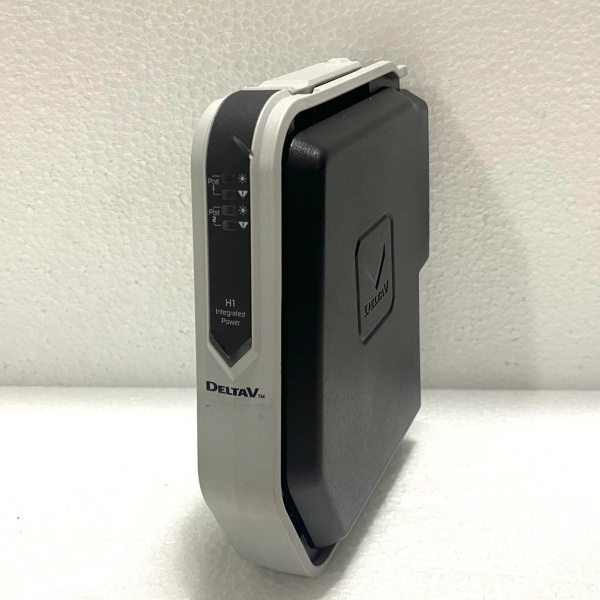
The module’s integration with Ovation’s backplane is seamless: front-panel LEDs provide at-a-glance status (Power Good, Standby Active, Fault), while backplane communication sends detailed diagnostics (input voltage, output current, fault codes) to the DCS HMI. Ruggedization features include a metal housing for EMI shielding, conformal coating on the circuit board (resisting moisture and dust), and vibration-resistant components (for turbine enclosure mounting).
What sets it apart is its purpose-built design for Ovation. Unlike generic redundant power supplies, it leverages Ovation’s backplane protocol for diagnostics and load monitoring, and its form factor fits perfectly in Ovation I/O chassis. The tool-less mounting and hot-swappable design (for standby modules) let technicians replace units in 30 seconds without powering down the chassis. For field service engineers, it’s the gold standard for Ovation power delivery—eliminating single points of failure, simplifying maintenance, and ensuring continuous operation of critical I/O systems. It’s not just a power supply—it’s the lifeline of Ovation DCS chassis.