Description
Hard-Numbers: Technical Specifications
- Input Characteristics:
- Number of Channels: 32 (dry contact)
- Input Voltage Range: 24 VDC
- Input Current per Channel: 5 mA
- Input Type: Dry contact (non-powered), requires external field power
- Power Requirements:
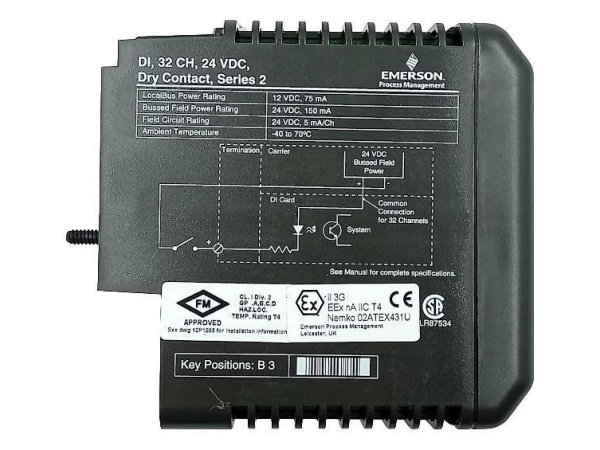
- Local Bus Power: 12 VDC at 75 mA (from carrier/controller)
- Bussed Field Power: 24 VDC at 150 mA (for field circuits, distributed via terminal block)
- Environmental:
- Operating Temperature: -40°C to +70°C
- Storage Temperature: -40°C to +85°C (non-condensing)
- Relative Humidity: 5% to 95% non-condensing
- Shock Resistance: 10g, ½ sine wave, 11 ms
- Vibration Resistance: 1mm peak-to-peak (2-13.2 Hz), 0.7g (13.2-150 Hz)
- Airborne Contaminants: ISA-S71.04-1985 Class G3
- IP Rating: IP20 (indoor cabinet mounting)
- Physical:
- Weight: 0.1-0.2 kg (module only)
- Terminal Block Key Position: B3 (prevents mismatch with other I/O types)
- Certifications:
- Hazardous Area: II 3G Ex nA IIC Gc (ATEX Zone 2)
- FM Approvals: FM12ATEX0090U, IECEx FMG 12.0035U
- Additional: CL.1 Div. 2 GP. A,B,C,D HAZ. LOC., T4 temperature rating
- CE Mark, FM Approved
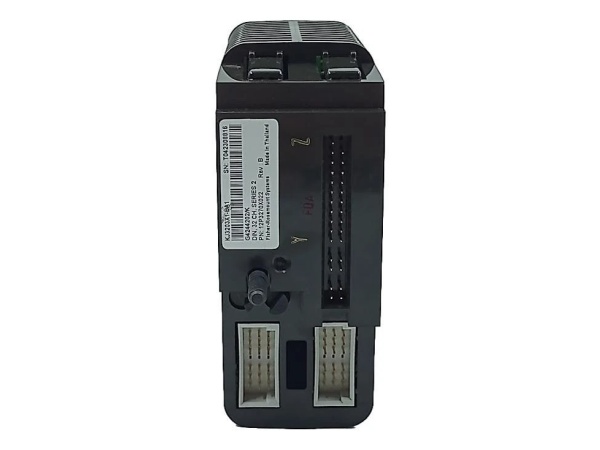
EMERSON KJ3203X1-BA1
The Real-World Problem It Solves
Running 32 separate limit switches back to a controller cabinet means 64 wires plus shield. In a Zone 2 refinery or pharma plant, you can’t bring non-rated junction boxes into the classified area. The KJ3203X1-BA1 lets you aggregate 32 dry contact inputs in a field-mountable I/O cabinet right at the process, then run a single LocalBus fiber or copper trunk back to the DeltaV controller. The ATEX Zone 2 certification means the module itself can sit in the hazardous area without explosion-proof enclosures. Rotary keying (B3 position) guarantees you’ll never accidentally plug this DI card into a DO or AI terminal block—critical when you’re swapping cards in the dark at 3 AM during a turnaround.
Where you’ll typically find it:
- Refinery distillation units monitoring valve position switches
- Pharmaceutical tablet presses with interlock proximity sensors
- Chemical batch reactors feeding agitator and pump status signals
- Oil & gas separator vessels with high-level and pressure switch inputs
Bottom line: This is the workhorse digital input aggregator for DeltaV systems in hazardous areas—mount it near the field devices, run one bus to the controller, and forget about miswiring explosions (literally).
Hardware Architecture & Under-the-Hood Logic
The KJ3203X1-BA1 is a passive DI card in the DeltaV Traditional I/O architecture. It doesn’t execute logic—that’s the controller’s job. Its job is to read 32 dry contact closures, debounce them, filter noise, and ship the status to the DeltaV controller via LocalBus. The module draws power for its own electronics from the LocalBus (12 VDC at 75 mA), but it needs external 24 VDC field power to energize the input circuits for dry contact detection.
-
LocalBus Interface: The card plugs into a DeltaV I/O carrier (chariot) which provides LocalBus connectivity to the DeltaV controller. LocalBus is a deterministic, redundant digital bus that carries both power and data. The module receives 12 VDC for its internal logic and communicates input status updates to the controller at the configured scan rate (typically 100-500 ms).
-
Input Circuit per Channel: Each of the 32 channels is an opto-isolated dry contact input. The field device (limit switch, proximity switch N/O or N/C contact) closes a circuit between the input terminal and common. The module doesn’t provide sourcing voltage—it expects an external 24 VDC supply (bussed field power) to be present at the terminal block. When the contact closes, current flows from field power through the contact into the module input, the optocoupler LED fires, and the logic state flips. The 5 mA per channel rating means you need at most 160 mA for 32 channels if all are on simultaneously—well within the 150 mA bussed field power rating (you’d derate or add external power for fully loaded scenarios).
-
Debouncing and Filtering: Mechanical switches chatter when they close—tiny bounces that look like multiple on/off transitions to a fast digital input. The KJ3203X1-BA1 implements hardware debouncing (typically 5-10 ms) to ignore contact bounce. It also provides noise rejection for the harsh electrical environments found in process plants. The result is a clean, reliable digital state change reported to the controller.
-
Terminal Block and Keying System: The module mates with a specific terminal block (part number 12P3270X032 or VE4001S2T2B4 with KJ4001X1-CJ1 termination block). This terminal block provides screw terminals for field wiring and incorporates the rotary keying system. The key is set to position B3 for this DI card. If you try to plug a different I/O type (say a KJ3204 DO card) into this terminal block, the physical keys won’t align, preventing insertion. This is critical for hot-swapping in live cabinets—you won’t accidentally power a 24 VDC output into a 5 mA input circuit and smoke the optocouplers.
-
Field Power Distribution: The terminal block receives 24 VDC bussed field power from the carrier or an external supply and distributes it to all 32 channels. This field power is separate from the LocalBus power—cutting LocalBus to swap the card doesn’t de-energize the field circuits (which is why you must de-energize non-sparking field circuits before removal in hazardous areas). The field power rating of 150 mA means the terminal block can supply all 32 channels simultaneously if each draws ≤5 mA, but Emerson recommends verifying load in fully-on scenarios.
-
Hazardous Area Protection: The module is rated for Zone 2 (II 3G Ex nA IIC Gc). This means it’s non-sparking under normal operation and won’t ignite flammable gas atmospheres. The design limits energy storage and ensures fault conditions don’t create sparks. The T4 temperature rating (135°C surface temperature) allows operation in most gas groups without overheating the enclosure. For Zone 1 applications, you’d need explosion-proof enclosures or intrinsic safety barriers—this module alone isn’t Zone 1 rated.
-
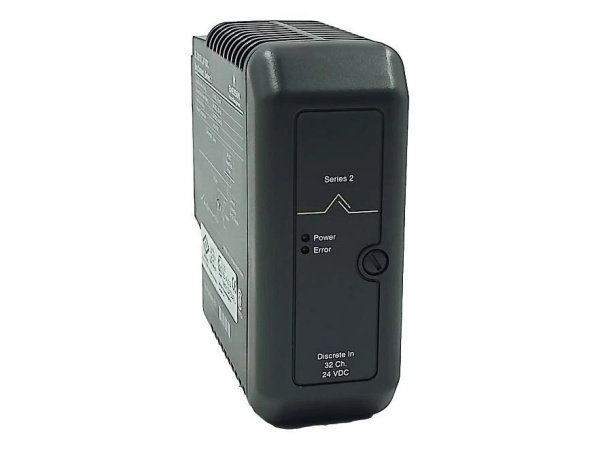
Diagnostic and Status Indicators: The front panel typically includes status LEDs for LocalBus communication (power, fault), and per-channel LEDs may be present on some terminal blocks. The DeltaV controller continuously monitors the module’s health—loss of communication, overcurrent, or internal faults trigger alarms in DeltaV diagnostics. The module itself contains no user-replaceable parts—faulted units get replaced, not repaired in the field.

EMERSON KJ3203X1-BA1
Field Service Pitfalls: What Rookies Get Wrong
Leaving Field Power Energized During SwapA tech pulls a KJ3203X1-BA1 for replacement in a Zone 2 cabinet but forgets to de-energize the 24 VDC bussed field power. When the card is removed, the field wiring is still live at the terminal block. If a tool shorts the terminals or a stray wire touches ground, you’ve got a spark in a hazardous area.
- Field Rule: In Zone 2 installations, always shut off the 24 VDC field power supply before removing or inserting I/O cards. Verify zero voltage with a multimeter at the terminal block. The module’s own 12 VDC LocalBus can stay energized (for hot-swap in non-hazardous areas), but field circuits must be dead. Emerson explicitly states: “Non-sparking field circuits MUST be de-energized before removing and inserting.”
Mixing Up Terminal Block Key PositionsA tech grabs a spare terminal block from the bin and keys it to position D4 (meant for a different card type), then plugs in the KJ3203X1-BA1. The keying system physically prevents insertion, so they force it or break off the key pins. Now the card is in, but the wiring may be misrouted or the block damaged.
- Quick Fix: Always verify the key position on the terminal block matches the module—B3 for KJ3203X1-BA1. The keying isn’t optional; it’s there to prevent catastrophic miswiring. If you must use a different block, pull the key pins and reinsert them in the correct B3 position. Never bypass the keying system.
Overloading the Bussed Field PowerAn engineer wires 32 proximity sensors that each draw 8 mA (instead of the expected 5 mA) to a single KJ3203X1-BA1. Total load is 256 mA, but the bussed field power rating is only 150 mA. At first, it works fine. But when all 32 sensors activate simultaneously during a batch cycle, the 24 VDC field supply sags, the module brownouts, and the DeltaV controller reports intermittent input faults.
- Field Rule: Calculate total field power draw per module: number of channels × current per device (including LED indicators on sensors). If it exceeds 150 mA, either (1) reduce the number of channels per card, (2) add an external 24 VDC power supply for that card’s field circuits, or (3) use sensors with lower current draw. Don’t assume 5 mA per channel—check the datasheet for your field devices.
Ignoring Ground Loops in Dry Contact WiringA tech grounds the common terminal of all 32 limit switches to the cabinet ground, then connects each switch to the KJ3203X1-BA1 inputs. The field devices are spread across a large plant with multiple ground references. When the plant runs, some inputs flicker randomly due to ground potential differences between the switch locations and the I/O cabinet.
- Field Rule: Dry contact inputs should be floating—don’t tie the common to earth ground unless necessary for safety. If you must ground, do it at one point only (typically at the I/O cabinet). Use shielded cable with the drain wire grounded at the cabinet end. For long runs (>50 meters), consider using isolated inputs or adding a signal conditioner to break ground loops. The KJ3203X1-BA1’s opto-isolation provides some protection, but severe ground differentials can still cause issues.
Hot-Swapping in Hazardous Areas Without CertificationA tech follows the DeltaV hot-swap procedure (remove card with system power on) in a Zone 2 cabinet. They pull the KJ3203X1-BA1 while the field power is de-energized, but the area is still classified as Zone 2 with flammable gas present. Emerson’s manual states hot-swap is only allowed in non-hazardous areas. A tiny spark from the connector could ignite the atmosphere.
- Quick Fix: In Zone 2, de-energize all power (LocalBus and field) before removing I/O cards. The manual explicitly says: “This unit cannot be removed or inserted with system power energized unless the area is known to be non-hazardous.” Verify the area is gas-free with a portable gas detector before considering hot-swap. If the area is Zone 2 and potentially hazardous, follow the full shutdown procedure.
Misinterpreting “Dry Contact” as Sourcing InputA tech connects 4-20 mA transmitters with loop-powered outputs to the KJ3203X1-BA1 inputs, thinking it’ll accept the signal. The module is designed for dry contacts, not current loops. The transmitter’s 4-20 mA exceeds the 5 mA input rating, potentially damaging the optocoupler. Worse, the controller sees all inputs as stuck on because the current loop is always complete.
- Field Rule: Dry contact means mechanical switch or relay contact—no power from the field device. If you need to read 4-20 mA signals, use an analog input card (KJ3222X1-BA1 for 8-channel or KJ3223X1-BA1 for 16-channel HART). If you must use a DI card with a transmitter, wire the transmitter’s contact output (many have a dry relay closure for alarms) to the DI, not the current loop itself.
Forgetting to Tag Channels During ReplacementA technician pulls a failing KJ3203X1-BA1 without noting which channels were in use. After swapping in the replacement, they blindly wire 32 new limit switches to the terminal block, but the DeltaV configuration still expects the old channel assignment. Now the controller shows the wrong valve status, and an interlock fails to trigger because the input is on the wrong channel.
- Field Rule: Always tag the field wiring at the terminal block with the DeltaV I/O channel number before removing the card. DeltaV Explorer or DeltaV Operate can print a wiring diagram showing channel assignments. If you’re replacing a card, the terminal block typically stays with the wiring—only swap the module itself. If you’re replacing both, map the old channels to the new ones before powering up.
Please note: The listed price is for reference only and is not binding. Final pricing and terms are subject to negotiation based on current market conditions and availability.