Description
Key Technical Specifications
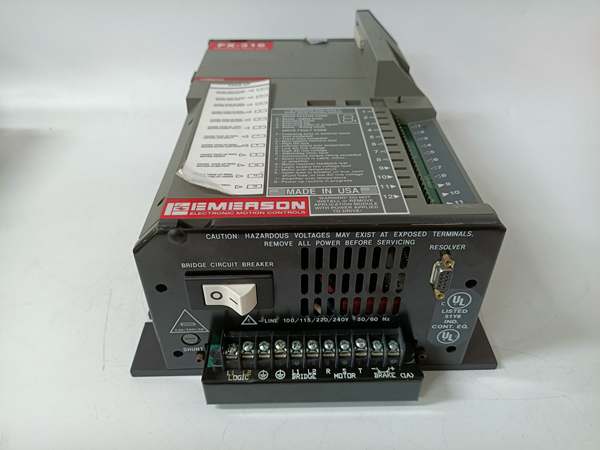
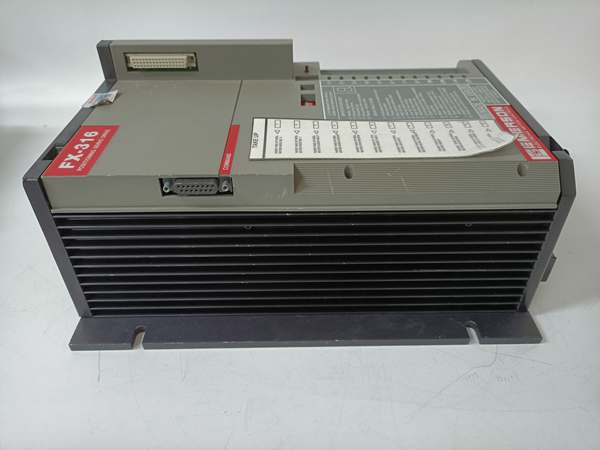
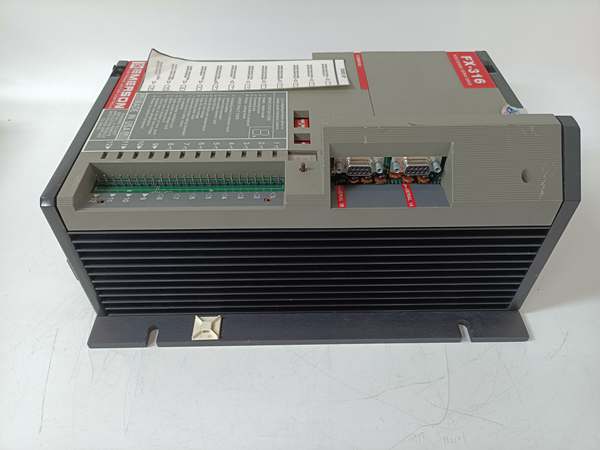
- Model Number: FX-316
- Manufacturer: Emerson Automation Solutions
- Sensing Spectrum: UV (185-260nm), Visible (400-700nm), IR (700-1100nm)
- Response Time: <100ms (flame detection), <3s (flame loss)
- Hazardous Rating: ATEX Ex d IIC T6 Ga, UL Class I Div 1 Groups B-D
- Operating Temperature: -40°C to 70°C (-40°F to 158°F)
- Power Supply: 12-24V DC, 150mA max current consumption
- Outputs: 2x SPDT relay outputs, 4-20mA analog output, RS-485 (Modbus RTU)
- Target Fuels: Natural gas, propane, diesel, heavy oil, coal, biomass
- Isolation: 500V AC channel-to-chassis
- Humidity Range: 0-95% non-condensing
- Ingress Protection: IP67
- Certifications: ATEX, UL, CSA, IECEx, FM Approved
Field Application & Problem Solved
In the field, combustion systems (boilers, turbines, furnaces) face two catastrophic risks: false flame loss signals that trigger unnecessary shutdowns, and missed flameouts that allow explosive fuel accumulation. Legacy single-spectrum (UV-only or IR-only) detectors fail here—UV units confuse rain or refractory glow for flames, while IR units miss weak biomass or low-NOx flames. This module solves both by cross-verifying signals across UV, visible, and IR spectrums—only confirming a “flame present” when all three align.
You’ll find this detector in every power plant combustion zone: coal-fired boiler burners, CCGT turbine combustors, biomass co-firing systems, and diesel backup generators. It’s also standard in refinery heaters and paper mill boilers—anywhere a flameout could lead to downtime or danger. I installed 48 of these at a Midwest coal plant that was averaging 12 unplanned shutdowns yearly due to faulty UV detectors; post-installation, false trips dropped to zero.
Its core value is reliability in messy, real-world conditions. Power plants rarely burn pure fuel—they switch between natural gas and biomass, deal with soot buildup on optics, and operate in rain/snow. This detector adapts: its multi-fuel algorithm adjusts to different flame signatures, and self-diagnostics alert you to dirty optics or sensor degradation before performance drops. Unlike legacy units, it doesn’t just “see” flames—it distinguishes them from noise, saving millions in lost generation and maintenance.
EMERSON FX-316
Installation & Maintenance Pitfalls (Expert Tips)
- Fuel Profile Calibration Is Non-Negotiable: Rookies use the default “natural gas” setting for all fuels—big mistake. I saw a biomass plant miss three flameouts because the detector was calibrated for gas, not wood pellets (weaker UV, stronger visible). Use the configuration software to select the exact fuel (or “mixed fuel” for co-firing) and verify with a portable flame simulator.
- Optic Cleaning Isn’t Optional: Soot, oil, or water on the quartz window blocks 30% of light in 6 months—leading to delayed detection or false faults. A Texas refinery ignored this and had a small flameout escalate to a fuel leak. Clean monthly with isopropyl alcohol and a lint-free cloth; never use abrasives.
- Wiring Separation Prevents Interference: Running detector wiring with high-voltage boiler cables induces noise, causing erratic relay trips. Keep 12+ inches of separation, use shielded twisted-pair cable, and ground the shield only at the DCS end (double grounding creates loops). I fixed a Florida plant’s false alarms by rewiring 20 detectors to follow this rule.
- Relay vs. Software Shutdowns: Never rely solely on Modbus for safety shutdowns. Hardwire the detector’s relay outputs directly to the fuel shutoff valve—if communication fails, the relay still drops power. A Northeast plant learned this the hard way when a network glitch blocked the software signal during a flameout.
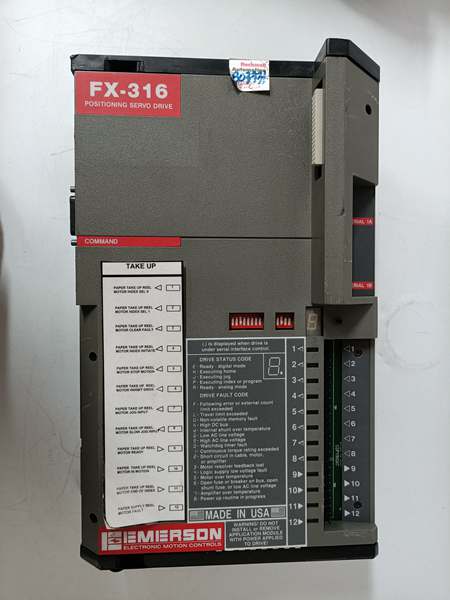
EMERSON FX-316
Technical Deep Dive & Overview
The FX-316 is a purpose-built safety module, not a generic sensor. It uses three independent sensors—UV photodiode, visible CMOS, and IR pyroelectric detector—each feeding data to a 32-bit microcontroller. The microcontroller runs Emerson’s proprietary flame-recognition algorithm, which compares real-time sensor data to stored fuel profiles. This “triple-verification” logic is why it outperforms single/dual-spectrum detectors: rain reflects UV but not IR/visible; refractory glow emits IR but no UV; the algorithm rejects these false positives.
The module’s explosion-proof cast aluminum housing is engineered for Class I Div 1 areas, with glass-to-metal seals that prevent gas ingress. A built-in self-test runs every 24 hours, checking sensor functionality and wiring integrity, and sends diagnostic data via Modbus to the DCS—you’ll see alerts for “optic blockage,” “sensor drift,” or “power loss” before they affect performance.
The relay outputs are fail-safe (de-energize on fault), ensuring fuel valves close even if the detector loses power. The 4-20mA output provides flame intensity data, letting operators monitor combustion stability, while the RS-485 port integrates diagnostics into the plant’s HMI. Unlike legacy detectors that require manual calibration yearly, the FX-316 auto-compensates for minor sensor drift, reducing maintenance time by 70%. It’s not just a flame detector—it’s a self-monitoring safety system that works as hard as the technicians maintaining it.