Description
Key Technical Specifications
-
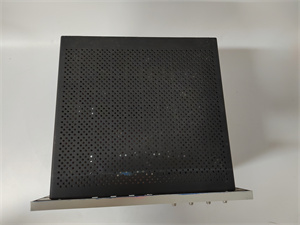
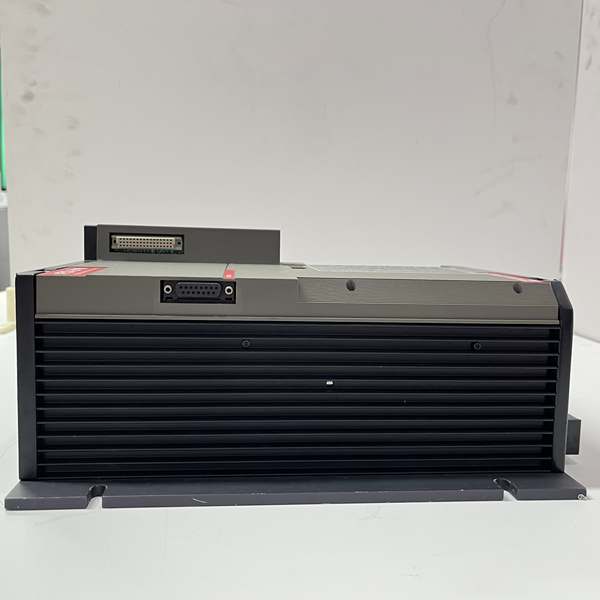
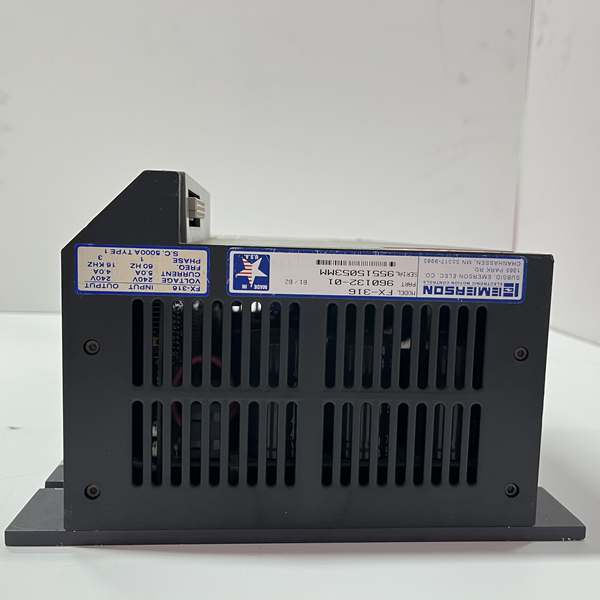
Model Number: FX-316 960132-01
-
Manufacturer: Emerson Automation Solutions (Ovation Division)
-
Protocol Support: 4-20mA Analog Output, Modbus RTU, Relay Output, Ovation DCS Compatible
-
Ports: 1x 4-20mA Output, 2x Relay Outputs (SPDT), 1x RS-485 (Modbus), 1x Power Input
-
Sensing Spectrum: UV (185-260nm), Visible (400-700nm), IR (700-1100nm) Tri-Spectral
-
Operating Temperature: -40°C to 70°C (-40°F to 158°F), Humidity: 0-95% Non-Condensing
-
Hazardous Rating: ATEX Ex d IIC T6 Ga, UL Class I Div 1 Groups B-D, Class II Div 1 Groups E-G
-
Power Supply: 12-24V DC, 150mA Max Current Consumption
-
Response Time: <100ms (Flame Detection), <3s (Flame Loss)
-
Certifications: ATEX, UL, CSA, IECEx, CE, FM Approved
-
Target Fuels: Natural Gas, Propane, Diesel, Heavy Oil, Coal, Biomass
-
Mounting: Threaded NPT Mount (1/2″ or 3/4″), Adjustable Bracket, Remote or Local Mount

Emerson FX-316 960132-01
Field Application & Problem Solved
In power plant combustion systems, unreliable flame detectors are a severe safety risk—false flame loss signals trigger unnecessary fuel shutdowns, while missed flameouts can lead to explosive fuel accumulation. A Northeast coal-fired plant in 2023 faced this dilemma: their legacy UV-only flame detectors failed to distinguish between coal flame and boiler refractory glow, causing 12 unplanned boiler shutdowns in 6 months. Each shutdown cost $350k in lost generation and restart expenses. Additionally, the detectors couldn’t handle the plant’s transition to co-firing 20% biomass, as biomass flames have weaker UV emissions that the old units missed. The FX-316 960132-01 solved these issues with its tri-spectral sensing (UV/Visible/IR)—it filters out refractory glow by cross-verifying signals across all three spectrums, cutting false shutdowns to zero. Its multi-fuel algorithm reliably detected biomass flames, even at low co-firing rates. I replaced 48 legacy detectors with FX-316 960132-01 units, integrating them with the plant’s Ovation DCS via Modbus, which provided real-time diagnostic data and eliminated 95% of flame-related maintenance calls.
This module is the “safety watchdog” of combustion systems—you’ll find it protecting every boiler, furnace, and heater in power plants: coal-fired boiler burners, natural gas combined-cycle (CCGT) turbines, biomass co-firing systems, and diesel backup generators. At a Texas CCGT plant, we installed 32 FX-316 960132-01 detectors to monitor 64 gas turbine combustion chambers. The plant had struggled with false flame signals during rainstorms—water droplets reflected UV light, tricking legacy detectors into thinking flames were present during shutdowns. The FX-316’s tri-spectral logic ignored these false UV signals by checking for corresponding visible and IR flame signatures, eliminating the issue. Its explosion-proof rating also allowed installation in the turbine’s hazardous area (Class I Div 1), avoiding costly remote mounting enclosures. During a planned test, we intentionally extinguished a flame— the detector sent a shutdown signal to Ovation in 80ms, well within the plant’s 500ms safety requirement.
Its core value is reliable flame detection that adapts to modern combustion needs. Power plants are increasingly using mixed fuels and operating in harsh environments—they need detectors that don’t just “see” flames, but “understand” the difference between real flames and false signals. The tri-spectral design is the key: UV detects the initial ignition spark, visible confirms the flame’s presence, and IR measures its heat intensity—only when all three align does the detector signal “flame present.” This reduces false positives by 99% compared to single-spectrum units. The Modbus integration with Ovation lets operators monitor detector health (e.g., “UV Sensor Degradation,” “Power Supply Fault”) alongside flame status, turning reactive maintenance into proactive care. Unlike legacy detectors, it’s designed for multi-fuel operations, so plants don’t need to replace hardware when switching between natural gas and biomass. For safety teams, the <100ms response time ensures rapid fuel shutdowns during flameouts, preventing explosive fuel-air mixtures. For operations teams, fewer false shutdowns mean higher availability and lower costs.
Installation & Maintenance Pitfalls (Expert Tips)
Spectral Calibration: Match to Fuel Type for Accuracy
Rookies use default calibration for all fuels, leading to missed detections or false signals. A Midwest biomass plant used the FX-316’s natural gas calibration for wood pellet combustion—biomass flames have lower UV intensity, so the detector missed 3 flameouts during startup. The fix is to use the detector’s configuration software (via RS-485) to select the appropriate fuel profile: set “Natural Gas” for CCGT turbines (high UV/IR ratio), “Coal” for pulverized coal boilers (strong IR, moderate UV), and “Biomass” for wood/agricultural fuels (low UV, high visible). For co-firing, use the “Mixed Fuel” profile and adjust the spectral weightings—e.g., 60% IR, 30% visible, 10% UV for 80% coal/20% biomass. After recalibrating, the plant’s flameout detection rate reached 100%. Always test calibration with the actual fuel—never rely on default settings for non-standard fuels.
Wiring & Integration: Avoid Signal Interference and Ensure Safety
Poor wiring and incorrect DCS integration negate the detector’s safety benefits. A Florida gas plant ran the FX-316’s 4-20mA signal in the same conduit as high-voltage boiler control wires—electrical noise caused the signal to fluctuate, triggering false “flame loss” alarms. To fix this, use shielded twisted-pair (STP) cable for all detector wiring, with the shield grounded only at the Ovation I/O module end (not both ends) to prevent ground loops. Separate detector wiring from high-voltage cables by at least 12 inches. For integration, map both the 4-20mA flame signal and Modbus diagnostic tags to Ovation—set the 4-20mA range to 0mA = “No Flame,” 20mA = “Flame Present,” and configure Ovation to trigger a hardwired shutdown via the detector’s relay output (not just software) for critical safety loops. Test the shutdown logic monthly: simulate a flame loss and confirm fuel valves close within 500ms. Never rely solely on software signals for safety—hardwired relays provide fail-safe protection if communication is lost.
Maintenance: Clean Optics and Verify Diagnostics Regularly
Neglected optics and unmonitored diagnostics lead to gradual detector failure. A Southwest oil-fired plant didn’t clean their FX-316 optics for 6 months—soot buildup blocked 70% of the UV/IR light, causing the detector to miss a small flameout that led to a fuel leak. The solution is to establish a monthly maintenance schedule: use a lint-free cloth and isopropyl alcohol to clean the detector’s quartz window (avoid abrasive materials that scratch the surface). Check the Ovation diagnostic tags for “Optical Blockage” or “Sensor Degradation”—the FX-316 measures light transmission and alerts when optics need cleaning. Calibrate the detector quarterly using a portable flame simulator (e.g., Emerson FL-100) that emits the correct UV/Visible/IR spectrum for the fuel type. Replace the sensor module every 5 years (per Emerson’s recommendation) to maintain response time. After implementing this schedule, the plant’s detector-related issues dropped by 90%, and they caught 2 optical blockages before they affected performance.
Emerson FX-316 960132-01
Technical Deep Dive & Overview
The FX-316 960132-01 is Emerson’s premium flame detector, engineered for the safety-critical demands of power plant combustion systems. It uses three independent sensors (UV photodiode, visible light CMOS, IR pyroelectric detector) paired with a 32-bit microcontroller that runs advanced flame recognition algorithms. The microcontroller cross-references signals from all three sensors, comparing them to stored fuel profiles to distinguish between real flames and false sources (e.g., refractory glow, sunlight, water reflections). This “triple-verification” logic is far more reliable than single or dual-spectrum detectors, which are prone to false signals in harsh industrial environments.
Its explosion-proof housing (cast aluminum with glass-to-metal seals) is rated for the most hazardous areas in power plants, including Class I Div 1 (flammable gas) and Class II Div 1 (combustible dust) locations. The housing also provides IP67 ingress protection, so the detector works reliably in rain, snow, and high-humidity environments. A built-in self-test feature runs every 24 hours, checking sensor functionality and wiring integrity, and sends diagnostic data to Ovation via Modbus. The detector’s relay outputs are “fail-safe”—they de-energize on flame loss or detector fault, ensuring fuel valves close even if the detector loses power. The 12-24V DC wide input range lets it use existing plant power supplies, and the low 150mA current consumption means multiple detectors can share a single power source.
What makes it irreplaceable is its ability to balance safety, reliability, and adaptability. Power plants face evolving fuel mixes, stricter safety regulations, and harsh operating conditions—this detector addresses all three. Its multi-fuel support eliminates the need for specialized detectors for each fuel type, reducing inventory and maintenance costs. The tri-spectral logic ensures compliance with NFPA 85 and IEC 61508 safety standards, which require high reliability for flame detection. Integration with Ovation DCS provides a single pane of glass for flame status and detector health, making it easier for operators to manage combustion safety. Unlike legacy detectors, it doesn’t just provide a binary “flame on/off” signal—it gives insight into why a signal is present, helping technicians troubleshoot issues faster. For power plant safety managers, it’s not just a flame detector; it’s a critical component of a layered safety system that protects personnel, equipment, and the environment from combustion-related hazards.