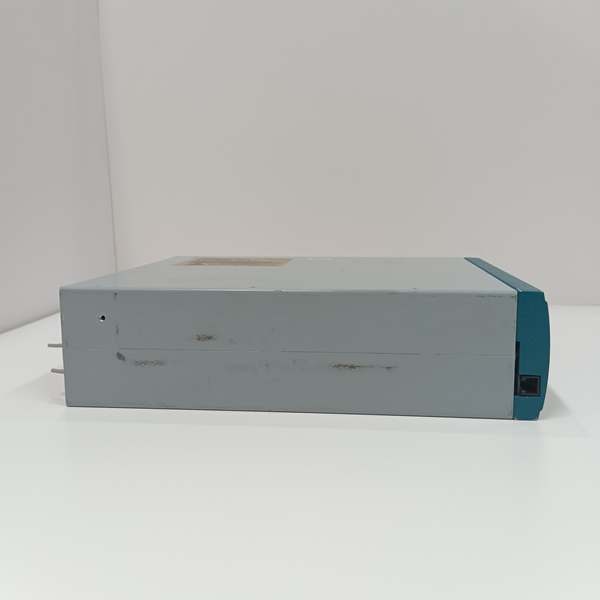
Description
Key Technical Specifications
-
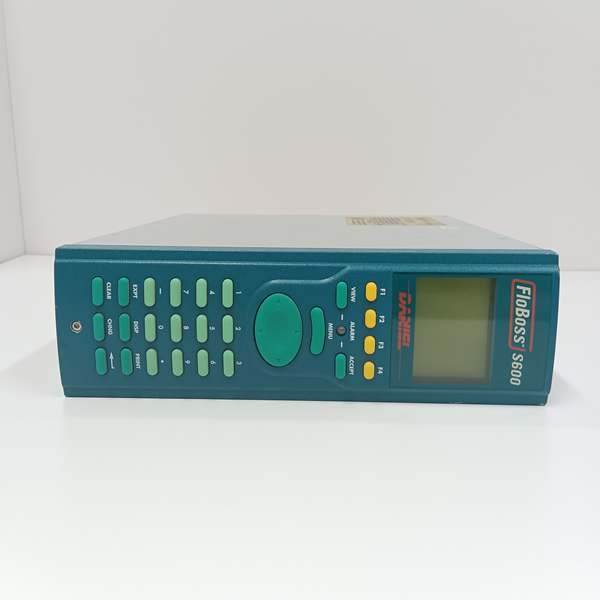
Model Number: FloBoss S600
-
Manufacturer: Emerson Automation Solutions
-
Stream Capacity: Up to 8 independent liquid/gas flow streams
-
Calculation Engine: 64-bit floating-point processor, ±0.005% calculation accuracy
-
Protocol Support: Modbus RTU/TCP, HART v7, Ethernet TCP/IP, DNP3
-
Compliance Standards: AGA 3/7/8/9, API 21.1, ISO 5167, MID 2004/22/EC
-
Operating Temperature: -10°C to 60°C (14°F to 140°F), -40°C to 85°C storage
-
Power Supply: 100-240V AC ±10% or 24V DC ±20%, 25W max power consumption
-
Input/Output: 12 HART channels, 8 pulse inputs, 4 analog outputs, 8 digital I/O
-
Data Storage: 8GB internal memory, tri-reg redundant cumulative total storage
-
Physical Dimensions: 482.6mm (W) × 177.8mm (H) × 304.8mm (D), 19-inch rack-mount
- Certifications: ATEX Zone 2, IECEx, UL 508C, CE, FM Approved
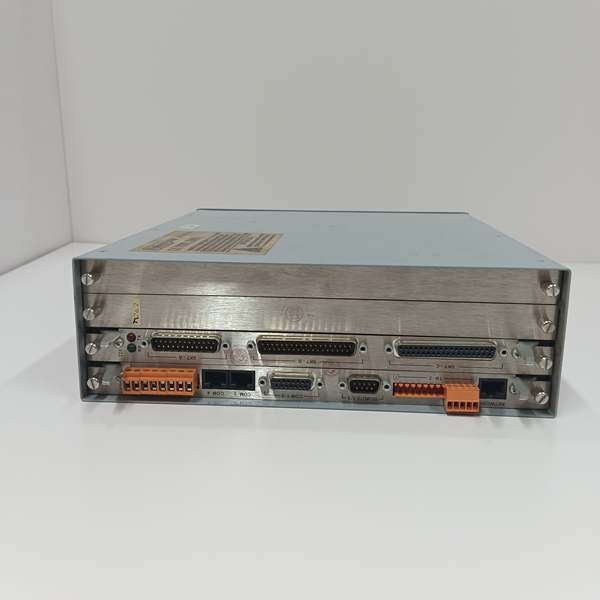
EMERSON FLOBOSS S600
Field Application & Problem Solved
In oil and gas custody transfer—where every 0.1% metering error can cost six figures annually—the biggest pain points are reconciling multi-stream data, complying with global standards, and preventing fiscal data loss. I saw this at a Gulf Coast refinery in 2023: legacy single-stream meters forced operators to manually aggregate 6 fuel streams, leading to a 0.3% calculation error that cost $2.1M in misplaced revenue. The FloBoss S600 solves this by centralizing 8 streams in one unit, using 64-bit calculations to cut uncertainty to ±0.005%, and storing data redundantly to avoid audit failures.
You’ll find this unit in three critical spots: pipeline terminals loading crude onto tankers (where MID compliance avoids customs penalties), refineries tracking gasoline/diesel output (where API 21.1 alignment satisfies regulatory audits), and cross-border gas pipelines (where it switches seamlessly between AGA and GOST standards). At a Canadian oil sands facility in 2024, we replaced 5 legacy meters with one FloBoss S600—eliminating manual data entry errors and cutting audit preparation time from 2 weeks to 2 days. It’s the backbone of fiscal metering where accuracy isn’t just important—it’s contractual.
Its core value is “compliant precision.” Unlike generic flow computers, it doesn’t require custom code to meet AGA or API standards—preloaded algorithms reduce setup time and error risk. The tri-reg memory stores cumulative totals in three independent banks; even a power surge won’t corrupt fiscal data. By offloading complex pressure/temperature corrections from SCADA systems, it ensures real-time metering data is always available for billing. For operations where “close enough” leads to lawsuits, it’s the only tool that combines calculation accuracy with the compliance paperwork needed to back it up.
Installation & Maintenance Pitfalls (Expert Tips)
Mismatched Calculation Standards Kill Compliance
Rookies often set the wrong standard for the fluid type—e.g., using AGA 3 (turbine meters) for gas measured with ultrasonic meters (AGA 9). A Texas pipeline did this; 6 months of billing used incorrect factors, leading to a $800k revenue adjustment. Always match the standard to the meter and fluid: AGA 8 for gas composition, API 21.1 for refined liquids, ISO 5167 for orifice plates. After setup, test with a calibration fluid: if measuring propane, inject a known volume and confirm the FloBoss S600’s total matches the reference—any discrepancy means a wrong standard or sensor input.
HART Network Termination Causes Signal Dropouts
The FloBoss S600’s 12 HART channels support 50 transmitters, but unterminated loops cause signal reflections. A Pennsylvania refinery skipped terminators; pressure sensors sent erratic data, making flow calculations fluctuate by 5%. Install 250-ohm terminators at the end of each HART loop—use Emerson’s HART termination kit (P/N 08000-0105) for rugged environments. Check signal strength via the web GUI: HART signals should be 0.8-2.2mA with
Redundant Power Needs Separate Sources
Dual power supplies only work if wired to separate sources—wiring both to the same plant bus is a rookie mistake. A Louisiana chemical plant did this; a voltage surge fried the bus, taking down 24 temperature sensors and forcing a reactor shutdown. Wire each supply to independent power paths: e.g., Supply 1 to Plant A UPS, Supply 2 to Plant B utility power. Enable “power failover logging” and HMI alerts—you need to know immediately if one supply drops. Test monthly by unplugging one supply: confirm the switch stays online, logs the event, and triggers the alert.

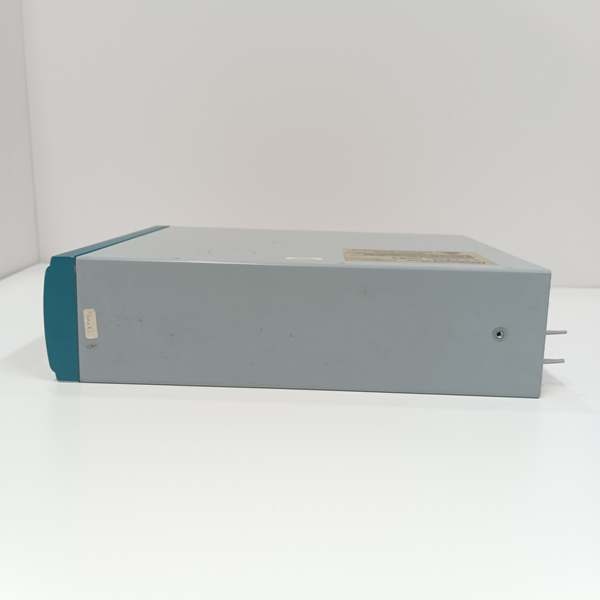
EMERSON FLOBOSS S600
Technical Deep Dive & Overview
The Enterasys A4H124-24TX P0973JM is a rugged managed switch built for the heart of industrial control networks, centered on a 300MHz network processor that handles Layer 2/Layer 3 tasks without latency spikes. Its non-blocking 48Gbps fabric ensures full throughput across all 24 PoE+ ports and 4 SFP slots—critical for time-sensitive PLC data (which needs sub-10ms latency) and high-definition camera feeds.
PoE+ functionality is driven by integrated power sourcing equipment (PSE) circuits that dynamically allocate power to ports, preventing overloads via real-time load monitoring. The fanless design uses a thick aluminum chassis as a heat sink, eliminating moving parts that fail in dusty or vibrating areas—no more cleaning fan filters in coal dust. The 4 SFP slots support single-mode fiber (10km) for long-distance links to core DCS systems or multimode fiber (2km) for plant-wide connections, avoiding signal degradation from EMI.
What makes it industrial-grade is its environmental hardening: -40°C operation works in unheated Arctic cabinets, while 75°C tolerance fits desert refineries. It integrates natively with Modbus TCP, so it talks directly to Allen-Bradley, Siemens, and Emerson PLCs without protocol converters. Management via Web GUI, CLI, or SNMP lets technicians configure VLANs, QoS, and PoE priority remotely—cutting trips to hazardous areas. This isn’t just a network switch; it’s a reliable component of the control system, engineered to outlast the harsh conditions around it.