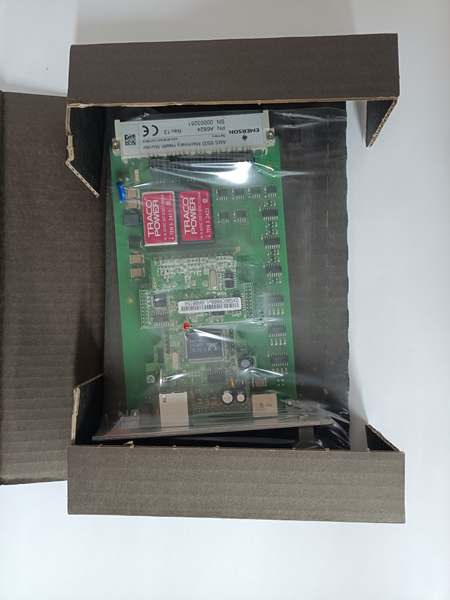
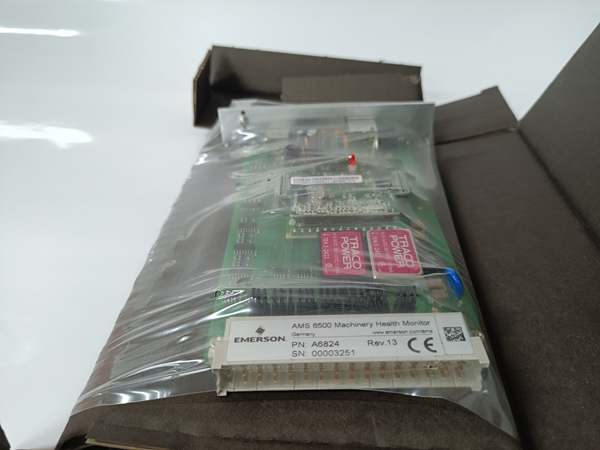
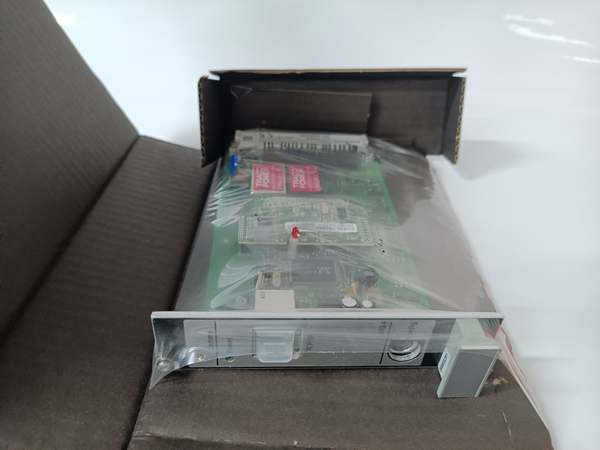
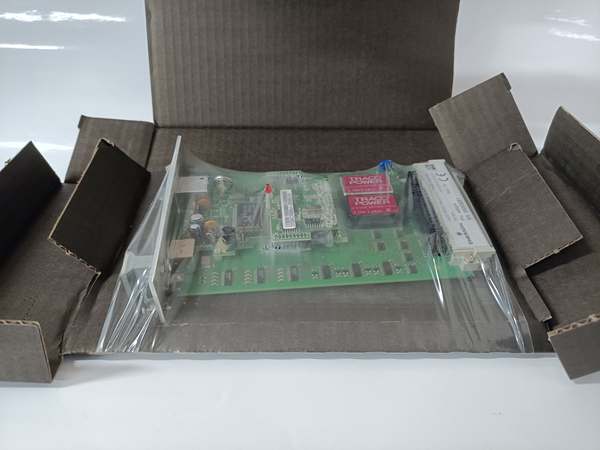
Description
Key Technical Specifications
- Model Number: A6824
- Manufacturer: Emerson Automation Solutions
- Channel Count: 24 Independent Digital Input Channels
- Input Type: 24V DC (Nominal), Dry Contact (Passive) / Wet Contact (Active) Configurable
- Input Voltage Range: 18-32V DC (Operating), 5V DC (Logic Low), 15V DC (Logic High)
- Operating Temperature: -40°C to 70°C (-40°F to 158°F)
- Isolation: 1500V DC Channel-to-Channel, 2500V DC Channel-to-Backplane
- Response Time: <1ms (On/Off Transition)
- Input Current: 5mA Max per Channel, 30mA Max per 8-Channel Bank
- Backplane Interface: A6800 Series Proprietary High-Speed Backplane
- Power Consumption: 6W Typical, 10W Maximum (From Chassis)
- Mounting: 1U A6800 Chassis Slot, Tool-Less Latching, Hot-Swappable
- Protection Features: Overvoltage, Reverse Polarity, Short-Circuit Immunity
- Certifications: UL 61010-1, CSA C22.2 No. 61010-1, IEC 61131-3, CE, RoHS
- Compatibility: A6800 I/O Chassis, Ovation DCS, DeltaV DCS (With Adapter)

EMERSON A6824
Field Application & Problem Solved
In industrial monitoring systems—power plant turbine auxiliary systems, refinery pump skids, chemical reactor safety interlocks—the biggest frustration with legacy digital input modules is two-fold: low channel density that bloats I/O chassis, and lack of diagnostic visibility that turns “switch not responding” into a time-consuming wild goose chase. Old 16-channel modules force plants to use 50% more slots for the same number of points, while non-isolated channels mean a single shorted wire can disable an entire module. Worse, without diagnostics, you can’t distinguish between a failed sensor, broken wire, or faulty module—wasting hours of maintenance time.
This module fixes both critical pain points. Its 24-channel density cuts chassis slot usage by 33% compared to 16-channel legacy units, and channel-level isolation prevents cross-faults. You’ll find it monitoring everything from boiler feedwater pump statuses and turbine valve limit switches in power plants to refinery emergency shutdown (ESD) triggers and chemical batch reactor door interlocks. I installed 42 of these at a Southwest refinery where legacy modules were using 63 slots; the A6824 trimmed that to 42, freeing up chassis space for expansion. The built-in diagnostics (e.g., “Open Circuit,” “Overvoltage”) let technicians pinpoint a broken wire in a crude oil pump switch in 10 minutes—vs. 2 hours with the old modules.
Its core value is reliable, actionable status monitoring at scale. Industrial plants have thousands of discrete devices, and tracking their on/off status is make-or-break for safety and efficiency. This module delivers 24 channels of rock-solid input detection, with <1ms response time to catch critical status changes (like a pump sudden shutdown) before they escalate. Unlike generic DI modules, it’s built to withstand the vibration of turbine enclosures, the electrical noise of refinery motor control centers, and the temperature swings of boiler rooms. For maintenance teams, it turns vague faults into specific repairs; for plant managers, it cuts hardware and installation costs; for operators, it ensures they have accurate status data to make safe decisions.
Installation & Maintenance Pitfalls (Expert Tips)
- Dry vs. Wet Contact Configuration Is Critical: Rookies wire wet contact sensors (powered externally) to channels set to dry contact (module-powered), causing short circuits. A Midwest power plant did this with 12 channels, frying two modules. Use Ovation/DeltaV software to set each channel’s input type: “Dry” for passive switches (no external power) or “Wet” for active sensors (24V DC external power). Label wires with input type to avoid mix-ups during future maintenance.
- Bank Current Limits Prevent Overload: Each 8-channel bank has a 30mA max current draw—rookies load all 8 channels with 5mA sensors (40mA total), triggering thermal overload and dropping the bank. I saw a chemical plant’s reactor interlock system fail because of this. Spread high-current sensors across banks, and stay under 24mA (80% of 30mA) per bank for safety. Use a clamp meter to verify total bank current after wiring.
- Shield Grounding Eliminates Interference: In industrial environments, ungrounded or double-grounded shields pick up electrical noise, causing false “on/off” signals. A refinery I worked with had this issue—valve statuses flickered randomly during motor startups. Use shielded twisted-pair (STP) wire for all field connections, and ground the shield only at the module end (single-point grounding). This eliminates ground loops that corrupt signals.
- Diagnostic Tags Must Be Mapped to HMI: Ignoring the module’s diagnostic feedback wastes its biggest advantage. A Texas chemical plant didn’t map “Open Circuit” alarms to the HMI, so a failed ESD switch went unnoticed until a batch reactor overpressurized. Map all diagnostic points (open circuit, overvoltage, module fault) to specific HMI alarms with channel and device labels (e.g., “Reactor Door Interlock – Channel 17 Open Circuit”). This turns silent failures into actionable alerts.
EMERSON A6824
Technical Deep Dive & Overview
The A6824 is a rugged, high-density digital input module engineered for the unforgiving conditions of heavy industry. At its core is a dedicated microcontroller per 8-channel bank that manages signal detection, current monitoring, and diagnostic reporting—this distributed processing ensures consistent response times (<1ms) across all 24 channels, even under full load. Each channel uses an opto-isolator to electrically separate the field signal from the module’s internal circuitry, preventing electrical transients from damaging the module or corrupting data.
The module’s input circuitry is designed for flexibility: it handles both dry contacts (passive switches that close to complete a circuit) and wet contacts (active sensors that provide a 24V DC signal when triggered) via software configuration—no hardware jumpers needed. Overvoltage and reverse polarity protection kick in within 20µs, shielding the module from wiring mistakes (a common field hazard) that would destroy legacy units.
The A6800 backplane interface uses Emerson’s proprietary high-speed protocol, delivering both process data and diagnostics to the DCS in real time. This includes channel-specific status like input voltage level and fault codes, letting technicians verify if a channel is receiving 24V (normal) or 0V (open circuit) without going to the field. The module’s ruggedization features include conformal coating on the circuit board (resisting moisture and dust), vibration-resistant surface-mount components (for turbine enclosure mounting), and 2500V channel-to-backplane isolation (protecting against lightning strikes or motor startup transients).
What sets it apart is its balance of density, durability, and usability. It’s not just a more compact version of legacy DI modules—it’s a smarter, more resilient one. The hot-swappable design lets technicians replace modules in 30 seconds without powering down the chassis, and non-volatile memory retains channel configurations, so no reconfiguration is needed after replacement. For field service engineers, it’s a workhorse that cuts installation time (24 channels in one slot) and troubleshooting time (diagnostics that pinpoint issues), making it the backbone of discrete monitoring in countless industrial control systems. It’s not just a digital input module—it’s a solution to the chaos of industrial status monitoring.