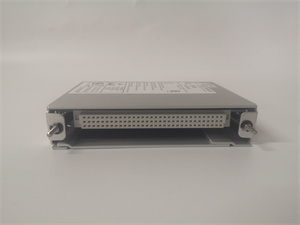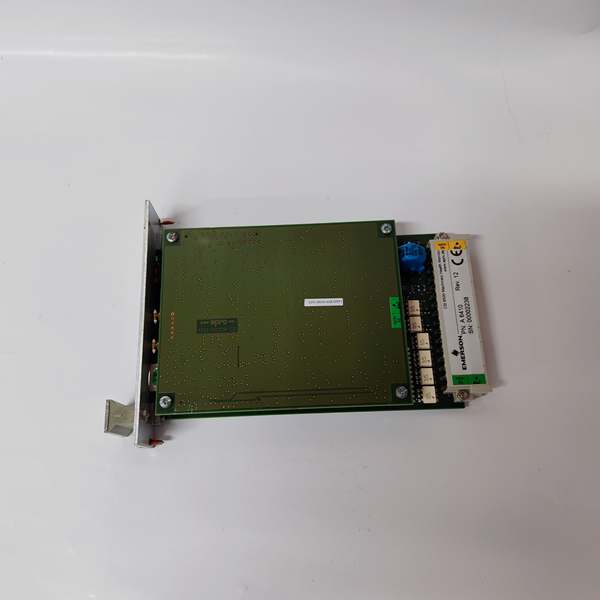
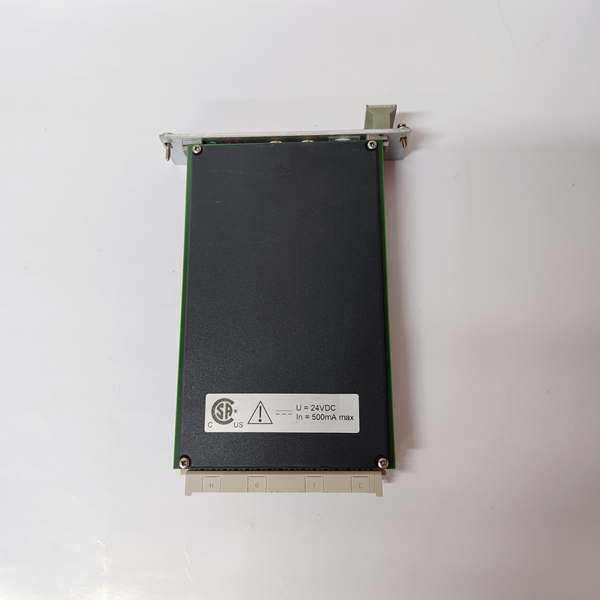
Description
Key Technical Specifications
-
Model Number: A6410
Field Application & Problem Solved
Modern industrial networks face a double challenge: connecting dozens of PoE-enabled devices (like IP cameras, wireless access points, and smart sensors) while ensuring zero downtime for critical control data. I was called to a Canadian oil sands facility in 2024 where consumer-grade switches failed repeatedly—they couldn’t handle the -35°C winter temperatures, and a single port failure took down a section of the SCADA network. The A6410 solves this: it’s built to survive harsh conditions, delivers reliable PoE power to field devices, and uses redundancy protocols to eliminate single points of failure. Unlike office switches, it prioritizes control traffic over non-essential data, so a large file transfer won’t delay turbine speed signals.
You’ll find this switch at the heart of industrial networks: DeltaV DCS racks in chemical plants, wind farm SCADA systems, refinery tank farm monitoring setups, and nuclear power plant auxiliary controls. At a Texas offshore platform, we installed two A6410s in a PRP redundancy pair to connect 32 vibration sensors and 8 IP cameras. When a hurricane damaged one of the switch’s SFP uplink ports, the PRP protocol automatically rerouted traffic in under 5ms—no data loss, no process upset. The switch’s PoE+ ports powered the cameras and sensors directly, eliminating the need for separate power supplies in the platform’s tight cable trays.
Its core value is “network resilience with simplicity.” Industrial teams don’t have the luxury of IT departments dedicated to network maintenance—they need a switch that’s easy to configure but tough enough to run unattended. The A6410’s web GUI uses industrial terminology (not IT jargon), so control engineers can set up VLANs and redundancy without training. Its dual power inputs and rugged design mean it keeps running during power surges or temperature swings that would take down commercial switches. For IIoT deployments, it supports NetFlow to monitor data traffic, helping teams identify bottlenecks before they affect operations. It’s not just a network device; it’s a critical part of the plant’s reliability infrastructure.

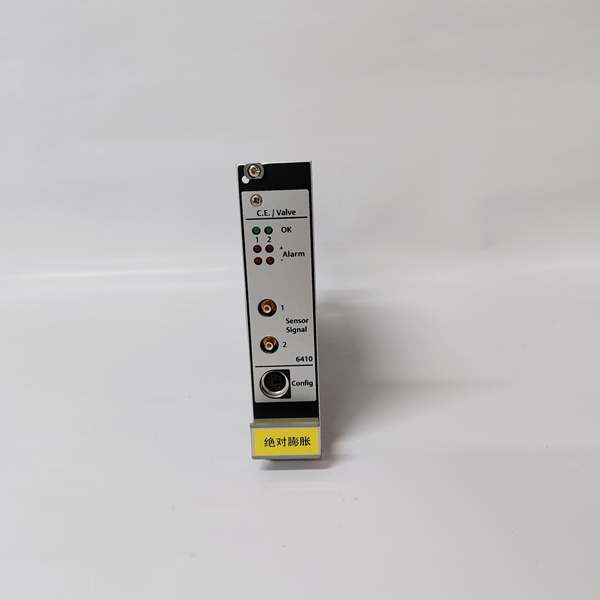
EMERSON A6410
Installation & Maintenance Pitfalls (Expert Tips)
PoE Power Budget: Don’t Overcommit Ports
Rookies plug 24x 30W devices into the A6410-24P, forgetting its 370W total PoE budget—this causes the switch to shut down non-critical ports unexpectedly. A Florida water treatment plant made this mistake, taking down 8 flow sensors when they added new IP cameras. Calculate your power needs upfront: most sensors use 5-15W, while PTZ cameras use 25-30W. Use the A6410’s “PoE priority” feature to assign critical devices (like DCS HMIs) to high priority—these ports get power first if the budget is exceeded. Enable power management alerts in AMS Device Manager to get notified when usage hits 80% of the budget. For high-power devices, use non-PoE ports with external power supplies to free up budget.
Redundancy Setup: MRP Rings Need Proper Configuration
Configuring MRP rings with multiple “manager” switches causes network loops and crashes. A Pennsylvania steel mill had three A6410s set as ring managers, leading to a 2-hour shutdown. Each MRP ring needs exactly one manager switch and the rest as clients. The manager monitors the ring health and opens a port if a loop is detected. Set the ring recovery time to 20ms (the minimum) for critical control networks—this ensures DCS data doesn’t drop out during a failover. Test the ring monthly by unplugging a cable: the switch’s “Ring Status” LED should change from green to yellow for 20ms, then back to green. If recovery takes longer, check for firmware updates—older versions had slower failover times.
SFP Modules: Use Industrial-Grade Transceivers
Using consumer-grade SFP modules in the A6410’s uplink ports causes intermittent connectivity issues in harsh environments. A Wyoming coal plant used $20 Amazon SFPs, which failed every 2-3 months in the plant’s dusty, vibrating control room. Emerson’s industrial SFPs (e.g., A6SFP-10G-SR) are temperature-rated to match the A6410 (-40°C to 75°C) and have better EMI shielding. They also include digital diagnostic monitoring (DDM), so you can track the module’s temperature and signal strength via the switch’s GUI. When installing SFPs, push until you hear a click—partial insertion is a common cause of “link down” faults that take hours to diagnose.
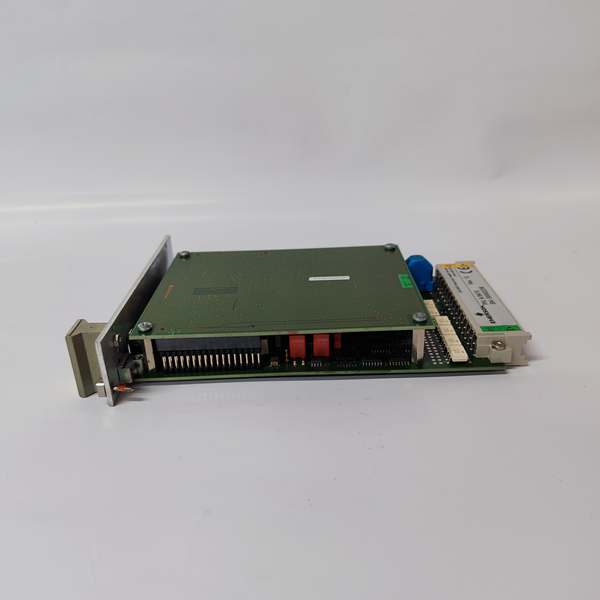
EMERSON A6410
Technical Deep Dive & Overview
-
Port Configuration: Configurable 24x 10/100/1000BASE-T (PoE+) + 4x 1/10GBASE-X (SFP+) uplink ports
-
Manufacturer: Emerson Automation Solutions
-
Switching Capacity: 56 Gbps
-
PoE Support: PoE+ (IEEE 802.3af/at), 30W per port, 370W total power budget
-
Redundancy Protocols: MRP (Media Redundancy Protocol), PRP (Parallel Redundancy Protocol), RSTP/STP
-
Forwarding Rate: 41.7 Mpps
-
Power Supply: Dual redundant 24V DC / 48V DC / 110V AC inputs
-
Operating Temperature: -40°C to 75°C (-40°F to 167°F)
-
Management: Web GUI, CLI, SNMP v3, Emerson AMS Device Manager, NetFlow
-
Protection Rating: IP30 (rack-mount), IP67 (with optional enclosure)
-
Mounting: 1U rack-mount, DIN-rail compatible
-
EMC Compliance: IEC 61000-4-2 (ESD ±15kV), IEC 61000-4-4 (EFT ±2kV), IEC 61000-4-5 (Surge ±2kV)
The A6410 is a Layer 2/Layer 3 managed switch designed for the unique demands of industrial networks. It uses a high-performance ASIC (application-specific integrated circuit) to process packets in hardware, ensuring deterministic latency (less than 50µs) for time-sensitive control traffic. Unlike Layer 2-only switches, its Layer 3 capabilities let you route traffic between VLANs, eliminating the need for a separate router in small to mid-sized plants.
Its PoE+ ports simplify device installation by delivering both data and power over a single Ethernet cable—critical for remote locations like tank farms where running separate power lines is expensive. The dual redundant power inputs accept a wide range of voltages (24V DC to 110V AC), making it compatible with most plant power systems. The switch’s fanless design (on some models) reduces dust buildup, while the conformal-coated circuit board resists moisture and chemicals. For security, it supports 802.1X authentication and ACLs (access control lists) to block unauthorized devices from accessing control networks.
Integration with Emerson’s ecosystem sets it apart from generic industrial switches. It works seamlessly with DeltaV DCS and AMS Device Manager, so you can monitor switch health (port status, PoE usage, temperature) alongside your transmitters and valves. The switch’s firmware can be updated remotely via AMS, eliminating the need for site visits. Its rugged design and redundancy features make it ideal for mission-critical applications—from offshore oil platforms to nuclear power plants. In a world where industrial networks are the backbone of automation, the A6410 is the reliable, easy-to-manage switch that keeps data flowing—no matter what the plant throws at it.