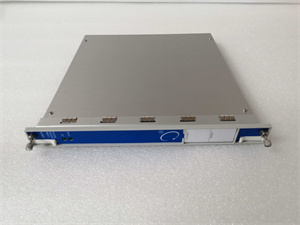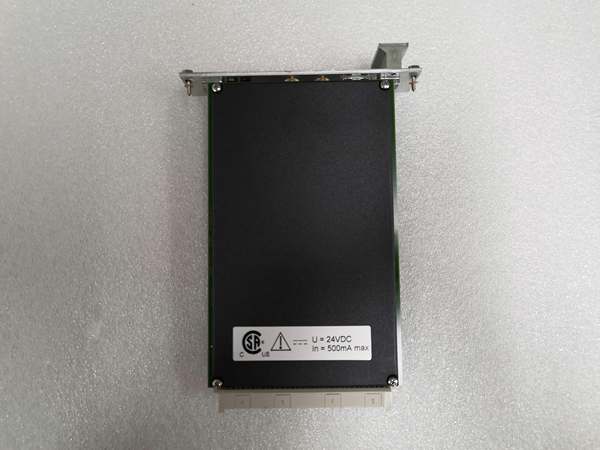
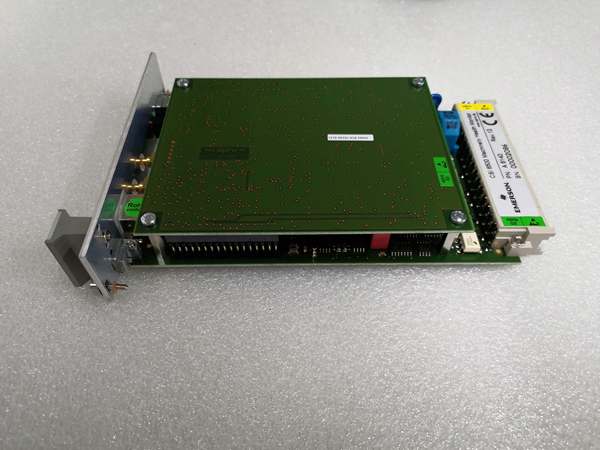
Description
Key Technical Specifications
- Model Number: A6140 9199-00058
- Manufacturer: Emerson Automation Solutions
- Channel Count: 16 Independent Digital Output Channels
- Output Type: Sourcing (Sink-Capable), 24V DC Nominal
- Output Current: 2A Per Channel, 10A Per 8-Channel Bank
- Operating Temperature: -20°C to 70°C (-4°F to 158°F)
- Isolation: 1500V DC Channel-to-Channel, 2500V DC Channel-to-Backplane
- Response Time: <1ms (On/Off Transition)
- Protection Features: Short-Circuit, Overcurrent, Thermal Shutdown
- Backplane Interface: A6100 Series I/O Backplane (Proprietary High-Speed Protocol)
- Power Consumption: 8W Typical, 12W Maximum (From Chassis)
- Mounting: 1U IEC Chassis Slot, Tool-Less Latching, Hot-Swappable
- Certifications: UL 61010-1, CSA C22.2 No. 61010-1, IEC 61131-3, CE, RoHS
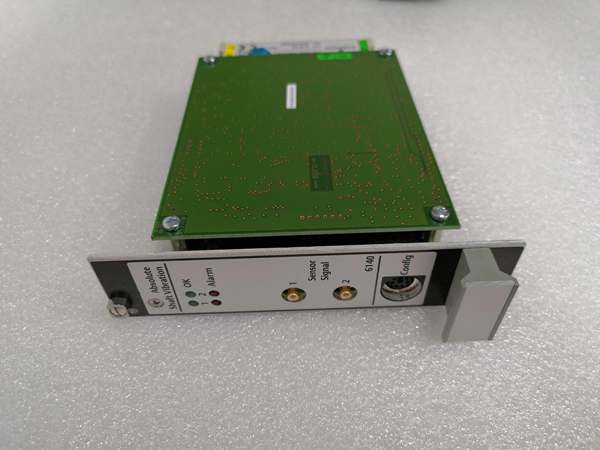
Emerson A6140 9199-00058
Field Application & Problem Solved
In industrial control systems—power plant boiler feedwater valves, refinery pump starters, paper mill conveyor drives—the biggest headache with legacy digital output modules is two-fold: limited channel density that clogs I/O chassis, and lack of diagnostic feedback that turns “valve not responding” into a 4-hour troubleshooting nightmare. Old 8-channel modules force plants to use twice as many slots, while non-isolated channels mean a single shorted wire can take down an entire module. Worse, without diagnostics, you can’t tell if a failure is the module, the wiring, or the actuator itself.
This module fixes both pain points. Its 16-channel density cuts chassis slot usage by 50% compared to 8-channel legacy units, and channel-level isolation prevents cross-faults. You’ll find it driving everything from turbine bypass valves in coal-fired plants to emergency shutdown relays in refineries—anywhere reliable, actionable output control is non-negotiable. I installed 28 of these at a Southwest refinery where legacy modules were causing 6-8 “valve stuck” false alarms monthly; post-installation, diagnostics pinpointed 3 actual wiring faults and 2 failing actuators before they caused downtime, and false alarms vanished.
Its core value is reliability paired with troubleshooting clarity. Industrial outputs can’t afford intermittent failures—this module’s 2A per-channel capacity handles most actuators without external relays, and short-circuit protection prevents burnout during wiring mistakes. The diagnostic feedback (via the A6100 backplane) tells you if a channel is shorted, overloaded, or offline—no more guessing if the problem is in the control room or the field. Unlike generic DO modules, it’s built to withstand the vibration and electrical noise of boiler rooms and pump skids, making it the workhorse for safety-critical and general-purpose output tasks alike.
Installation & Maintenance Pitfalls (Expert Tips)
- Bank Current Limits Are Non-Negotiable: Rookies load 8 channels in a bank with 2A actuators (hitting 16A) without checking the 10A per-bank limit—this triggers thermal shutdown and drops all 8 channels. I saw a power plant’s boiler feedwater system trip because of this. Spread high-current devices (e.g., 2A valves) across both 8-channel banks, and stay under 80% of the bank limit (8A) for margin. Use a clamp meter to verify total bank current after wiring.
- Common Grounding Prevents Floating Signals: Using separate grounds for each channel creates floating voltages that cause erratic on/off behavior. A refinery I worked with had this issue—valves would toggle randomly during motor startups. Tie all actuator grounds to the module’s common ground terminal (not chassis ground) and use a single-point ground for the I/O chassis. This eliminates ground loops that corrupt output signals.
- Hot-Swap Only When Chassis Is In “Maintenance Mode”: Yanking the module while the chassis is active can corrupt the backplane communication or damage the module’s output drivers. A paper mill technician learned this the hard way, frying two modules in a year. Put the A6100 chassis in “Maintenance Mode” via the DCS before swapping—this isolates the module and prevents voltage spikes during removal/installation.
- Diagnostic Tags Must Be Mapped to HMI: Ignoring the module’s diagnostic feedback wastes its biggest advantage. A Midwest chemical plant didn’t map “Channel Short-Circuit” tags to the HMI, so a shorted wire in a reactor shutdown valve went undetected until the valve failed to actuate. Map all diagnostic points (short-circuit, overcurrent, module fault) to specific HMI alarms with channel and device labels—this turns vague faults into actionable repairs.
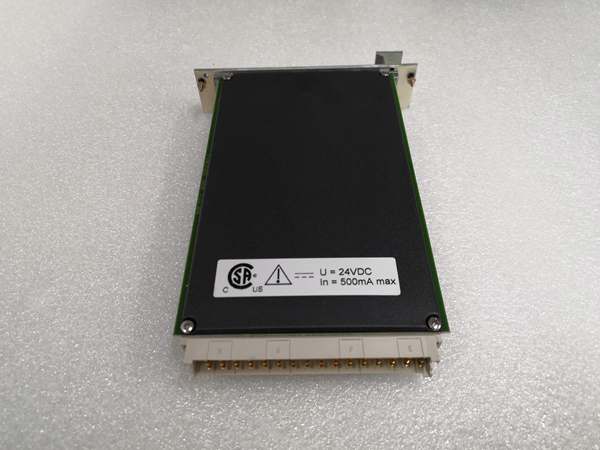
Emerson A6140 9199-00058
Technical Deep Dive & Overview
The A6140 9199-00058 is a rugged, high-performance digital output module engineered for the demands of heavy industry. At its core is a dedicated microcontroller per 8-channel bank that manages output switching, current monitoring, and diagnostics—this distributed processing ensures that a fault in one bank doesn’t affect the other, and response times stay consistent even under full load. Each channel uses a MOSFET output driver (instead of mechanical relays) for fast switching (<1ms) and long life (100 million+ cycles), eliminating relay wear that plagues legacy modules.
The module’s isolation design is critical for industrial environments: 1500V between channels prevents a shorted actuator on Channel 1 from taking down Channel 2, while 2500V between channels and the backplane protects the I/O chassis from high-voltage transients (common during motor startups or lightning strikes). The short-circuit and overcurrent protection kick in within 50µs, shutting down the affected channel without impacting others—far faster than legacy modules that wait for thermal overload.
The A6100 backplane interface uses Emerson’s proprietary protocol, delivering diagnostic data (channel current, fault status) to the DCS in real time. This isn’t just “output on/off” data—it’s actionable intelligence: you can see if a channel is drawing 0.5A (normal) or 3A (shorted) and set alarms for abnormal current draw. The hot-swappable design uses a tool-less latch and guided rails, allowing technicians to replace the module in 30 seconds without powering down the chassis.
What sets it apart is its balance of density, durability, and usability. It’s not just a collection of output channels—it’s a self-monitoring module that reduces downtime by simplifying troubleshooting and preventing common wiring mistakes. The industrial-grade components (extended temperature range, vibration-resistant soldering) ensure it survives in boiler rooms, pump skids, and offshore platforms where commercial modules fail. For field service engineers, it’s a reliable workhorse that cuts installation time (16 channels in one slot) and maintenance time (diagnostics that pinpoint issues), making it the backbone of countless industrial control systems.