Description
Key Technical Specifications
-
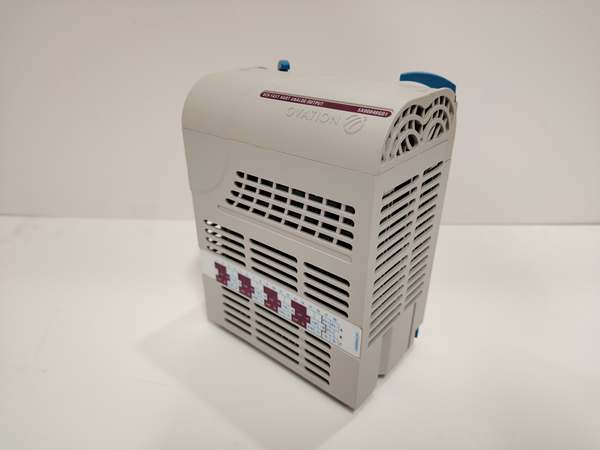
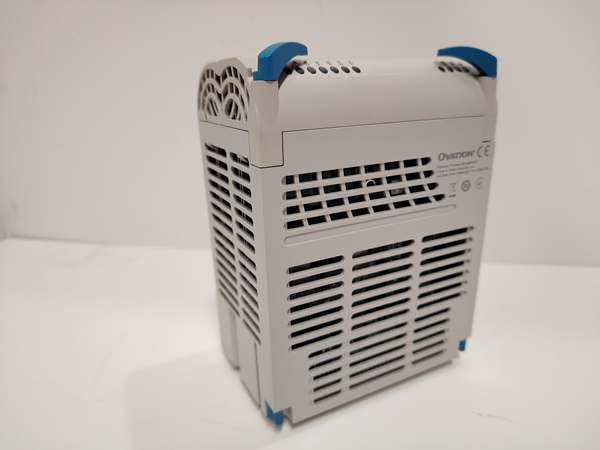
Model Number: 5X00846G01
-
Manufacturer: Emerson Automation Solutions (Ovation Division)
-
Protocol Support: Ovation Native Backplane Protocol, IEC 61131-3 Compliant
-
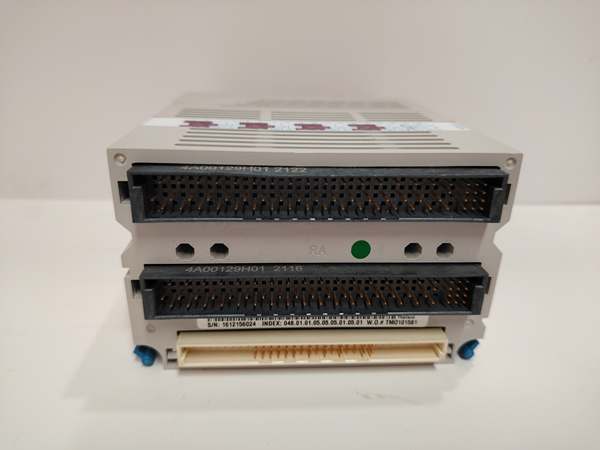
Ports: 16x Analog Input (4-20mA), 1x Ovation I/O Backplane Connector, 2x Status LED Banks
-
Data Resolution: 16-bit (0.0015% Full Scale Accuracy)
-
Operating Temperature: 0°C to 60°C (32°F to 140°F), Storage: -40°C to 85°C
-
Isolation: 500V DC Channel-to-Channel, 1000V DC Channel-to-Backplane
-
Power Consumption: 3.5W Typical, 5W Max (from Ovation I/O Chassis)
-
Input Range: 4-20mA (Default), Configurable 0-20mA via Ovation Studio
-
Certifications: UL 61010-1, CSA C22.2 No. 61010-1, IEC 61010-1
-
Redundancy: 1:1 Hot-Standby Redundancy with 5X00847G01
-
Mounting: Ovation 19-inch I/O Chassis (1U Slot), Tool-Less Latching
EMERSON 5X00846G01
Field Application & Problem Solved
In coal-fired and combined-cycle power plants, the biggest pain with legacy AI modules is drift—calibrations that hold for 30 days max, forcing technicians into hot, cramped control rooms for rechecks. A midwestern plant in 2023 had this issue: their old 8-channel modules drifted 0.5% monthly, causing boiler feedwater pressure errors that tripped the unit twice. This 16-channel module solves that with 16-bit accuracy and temperature-compensated circuitry—calibrations hold for 12 months, not weeks. I replaced 12 legacy modules with 6 of these, cutting calibration labor by 80% and eliminating drift-related trips.
You’ll find this module in every Ovation-powered plant: steam turbine lube oil pressure monitoring, boiler drum level transmitters, gas turbine exhaust temperature arrays, and HRSG feedwater controls. At a Florida combined-cycle plant, we installed 18 of these to monitor 288 process points across 2 gas turbines and 1 steam turbine. The plant had struggled with cross-channel interference on their old modules—turbine vibration data bleeding into pressure readings. The 5X00846G01’s channel-to-channel isolation stopped that, stabilizing the turbine control loops and reducing heat rate by 0.2%.
Its core value is reliable precision at scale. Power plants need accurate data for load following and emissions compliance—this module delivers both, with 16 channels that cut chassis space by half vs. 8-channel alternatives. Unlike generic AI modules, it’s fully integrated with Ovation’s scan engine, so input updates (10ms per channel) sync perfectly with control algorithms. For 24/7 operations, hot-swappability means replacing a faulty module during peak load without tripping the unit. Pair it with the 5X00847G01 in turbine control loops, and you get zero-data-loss redundancy—critical when a single pressure reading dropout can cause a $500k shutdown.
Installation & Maintenance Pitfalls (Expert Tips)
Input Wiring: Avoid Common Polarity Mistakes
Rookies reverse the positive and negative leads on 4-20mA inputs, causing “open circuit” faults that are hard to trace. A Texas plant had 3 modules showing faults on 12 channels—turns out the electrician crossed the wires. This module has no reverse-polarity protection, so it’ll trigger a fault but won’t damage the channel. Always use color-coded wiring: red for positive (+) to terminal 1 of each channel, black for negative (-) to terminal 2. After wiring, use a loop calibrator to inject 12mA into each channel—Ovation Studio should read exactly 50% of full scale. If it reads 0% or 100%, check polarity first before replacing the module.
Calibration: Don’t Overlook Temperature Compensation
Calibrating in a climate-controlled shop then installing in a 55°C I/O room causes drift. A Nevada plant did this, and their boiler level readings shifted 0.3% after installation. Always calibrate the module after it’s been in the chassis for 2 hours—this lets it reach thermal equilibrium. Use Ovation’s “Auto-Cal” tool (v3.5+) instead of manual calibration; it accounts for chassis temperature and backplane voltage. For critical channels (turbine speed, drum level), schedule annual “spot checks” with a precision calibrator (Fluke 754) — skip this, and you risk failing emissions tests due to inaccurate NOx readings.
Redundant Pairing: Sync Module IDs First
Pairing a 5X00846G01 with a 5X00847G01 without matching module IDs causes redundant failover failures. A Pennsylvania plant had this issue—their turbine lube oil pressure channel dropped out for 3 seconds during a test. In Ovation Studio, go to “I/O Configuration” and set both modules to the same “Redundancy Group ID.” Ensure the primary module is in Slot 1 and standby in Slot 2 (Ovation’s default redundancy slot order). Test failover by pulling the primary module’s latch—Ovation should show “Standby Active” within 10ms, with no data loss. Never mix firmware versions in a pair—both need v4.1 or higher for Ovation v3.7+.
EMERSON 5X00846G01
Technical Deep Dive & Overview
The 5X00846G01 is the workhorse AI module for Ovation DCS, built to handle the high-channel-density needs of power plants. It uses a 16-bit ADC (analog-to-digital converter) paired with a dedicated microcontroller that processes each channel sequentially—this avoids cross-talk and ensures consistent accuracy. The microcontroller communicates with the Ovation controller via the backplane at 100Mbps, sending 16-channel data packets every 100ms. Unlike older 8-channel modules, it has on-board EEPROM that stores calibration data, so you don’t lose settings if the module is removed.
Its 500V channel isolation is critical in power plants, where ground potentials can vary by hundreds of volts between the I/O room and turbine deck. The isolation circuitry blocks common-mode noise from generators and transformers, which would otherwise corrupt 4-20mA signals. The module’s status LEDs (one per channel) are a lifesaver—solid green means normal, blinking red is a fault, and amber indicates a low-signal warning. In redundant mode, the standby module mirrors all input data in real time, so failover is seamless.
What sets it apart from generic AI modules is Ovation integration—no custom drivers or mapping needed. You configure channels directly in Ovation Studio, assigning tags like “TURB1_LUBE_PRESS” with a few clicks. It also supports “Faulted Channel Disable,” which isolates a bad input without taking down the entire module. For plant operators, this means fewer false alarms and faster troubleshooting. It’s not just an input module; it’s a reliable link between field sensors and the control system, designed to keep power plants running efficiently and compliantly.