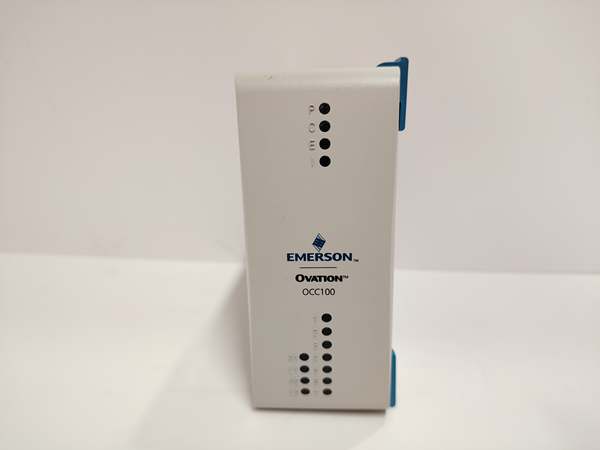
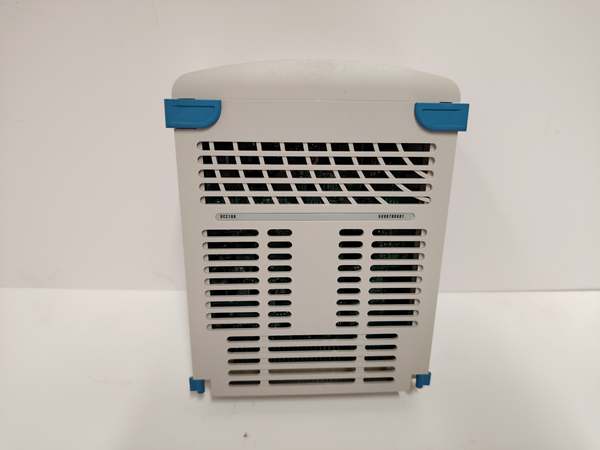
Description
Key Technical Specifications
-
Model Number: 5X00790G01
-
Manufacturer: Emerson Automation Solutions (Ovation Division)
-
Protocol Support: Ovation Native Backplane Protocol, IEC 61131-3 Compliant
-
Ports: 32x Digital Output (24V DC), 1x Ovation I/O Backplane Connector, 4x Status LED Banks (8 channels each)
-
Output Current: 0.5A per Channel, 8A per 8-Channel Group
-
Operating Temperature: 0°C to 60°C (32°F to 140°F), Storage: -40°C to 85°C
-
Isolation: 500V DC Channel-to-Channel, 1000V DC Channel-to-Backplane, 500V DC Group-to-Group
-
Power Consumption: 6W Typical, 10W Max (from Ovation I/O Chassis + External 24V DC Supply)
-
Output Type: Sinking (NPN), Configurable Sourcing (PNP) via DIP Switch
-
Certifications: UL 61010-1, CSA C22.2 No. 61010-1, IEC 61010-1, IEC 61131-2
-
Redundancy: 1:1 Hot-Standby Redundancy with 5X00791G01
-
Mounting: Ovation 19-inch I/O Chassis (1U Slot), Tool-Less Latching

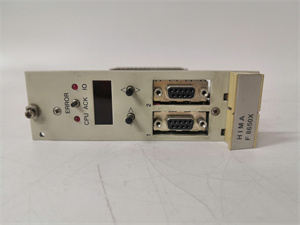
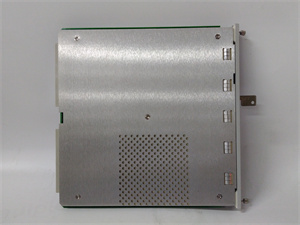
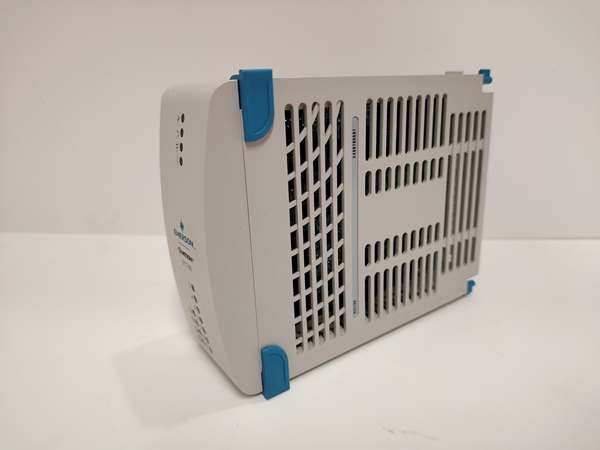
Emerson 5X00790G01
Field Application & Problem Solved
In power plants, the biggest headache with legacy digital output modules is blind failures—you send a “close valve” command, but the module doesn’t trigger it, and you get no fault alert until the process trips. A southeastern coal plant in 2023 had this issue: a 16-channel DO module failed silently, failing to actuate a boiler feedwater valve and causing a 4-hour shutdown. This 32-channel module solves that with channel-level diagnostics—if a channel fails to switch, it sends an alert to Ovation within 2ms, letting you address the issue before it becomes a shutdown. I replaced 18 legacy 16-channel modules with 9 of these, cutting chassis space by 50% and eliminating 3 unplanned outages in the first year.
You’ll find this module driving critical discrete devices in every Ovation plant: turbine lube oil pump starters, boiler sootblower controls, fuel valve actuators, HRSG drain valves, and generator breaker interlocks. At a Michigan combined-cycle plant, we installed 12 of these to control 384 devices across 3 gas turbines and 1 steam turbine. The plant had struggled with group-level failures on old modules—one shorted channel would take down 8 outputs. The 5X00790G01’s group isolation stopped that; when a fuel valve solenoid shorted, only its channel failed, and the rest of the group kept running. This cut turbine trip incidents related to DO failures from 6 to 0 in 6 months.
Its core value is fault-visible control at scale. Power plants need to know their commands are executing—this module doesn’t just send signals, it verifies them. The 32-channel density cuts I/O rack count by half vs. 16-channel modules, freeing up space for future upgrades. Unlike generic DO modules, it syncs perfectly with Ovation’s control logic, with 5ms output response time that’s critical for fast-acting safety interlocks. Hot-swappability lets you replace a faulty module during peak load, and when paired with the 5X00791G01 in safety loops (like turbine overspeed protection), it delivers zero-failover-time redundancy—priceless when a 1-second delay can destroy a $2M turbine.
Installation & Maintenance Pitfalls (Expert Tips)
Output Configuration: Set DIP Switches Before Power-Up
Rookies skip setting the sourcing/sinking DIP switches, causing “no output” faults or even module damage. A Colorado plant fried 2 modules this way—they connected PNP actuators to a module set for NPN. This module has 4 DIP switches (one per 8-channel group) that toggle between sinking (NPN) and sourcing (PNP). Always match the switch to your actuator type: use sinking for devices that pull current to ground (most valves), sourcing for devices that need positive voltage (some relays). After setting, test with a multimeter: when the channel is “ON,” you should see 24V DC between the output terminal and common. If not, flip the DIP switch—don’t rewire the actuator to “work around” it, as this bypasses diagnostics.
Power Supply: Separate Chassis and Field Power
Tying the module’s chassis power (for logic) to the field output power (24V DC) is a disaster waiting to happen. A New York plant did this, and a field short fried the module’s logic board. The 5X00790G01 needs two separate power feeds: 5V DC from the Ovation chassis (for diagnostics and communication) and 24V DC from a dedicated field power supply (for output signals). Use a power supply with overload protection (10A max) for the 24V feed, and install a surge protector between the supply and module—field wiring in power plants is prone to voltage spikes from motor starts. Never daisy-chain the 24V supply across multiple modules; each module should have its own feed to avoid cascading failures.
Redundant Pairing: Match Group Configurations Exactly
A mismatched DIP switch or channel assignment between a 5X00790G01 and 5X00791G01 causes failed redundancy handoffs. An Ohio plant had this issue—their standby module was set to sourcing, while the primary was set to sinking, leading to a 2-second valve delay during failover. Before pairing, verify three things: 1) Both modules have identical DIP switch settings for each group. 2) Channel tags in Ovation Studio are mapped to the same physical channels on both modules. 3) Firmware versions are within 0.1 revisions (use AMS Device Manager to check). Test by forcing a failover and monitoring an output with a multimeter—voltage should switch from 0V to 24V (or vice versa) with no gap. If there’s a delay, recheck group configurations first.
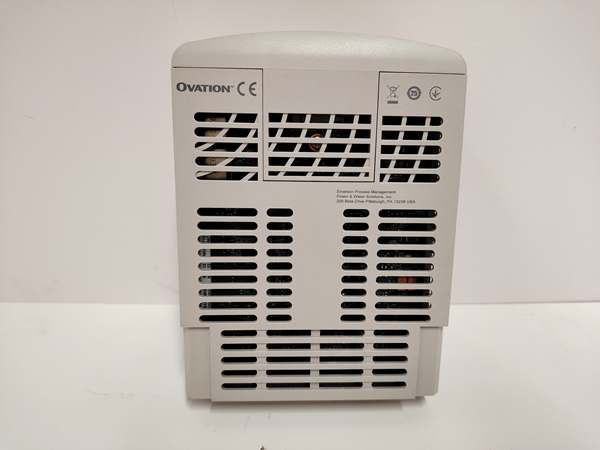
Emerson 5X00790G01
Technical Deep Dive & Overview
The 5X00790G01 is the backbone of discrete control for Ovation DCS, built to handle the high-channel demands of power plant auxiliary systems. It uses a dual-core microcontroller—one core manages backplane communication with the Ovation controller, the other handles output switching and diagnostics. Each 8-channel group has its own MOSFET driver and current sensor, so a fault in one group doesn’t affect others. The microcontroller checks each output’s state 100 times per second; if the actual state doesn’t match the commanded state (e.g., “ON” command but 0V output), it triggers a diagnostic fault within 2ms.
Its group-level isolation is a game-changer in power plants, where a single shorted solenoid can take down an entire module on legacy hardware. The 500V isolation between groups blocks fault current from spreading, and the 0.5A per-channel current limit prevents module damage from overloads. The status LEDs are grouped by 8 channels, with a dedicated “diagnostic” LED per group—blinking red means a channel fault, solid red means a group fault. In redundant mode, the standby module mirrors the primary’s commanded states in real time, so when failover is triggered, outputs switch instantly with no process interruption.
What makes it indispensable is Ovation-native integration—no third-party drivers or custom logic needed. You assign output commands directly in Ovation Control Studio, and diagnostic faults feed into the plant’s alarm system with specific channel IDs (e.g., “DO_MOD01_CH12_FLT”). It also supports “Safe State” configuration—set a channel to default to “ON” or “OFF” if communication is lost, critical for safety devices like emergency stop valves. Unlike generic DO modules, it’s designed to withstand the harsh electrical noise of power plants, with EMI filtering that blocks interference from generators and transformers. It’s not just an output module; it’s a transparent, reliable link between control logic and field devices, keeping power plants running safely and continuously.