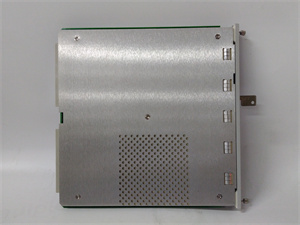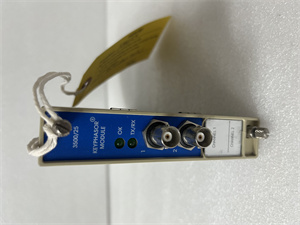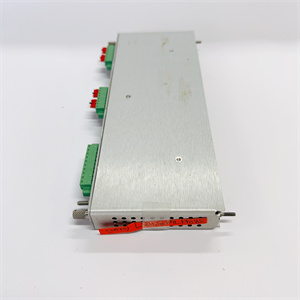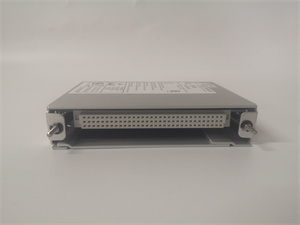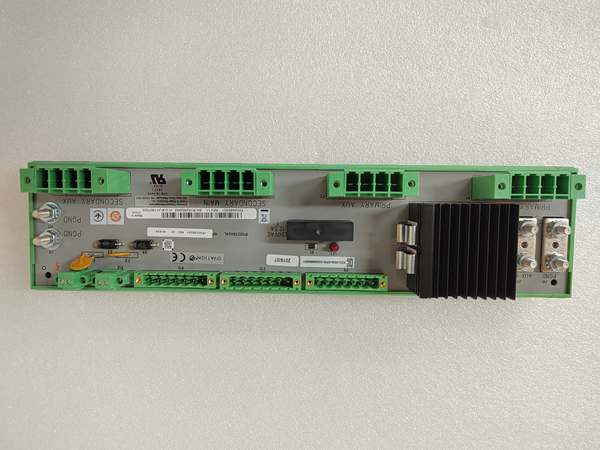


Description
Key Technical Specifications
-
Model Number: 5X00489G01
-
Manufacturer: Emerson Automation Solutions
-
Output Voltage: 24V DC ±0.5V (adjustable via trim pot)
-
Output Current: 10A continuous, 12A peak (10 seconds)
-
Input Voltage: 100-240V AC ±10%, 50/60Hz (universal input)
-
Redundancy: N+1 compatible (up to 4 modules in parallel)
-
Operating Temperature: 0°C to 55°C (32°F to 131°F)
-
Protection Features: Overcurrent (auto-reset), overvoltage (latch-off), overtemperature (shutdown)
-
Form Factor: 3U rack-mount (Ovation DCS compatible)
-
MTBF: 250,000 hours (per IEC 61709)
-
Isolation: 2500V AC (input to output), 500V AC (output to ground)
-
Status Indicators: Power OK (green), Fault (red), Overload (amber)

EMERSON 5X00489G01
Field Application & Problem Solved
In power plants and refineries, a DCS power failure isn’t just an outage—it’s a safety risk. I was called to a Florida power plant in 2021 where a single non-redundant power supply failed, taking down the boiler feedwater control system. The unit tripped, costing $80,000 in lost generation and 6 hours of downtime. That’s the problem this module fixes: it eliminates single points of failure for DCS power, the lifeblood of critical control systems.
You’ll find these in Ovation DCS racks—powering everything from turbine control modules to boiler level transmitters. At a Texas refinery’s FCC unit, we installed three 5X00489G01 modules in parallel (2 active, 1 redundant) to power 42 I/O modules. When one module faulted last year (due to a voltage spike), the redundant unit picked up the load in 2ms—no alarms, no process interruption. The operators didn’t even know it happened until the daily status check.
Its core value is “invisible reliability.” It doesn’t just supply power—it does so without fanfare, even when components fail. For control engineers, that means no more losing sleep over power-related trips. It’s the backbone of the DCS, and unlike cheap aftermarket supplies, it’s built to handle the voltage spikes, temperature swings, and electrical noise that destroy lesser units in industrial environments.
Installation & Maintenance Pitfalls (Expert Tips)
Redundancy Wiring: Never Daisy-Chain Power Inputs
The biggest mistake I see is wiring multiple redundant modules to the same AC feed. A Louisiana refinery did this—lightning hit the main AC bus, taking out all three modules at once. Wire each module to a separate input source: e.g., Module 1 to Plant UPS, Module 2 to Utility AC, Module 3 to Backup Generator. Use the module’s built-in redundancy logic (not external breakers) to handle load sharing—this ensures a clean handoff if one input fails.
Trim Pot Adjustment: Don’t “Set and Forget”
Rookies set the 24V output once and never check it. Over time, temperature drift can push voltage to 25.2V or 22.8V—both hard on DCS modules. After installation, use a calibrated multimeter to verify output at the module’s terminal block (not just the front panel). Adjust the trim pot to 24.0V ±0.1V. Check it quarterly—especially after extreme temperature swings (e.g., winter cold snaps in refinery control rooms).
Fault Monitoring: Enable All Alarms (Even the “Minor” Ones)
Many teams disable the “overtemperature” or “low current” alarms to reduce clutter. Bad move. A Pennsylvania power plant ignored a low-current alarm on a 5X00489G01—it turned out the module’s output transistor was failing, and the alarm was the early warning. Enable every status signal (Power OK, Fault, Overload) in the DCS and map them to HMI alarms. Set up email alerts for faults—catching a failing module during a shift change beats a midnight emergency call.

EMERSON 5X00489G01
Technical Deep Dive & Overview
The 5X00489G01 is a switch-mode power supply (SMPS) designed for industrial rigor—no flimsy consumer-grade components here. It converts 100-240V AC input to a stable 24V DC output using a pulse-width modulation (PWM) controller, which is far more efficient (92% typical) than old linear supplies. This efficiency means less heat, which extends component life in cramped DCS racks.
What makes it redundant is its parallelable design. When multiple modules are installed, they share the load equally via current-sharing resistors. If one module fails, the others ramp up their output to compensate—all within 2ms, faster than the DCS can register a voltage dip. The hot-swappable feature lets you replace a faulty module without powering down the rack—critical for 24/7 operations like nuclear power plants or LNG terminals.
Its protection circuits are aggressive but forgiving: overcurrent trips reset automatically after the load drops, while overvoltage latches off (to prevent DCS damage) and requires a manual reset. The status LEDs are bright enough to see from across a control room, but the real value is the hardwired status signals—they let the DCS log faults for compliance, which matters during FDA or OSHA audits. It’s not flashy, but it’s the kind of component that makes or breaks a control system’s reliability.