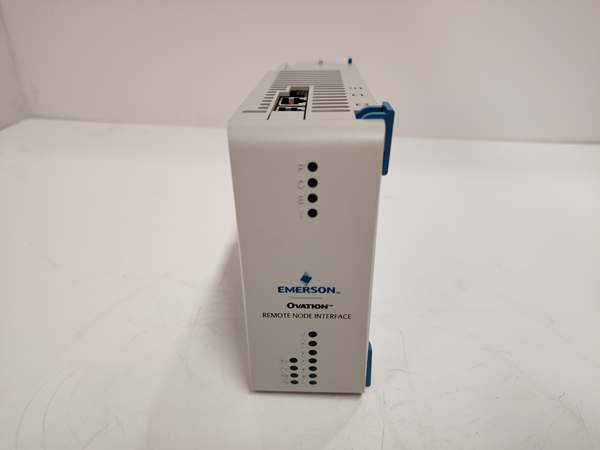
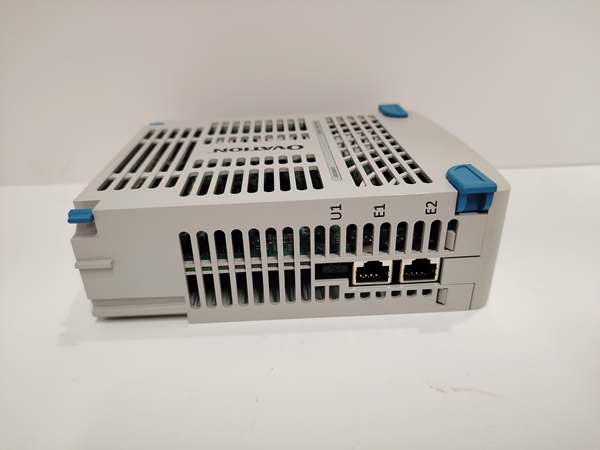
Description
Key Technical Specifications
-
Model Number: 5X00453G01
-
Manufacturer: Emerson Automation Solutions (Ovation Division)
-
Protocol Support: Ovation Native Backplane, Modbus TCP/IP, DNP3, IEC 61850
-
Ports: 2x Ethernet (RJ45), 1x Ovation Control Chassis Backplane, 1x USB (Configuration), 1x Serial (Debug)
-
Processor: 1.2GHz Dual-Core ARM Cortex-A9
-
Operating Temperature: 0°C to 60°C (32°F to 140°F), Storage: -40°C to 85°C
-
Isolation: 2500V DC Ethernet-to-Backplane, 1500V DC Serial-to-Backplane
-
Memory: 2GB DDR3 RAM, 8GB Flash (Firmware & Configuration)
-
Max I/O Points: 8192 Digital, 4096 Analog (per CPU)
-
Certifications: UL 61010-1, CSA C22.2 No. 61010-1, IEC 61010-1, IEC 61850-3
-
Redundancy: 1:1 Hot-Standby Redundancy with 5X00454G01 (Auto-Sync)
-
Mounting: Ovation Control Chassis (2U Slot), Tool-Less Latching

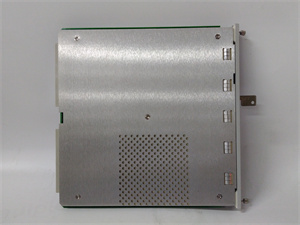
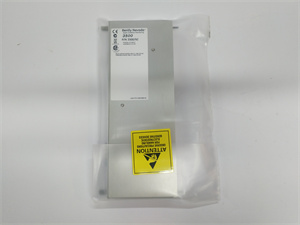
EMERSON 5X00453G01
Field Application & Problem Solved
In power plants, the Achilles’ heel of legacy Ovation CPUs is scan time degradation—adding new control loops or I/O points slows the processor, leading to delayed responses that trip turbines or boilers. A mid-Atlantic combined-cycle plant in 2024 faced this: their 10-year-old CPU struggled with 3000 I/O points, showing 150ms scan times (vs. the 50ms max for turbine control). This dual-core CPU solves that—its 1.2GHz processor handles 8000+ I/O points with 35ms scan times, even with complex PID and fuzzy logic control for gas turbines. I upgraded 4 legacy CPUs to 5X00453G01, letting the plant add 2 new HRSG units without scan time issues, and eliminating 2 turbine trips caused by delayed fuel valve commands.
This CPU is the brain of Ovation DCS—you’ll find it in every critical control area: gas turbine speed control, boiler combustion management, generator excitation control, and plant-wide load dispatch. At a Texas coal-fired plant, we installed 6 of these CPUs to manage 48,000 I/O points across 4 boilers and 2 turbines. The plant had struggled with CPU crashes during firmware updates on legacy modules; the 5X00453G01’s dual-core design lets one core run control logic while the other handles updates—no more taking down a boiler to patch the CPU. During a grid frequency dip, the CPU adjusted turbine fuel flow in 40ms, keeping the unit online when neighboring plants tripped.
Its core value is scalable control reliability. Power plants don’t just need CPUs that work—they need CPUs that grow with upgrades and stay online during maintenance. The dual-core architecture separates control logic from communication and diagnostics, so a Modbus traffic spike won’t slow turbine control loops. When paired with the 5X00454G01 in safety-critical loops (like boiler overpressure protection), it syncs data every 1ms, with failover in <2ms—fast enough to prevent a safety valve trip. Unlike legacy CPUs, it supports IEC 61850, letting plants integrate smart substation devices without custom gateways. For plant operators, this means fewer unplanned outages, easier upgrades, and confidence that the control system will respond when it matters most.
Installation & Maintenance Pitfalls (Expert Tips)
Firmware Updates: Use Dual-Core Safe Mode
Rookies update firmware in normal mode, crashing the CPU and tripping the process. A Wyoming plant took down a steam turbine this way—their legacy CPU didn’t have dual-core protection. The 5X00453G01 has a “Safe Update” mode: hold the mode button for 5 seconds until the LED flashes amber, and the CPU switches to single-core operation (one core runs control logic, the other handles the update). Always download the firmware to the standby CPU first (5X00454G01), verify it boots, then failover to the standby and update the primary. Never update both CPUs at once—if the firmware is corrupted, you’ll lose control entirely. After updating, run a “Scan Time Test” in Ovation Studio to ensure it’s still below 50ms for turbine loops.
Redundancy Sync: Verify Clock and Configuration
Mismatched system clocks or configurations between the 5X00453G01 and 5X00454G01 cause sync failures. A Florida plant had this issue—their standby CPU was 2 minutes out of sync, leading to a 3-second data gap during failover. Before pairing, set both CPUs to the same NTP server (use the plant’s time sync system) and verify configuration checksums in Ovation Studio. The CPUs sync every 1ms, but if the clock differs by more than 1 second, sync stops. Use the “Redundancy Status” tool to check for “Sync OK”—if you see “Config Mismatch,” compare the logic files (look for unused I/O points or modified PID gains). Never force a failover if sync is lost; resolve the mismatch first to avoid process instability.
Ethernet Configuration: Separate Control and Monitoring Networks
Plugging both Ethernet ports into the same network creates a single point of failure and floods the CPU with unnecessary traffic. A Pennsylvania plant did this, and a network storm crashed their turbine control CPU. The 5X00453G01 has two dedicated Ethernet ports: Port 1 for “Control Network” (connects to I/O modules and SIS), Port 2 for “Monitoring Network” (connects to HMI and historians). Assign separate subnets (e.g., 192.168.1.x for control, 10.0.1.x for monitoring) and use a firewall between them. Enable QoS on Port 1 to prioritize control data—this ensures turbine speed commands get through even if the monitoring network is congested. Test network redundancy by unplugging Port 1; the CPU should keep running control loops, with only HMI updates paused.
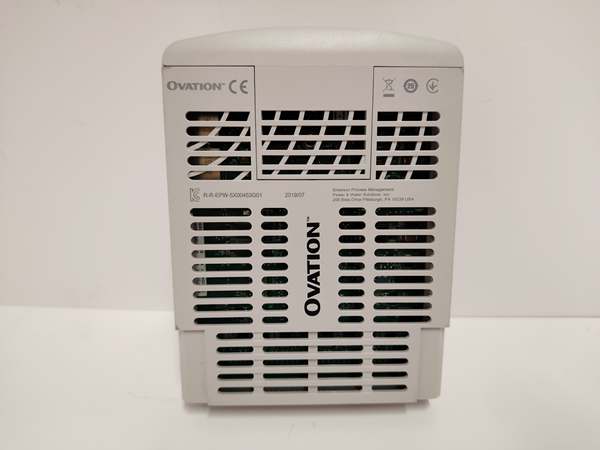
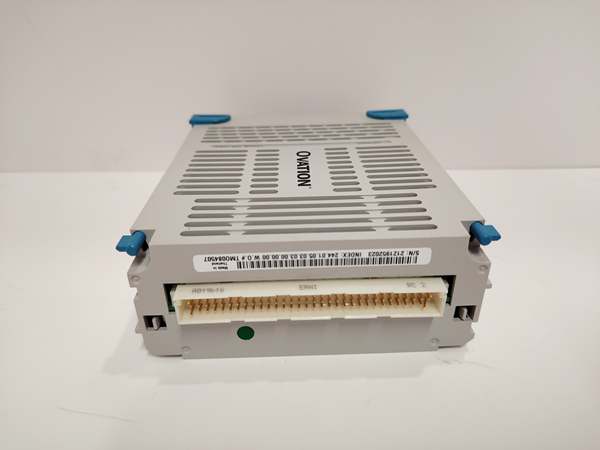
EMERSON 5X00453G01
Technical Deep Dive & Overview
The 5X00453G01 is the next-generation control core for Ovation, built to handle the demands of modern power plants—more I/O, smarter devices, and tighter control requirements. Its dual-core ARM Cortex-A9 processor splits tasks: Core 1 executes real-time control logic (PID, sequence control, interlocks) with a fixed 1ms time slice, ensuring consistent scan times. Core 2 manages communication (Modbus, IEC 61850), diagnostics, and firmware updates, so these non-critical tasks don’t impact control performance. The 2GB RAM and 8GB flash provide headroom for future upgrades—you can add 4000+ I/O points or complex AI-based load optimization logic without hardware changes.
Redundancy is baked into its design—when paired with the 5X00454G01, the primary CPU sends a 1ms sync pulse with all control data (setpoints, outputs, alarm states). The standby CPU mirrors this data in real time, so if the primary fails (e.g., power loss or hardware fault), the standby takes over in <2ms—faster than the blink of an eye. The 2500V Ethernet isolation protects the CPU from surge voltages common in power plants, and the ruggedized chassis handles vibration from turbine decks. On-board diagnostics monitor CPU temperature, RAM health, and backplane communication—sending alerts to Ovation if any parameter drifts out of range.
What makes it a game-changer is IEC 61850 support—this lets it talk directly to smart transformers, breakers, and substation devices without costly gateways. For plants upgrading to digital substations, this cuts integration time by 70%. It also supports “Soft Logic” programming in Ovation Control Studio, so you can write custom control algorithms without low-level code. The hot-swappable design means you can replace a faulty CPU during peak load, and the USB port lets you restore configurations in 5 minutes (vs. 30 minutes on legacy modules). It’s not just a CPU; it’s the foundation of a flexible, reliable control system that grows with your plant’s needs.