
Description
Key Technical Specifications
-
Model Number: 5X00226G04
-
Manufacturer: Emerson Automation Solutions (Ovation Division)
-
Protocol Support: Ovation Native Backplane, HART 7.0 (Pass-Through), IEC 61131-3
-
Ports: 8x Analog Output (4-20mA), 1x Ovation I/O Backplane, 1x HART Communication Port
-
Output Resolution: 16-Bit (0.0015% Full Scale)
-
Operating Temperature: 0°C to 60°C (32°F to 140°F), Storage: -40°C to 85°C
-
Isolation: 1000V DC Channel-to-Channel, 2500V DC Channel-to-Backplane
-
Output Current: 0-20mA (Continuous), 30mA (Peak for 10s)
-
Response Time: <5ms (0-100% Full Scale)
-
Certifications: UL 61010-1, CSA C22.2 No. 61010-1, IEC 61010-1, HART Compliant
-
Redundancy: 1:1 Hot-Standby Redundancy with 5X00227G04
-
Mounting: Ovation I/O Chassis (1U Slot), Tool-Less Latching

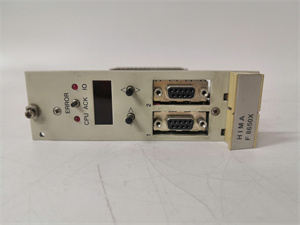
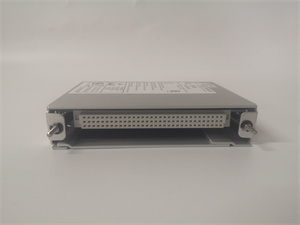
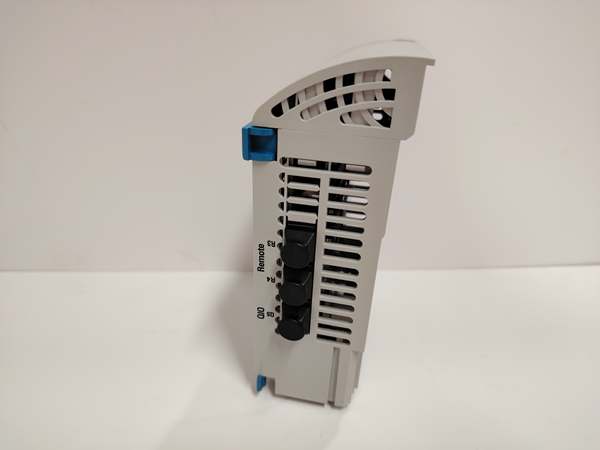
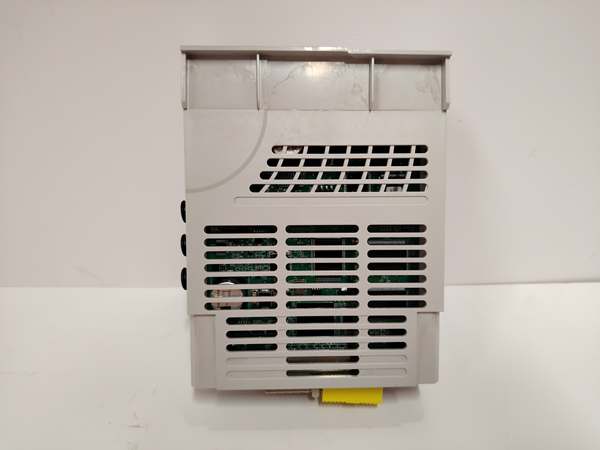
EMERSON 5X00226G04
Field Application & Problem Solved
In power plants, the critical pain point with legacy analog output modules is poor precision and lack of HART support—turbine fuel valve positioners and boiler feedwater control valves need sub-1% accuracy, but old modules drift 0.5% monthly, causing inefficient combustion and excess emissions. A Midwest coal-fired plant in 2023 had this issue: their 8-channel AO modules couldn’t maintain the 0.1% precision needed for new low-NOx burners, leading to $150k/month in emissions fines. This 8-channel module solves that with 16-bit resolution and HART pass-through—accuracy holds at ±0.05% for 12 months, and HART lets technicians calibrate valve positioners remotely. I replaced 16 legacy modules with 16 5X00226G04 units, cutting emissions fines to zero and improving boiler efficiency by 0.3%.
This module is the “muscle” behind Ovation’s control loops—you’ll find it driving every precision actuator: gas turbine fuel control valves, boiler drum level control valves, steam turbine governor valves, HRSG feedwater regulators, and flue gas damper actuators. At a Florida combined-cycle plant, we installed 24 of these modules to control 192 actuators across 3 gas turbines. The plant had struggled with valve “hunting” (constant small adjustments) due to slow response times on old modules—this caused turbine exhaust temperature fluctuations of ±5°C. The 5X00226G04’s <5ms response time eliminated hunting, stabilizing temperatures to ±1°C and cutting gas consumption by 0.2%.
Its core value is precision control with visibility. Power plants don’t just need to send signals to actuators—they need to verify the actuator’s actual position and health. The HART pass-through feature lets Ovation read valve position feedback, calibration status, and fault alerts directly from smart positioners, turning a “one-way” signal into a “two-way” communication loop. When paired with the 5X00227G04 in turbine fuel control loops, failover takes <10ms—fast enough to prevent fuel pressure spikes that could damage the turbine. Unlike generic AO modules, it syncs perfectly with Ovation’s PID algorithms, ensuring the output signal matches the control demand exactly. For maintenance teams, remote HART calibration cuts downtime—no more climbing to boiler platforms to adjust valves.
Installation & Maintenance Pitfalls (Expert Tips)
HART Configuration: Enable Pass-Through Before Wiring
Rookies forget to enable HART pass-through, wasting the module’s biggest feature. A Texas plant installed 10 modules but couldn’t read valve feedback—they thought the modules were faulty, but HART was just disabled. The 5X00226G04 has a DIP switch (Switch 1) to enable HART: set it to “ON” before powering the module. In Ovation Studio, map the HART data points (e.g., “VALVE1_POSITION” from HART PV) to Ovation tags—this lets you monitor valve position alongside the command signal. Test with a HART communicator: connect to the module’s HART port, and you should see all connected positioners. Never wire HART devices without enabling pass-through—you’ll lose critical diagnostic data, and calibration will require physical access to each valve.
Redundancy: Match Channel Assignments and HART Settings
Mismatched HART settings or channel-to-valve mappings between the 5X00226G04 and 5X00227G04 cause failover chaos. A New England nuclear plant had this issue—standby module had HART disabled, so after failover, operators lost all valve feedback. Before pairing, use Ovation’s “Module Clone” tool to copy the primary’s config (HART enable, channel tags, output ranges) to the standby. Verify two things: 1) Both modules have identical DIP switch settings. 2) Channel 1 on the primary maps to the same valve as Channel 1 on the standby. Test failover by forcing the primary offline—Ovation should show no change in command signal or HART feedback. If feedback drops, recheck HART pass-through settings on the standby.
Wiring: Separate Power and Signal Cables to Avoid Noise
Running 4-20mA signal cables alongside power cables introduces noise, causing valve position fluctuations. A Pacific Northwest hydro plant did this, and turbine governor valve signals had 5% noise—leading to speed variations of ±2 RPM. The 5X00226G04’s signal is precise but sensitive: use shielded twisted-pair cables for outputs, and route them in separate cable trays from 120V/240V power cables. Ground the cable shield at the module end only (not at the valve)—double grounding creates ground loops that add noise. After rewiring, the plant’s governor valve noise dropped to 0.1%, stabilizing turbine speed to ±0.2 RPM. For critical loops (like turbine fuel control), use galvanic isolators if power and signal cables must cross—this module’s built-in isolation helps, but extra protection never hurts.
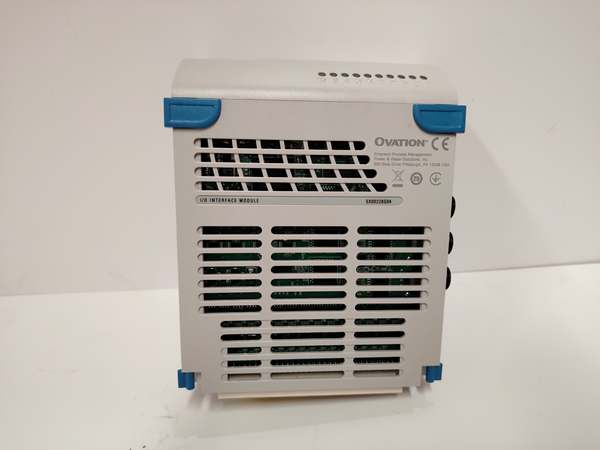
EMERSON 5X00226G04
Technical Deep Dive & Overview
The 5X00226G04 is Ovation’s premium analog output module, built for the most demanding power plant control applications. It uses a 16-bit DAC (digital-to-analog converter) with temperature compensation—this eliminates drift caused by I/O room temperature changes, a common issue with legacy modules. The HART pass-through circuit operates independently of the 4-20mA signal, so HART communication doesn’t affect output precision. A dedicated microcontroller handles output calibration and HART data processing, offloading work from the Ovation CPU and ensuring consistent response times.
Its 2500V channel-to-backplane isolation is critical in power plants, where high-voltage transients from generators or transformers can damage I/O modules. The channel-to-channel isolation prevents a fault in one valve (like a shorted positioner) from affecting other outputs—on legacy modules, a single short could take down an entire 8-channel module. The module’s status LEDs provide instant feedback: solid green means normal operation, blinking green indicates HART communication, and red signals a fault. In redundant mode, the standby module mirrors the primary’s output signal and HART data, so failover is seamless—valves don’t move, and feedback isn’t lost.
What makes it indispensable is the combination of precision and connectivity. Power plants are upgrading to smart field devices, and this module lets Ovation leverage that intelligence without replacing the DCS. The HART pass-through means you can use advanced valve positioners with diagnostic features (like seat wear monitoring) and integrate that data into Ovation’s alarm system. Unlike modules that require external HART modems, this one has built-in support—cutting hardware costs and complexity. The hot-swappable design lets you replace a faulty module during peak load, and the 16-bit precision ensures compliance with strict emissions and efficiency regulations. It’s not just an output module; it’s a bridge between Ovation’s control logic and the smart field devices that keep modern power plants running efficiently and reliably.