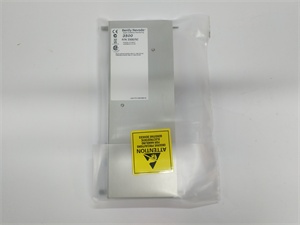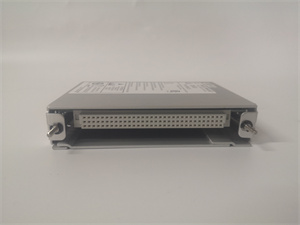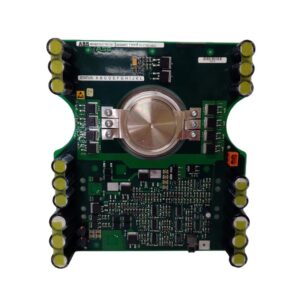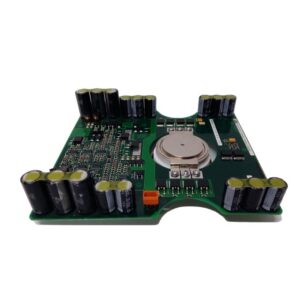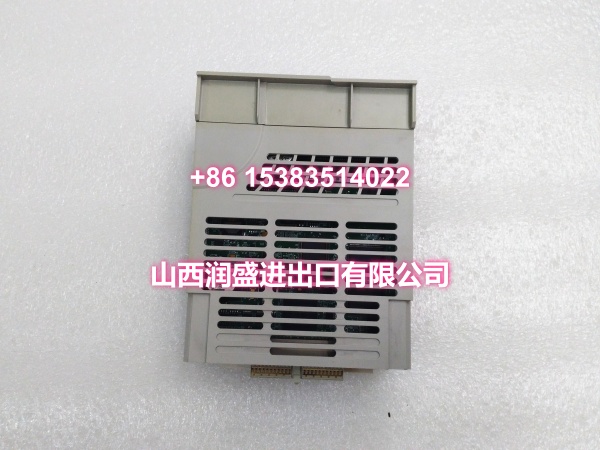
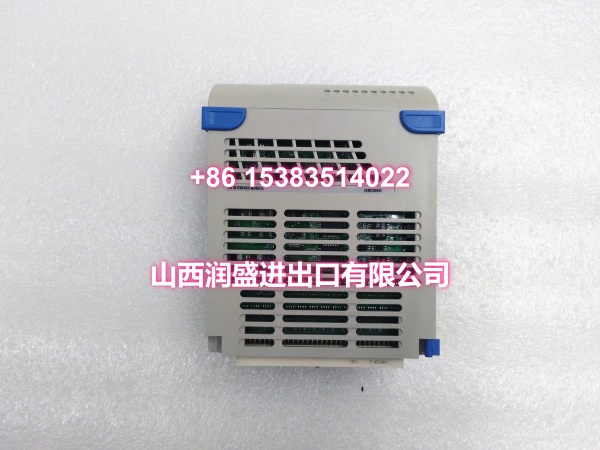
Description
Product Core Brief
- Model: 5X00226G02
- Brand: EMERSON
- Series: Ovation I/O family (per common supplier listings)
- Core Function: Provides solid-state digital outputs that switch DC loads such as solenoids, indicator lamps, and interposing relay coils inside a DCS panel.
- Product Type: Solid-state relay / digital output module
- Key Specs: Backplane powered | Channel-to-backplane galvanic isolation | Plug-in mounting on Ovation base with field termination
- Condition: New Surplus or Factory Sealed, confirmed per unit at quote
One honest note. Some resellers describe this part as a generic input/output module, and a few even list screen size and touch resolution, which is obviously copied from an HMI page. That is not this card. Confirm against your own panel drawings before ordering.
Product Introduction
Most output failures in a control cabinet do not announce themselves. A solenoid fails to pick up, an interlock does not fire, and the operator assumes the logic was wrong. Solid-state output cards like the EMERSON 5X00226G02 sit between controller logic and the field, isolating the backplane from ground potential differences and field spikes while switching DC loads with no mechanical contacts to weld.
Why buyers care is downtime math. A single stuck output on a trip or trip-reset circuit can turn a two-hour planned swap into a forced unit outage, and forced outages on a utility unit commonly cost tens of thousands of dollars per day in lost generation and penalties. Keeping one verified spare on the shelf, plus a documented forced-output test procedure, usually pays for itself the first time it avoids a scramble for a card from an unknown broker. (Though your mileage may vary depending on how many such circuits feed safety functions.)
Key Technical Specifications
| Parameter | Value |
|---|---|
| Brand / Model | EMERSON 5X00226G02 |
| Output Type | Solid-state relay digital outputs for DC loads |
| Isolation | Channel-to-backplane galvanic isolation |
| Power Source | Powered through the Emerson I/O backplane, no separate module supply typically |
| Communication | Proprietary Emerson I/O backplane interface, not Modbus or Ethernet |
| Installation | Plug-in module on Emerson I/O base with field termination assembly |
| Operating Temperature | 0 to 60°C typical cabinet environment |
| Status Indication | Front LEDs plus controller diagnostics where configured |
| Load Protection | Compatible with diode or RC snubbers across inductive loads |
| Form Factor | Single-width DCS I/O card profile, exact values vary by build |
| Maintenance Profile | No moving contacts, so switching endurance is generally higher than electromechanical relay cards |
All values above follow supplier-published descriptions and should be verified against your Ovation documentation and panel drawings before commissioning.
Key Selling Points & Differentiators
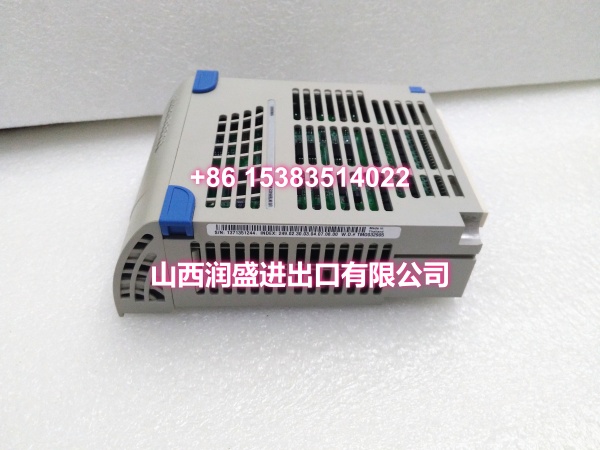
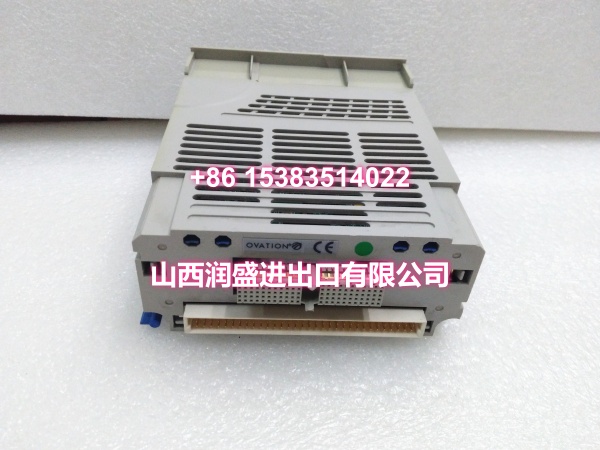
- Verified identity, not guessed identity. We send front and back photos with the full silkscreen and revision so you can match it to the card you pulled.
- Forced-output test before shipping. Every unit is exercised channel by channel with a load, not just powered up and called good.
- Clear contrast with electromechanical relay cards. No contact welding under frequent cycling, but no true dry contact either, so do not expect it to isolate an AC circuit like a mechanical relay would.
- Documented chain of custody. We state whether the unit is new surplus, factory sealed, or pulled from service, with the reason if known.
- Warranty tied to real failure modes. Coverage addresses no-output, stuck-on, and channel-not-recognized conditions rather than vague language.
- Not recommended for switching AC mains loads, high inrush solenoids without an interposing relay, or any safety function where the plant requires a proven de-energized trip on loss of power without confirming the fail-safe behavior in your strategy.
Quality Transparency SOP
- Visual and silkscreen QA. We check for burnt components, bulged capacitors, corroded traces, re-soldered headers, and sanded or re-labeled part numbers.
- Connector and edge inspection. Contacts are checked for oxidation and bent pins, since a poor backplane seat mimics a dead card.
- Powered bench test on a matching base. We confirm backplane power draw, LED behavior, and controller recognition rather than relying on a bare power-up.
- Channel-by-channel load test. Each output is driven into a resistive and an inductive load while measuring voltage drop with a Fluke meter and waveform with an oscilloscope to catch a shorted or leaky solid-state switch.
- Isolation and insulation check. Field-to-backplane isolation is verified with a Megger where the design allows, then the unit is sealed in anti-static packaging with the test record included.
If a step cannot be performed because we lack the correct base or firmware, we tell you up front instead of shipping blind.
Technical Risk Avoidance
❗ Base and termination mismatch. Ovation bases and field termination assemblies are not interchangeable across all card types. Ordering the card without the matching base means it will not wire up, even if the part number is correct.
❗ Assuming it is a dry contact. A solid-state output will not behave like an electromechanical relay. If your trip logic depends on a truly open circuit when power is lost, verify the fail-safe state in the strategy and in the wiring, not in a supplier blog.
❗ Backplane power budget and rack behavior. Adding or swapping cards changes rack power draw and can expose a weak rack power supply or a loose backplane connection. Several erratic outputs on one card usually point to power or backplane issues rather than the card itself.
❗ Inductive load voltage spikes. Driving solenoids or interposing relay coils without a diode or RC snubber can destroy the output stage and sometimes disturb neighboring channels. Suppression is cheap, a forced outage is not.
❗ Configuration and revision mismatch. Ovation configuration lives in the controller, and electronic and personality module pairings matter on many I/O designs, so a revision or pairing mismatch can keep the card from being recognized even when it is electrically fine.
Buyer’s FAQ
Is this truly OEM Emerson, not a clone? We only sell genuine factory-produced units and provide silkscreen photos plus revision. If we cannot prove it, we say so. Cloned or re-labeled cards are common in the surplus channel and usually fail under sustained load.
Is it new surplus or refurbished? Both exist for this family. New surplus means unused but not in original sealing. Refurbished means someone repaired it, often by replacing capacitors or re-soldering headers. We label each unit and explain the history when known.
What is the real lead time? If it is on our shelf, we ship the same business day after photo confirmation. If it is not, we tell you immediately instead of quoting a hopeful date. Emergency outage orders are prioritized, and many supply agreements push emergency spares out within four hours, which is a fair benchmark to hold any supplier to.
Will it drop into my existing rack and work? Only if the base, termination, configuration, and controller revision all match. Send your panel drawing, base part number, and system version, and we will check before you pay. Some Ovation I/O designs use electronic and personality module pairs, so a card alone may not be enough.
What does the warranty actually cover? No-output, stuck-on, and not-recognized failures during the warranty period, provided the card was installed on the correct base with proper suppression and within temperature limits. It does not cover damage from AC mains switching, un-suppressed inductive kickback, lightning, or water ingress.
If you are chasing a stuck or dead output right now, compare the commanded state in the software against the actual terminal voltage, then swap in a known-good card to see whether the symptom moves. That single test separates a bad card from a field short, a ground fault, or noise on a compromised isolation path.