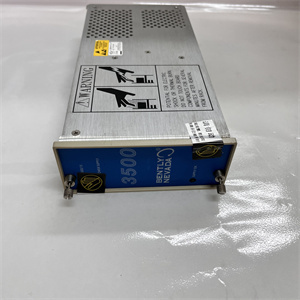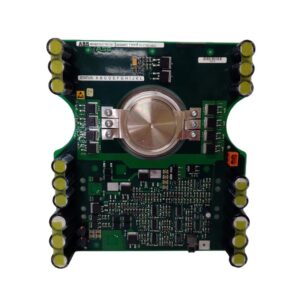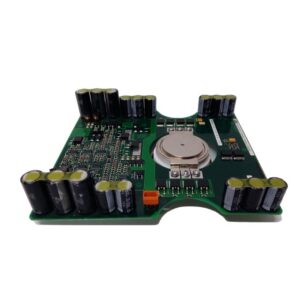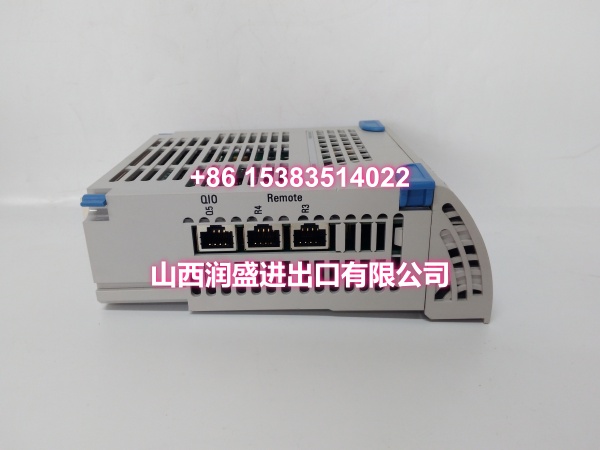
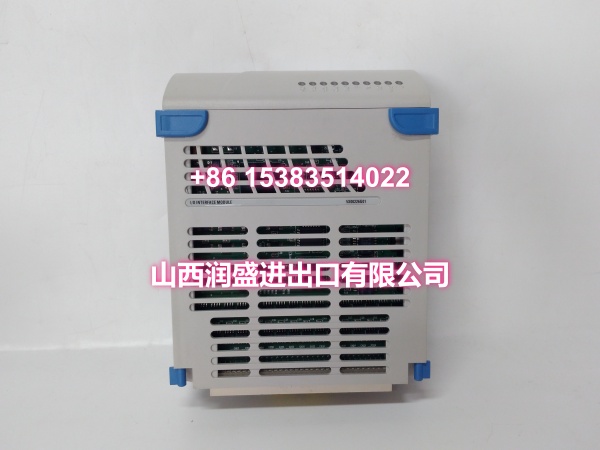
Description
Product Core Brief
- Model: 5X00226G01
- Brand: EMERSON
- Series: Ovation distributed control system I/O family
- Core Function: Provides electrically isolated dry-contact switching to drive solenoids, interposing relays, motor starters, beacons, and audible alarms from control logic
- Product Type: Relay output module
- Key Specs: Isolated relay contacts, Form A or Form C depending on terminal base | Backplane powered logic | Per-channel status LEDs typical
- Condition: New Surplus / Factory Sealed on request, confirmed per unit
Important before you order. Public listings disagree on this part. Some describe a mechanical relay output card, others push a solid-state version under a nearby suffix. Confirm the card face silkscreen, not the reseller headline.
Product Introduction
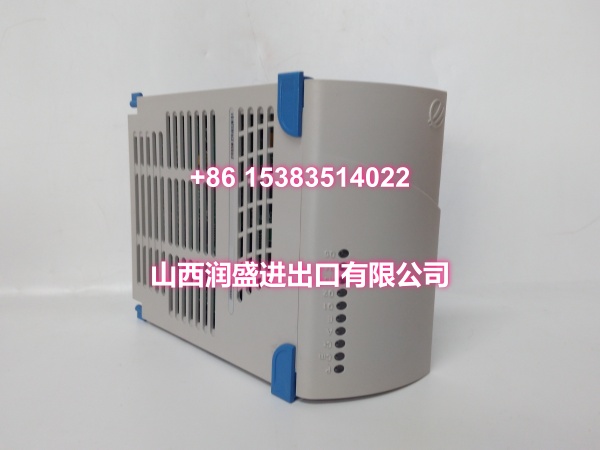
Most failed output loops are not the card. They are a blown base fuse, a floating shield, or a strategy still forcing the point. When it really is the card, a dry-contact output module is the piece that fails quietly, because contacts weld after repeated inrush and the loop looks alive while the solenoid never pulls. This Emerson unit sits in that path on Ovation racks, giving clean galvanic separation between control logic and field power so field transients do not travel back to the controller.
The real value is predictable replacement. A keyed plug-in card with per-channel LEDs lets a technician confirm state in minutes instead of chasing a phantom fault overnight. Plants that stock the electronic module plus the matching personality module and base routinely avoid the classic six-hour scramble where the card arrives but the assembly is incomplete. One correction from field experience: many “dead card” calls end up being wrong personality modules or missing base power, so verify the whole assembly, not just the board.
Key Technical Specifications
| Parameter | Value |
|---|---|
| Brand | Emerson |
| Model | 5X00226G01 |
| System Family | Ovation DCS I/O |
| Function | Relay output, dry contacts |
| Contact Type | Form A or Form C depending on terminal base and wiring |
| Isolation | Logic to contact galvanic isolation |
| Power Path | Backplane supplied for logic, field power separate |
| Load Flexibility | Can switch AC or DC within contact rating |
| Status Indication | Per-channel LEDs typical |
| Installation | Plug-in card for Ovation I/O rack or base with captive fasteners |
| Fail Behavior | Often configurable in strategy to defined state on controller or comm loss |
| Documentation Status | No confirmed public factory datasheet, verify by silkscreen and base assembly |
Key Selling Points & Differentiators
- True dry contacts, not a transistor stage. You can switch AC or DC within rating from the same point, which a solid-state output cannot do reliably.
- Field transient separation. Galvanic isolation helps keep contactor kickback and ground potential differences away from the controller.
- Faster fault tracing. Channel LEDs mirror output state on most builds, so you confirm whether the card fired or the strategy never commanded it.
- Brownfield friendly. Replacing like for like avoids reworking existing field wiring and terminal runs.
- Assembly-level supply. We ship the electronic module with the correct personality module and confirm base fit, because half an assembly is not a spare.
- Not recommended for safety instrumented functions unless your original design used this exact part there and you can prove proof test coverage. Do not drop it into an SIS trip loop on a reseller claim.
Quality Transparency SOP
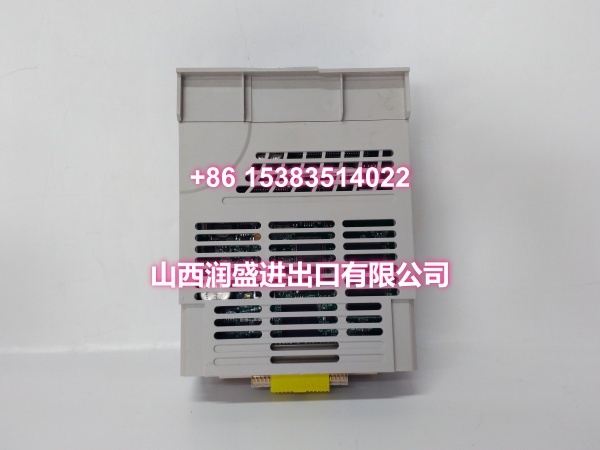
- Silkscreen and revision audit. PN, REV, and date code photographed from the board so you confirm it is a relay card and not a solid-state variant relabeled in a listing.
- Contact form verification. Continuity checked across COM, NO, and NC with a Fluke multimeter to confirm Form A or Form C behavior matches your terminal run.
- Coil drive test. The card is energized through its expected drive circuit and each relay is heard and measured for pull-in and drop-out, catching sticky or welded contacts.
- Insulation and isolation check. A Megger confirms logic-to-contact isolation, exposing degraded barriers that pass a quick power-on test but fail under field noise.
- Inductive kick review. Where the card drives coils, we confirm your design includes a flyback diode for DC or an RC snubber and varistor for AC, since missing suppression kills relays fast.
- Visual QA and sealing. Connector pins checked for bent or oxidized contacts, capacitors inspected for bulging, then sealed in anti-static packaging with desiccant.
Technical Risk Avoidance
❗ Buying the solid-state version by mistake. A solid-state output generally handles DC only and can burn out on AC or high inrush, while a mechanical card handles both within rating. Confirm which one your drawing calls for.
❗ Welded contacts masking as a working card. Repeated inrush into solenoids and motor starters welds contacts. The LED stays on, the load stays dead. Measure across the contacts, do not trust the light.
❗ Missing suppression on inductive loads. DC coils need a flyback diode, AC coils need an RC snubber or varistor, otherwise back EMF destroys the drive stage.
❗ Base power and fuse misdiagnosis. Blown base fuses or missing auxiliary supply get blamed on the card constantly. Check fuses and base supply with a multimeter first.
❗ Install order matters on Ovation hardware. Fit the personality module into the base first, then insert the electronic module and lock the latch, otherwise pins can bend and the board can burn on power-up. Also take the card points out of scan in I/O Builder before swapping.
Buyer’s FAQ
Is this a relay output or a solid-state output? Listings conflict. Most technical write-ups describe a dry-contact relay output for isolated switching of solenoids, interlocks, and alarms. Nearby part numbers are described as solid-state for DC loads. Send a photo of the card face and we will tell you which one you actually have.
Is it genuine Emerson OEM? It can be. Only the silkscreen proves it, since many reseller pages mix brand names loosely and list Ovation parts under unrelated brands. We provide board photos before payment.
New, new surplus, or refurbished? Batch dependent. New surplus means unused stock with possibly aged packaging. Refurbished means repaired or recapped. We state it per unit because failure risk differs a lot between the two.
Will it drop into my rack without changes? Usually, if the electronic module, personality module, base, slot, and controller configuration all match. Missing personality modules and out-of-scan points cause more failed installs than dead hardware.
What does the warranty cover? Bench-verified functional failure within the agreed window, assuming correct personality module, correct fuses, rated load, and proper suppression on inductive loads. Welded contacts from uncontrolled inrush, wrong voltage, or surge damage are excluded, and that is intentional rather than a loophole.