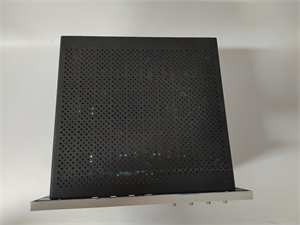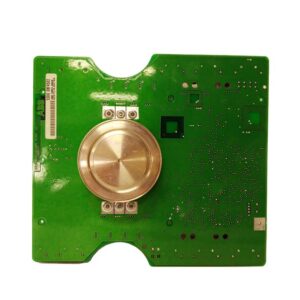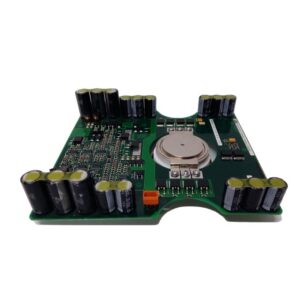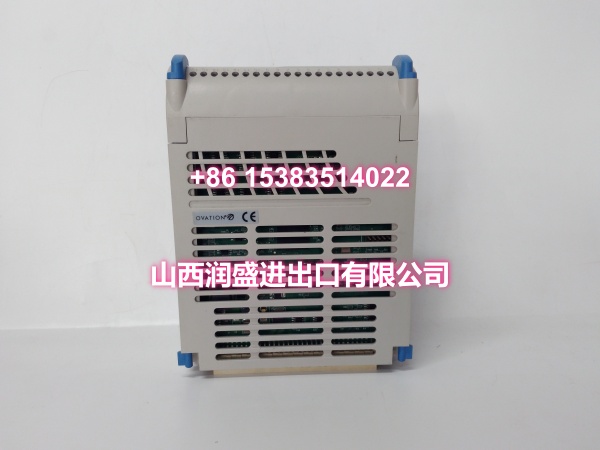
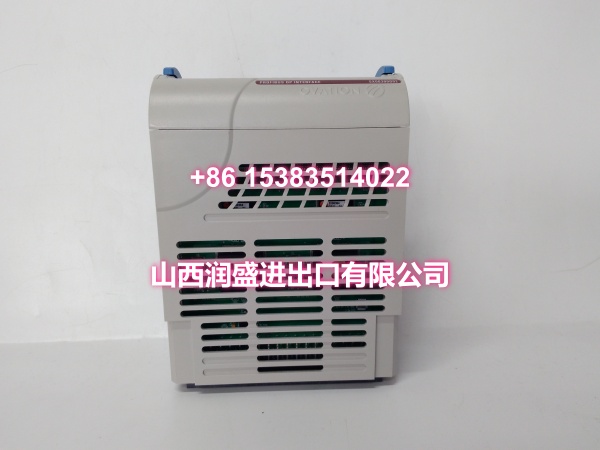
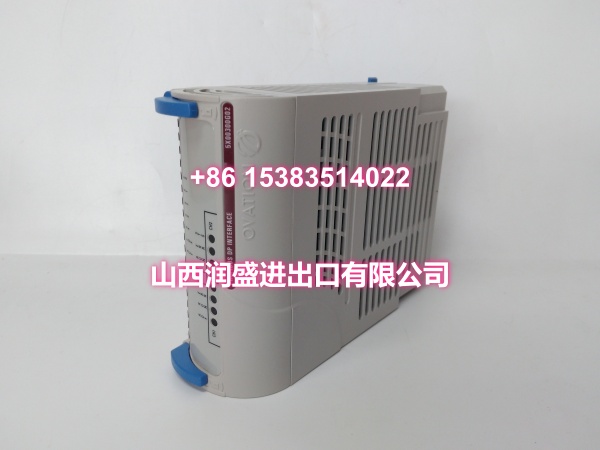
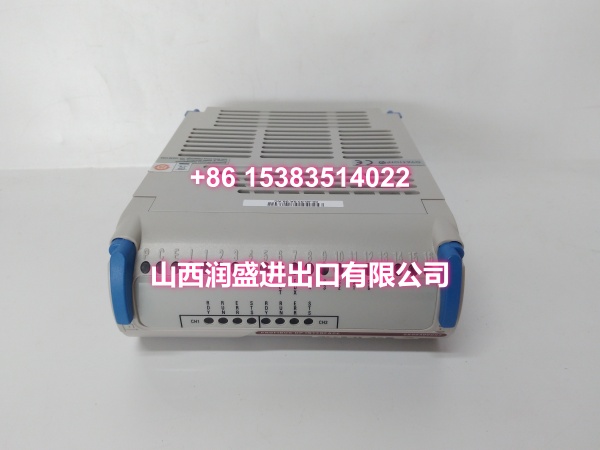
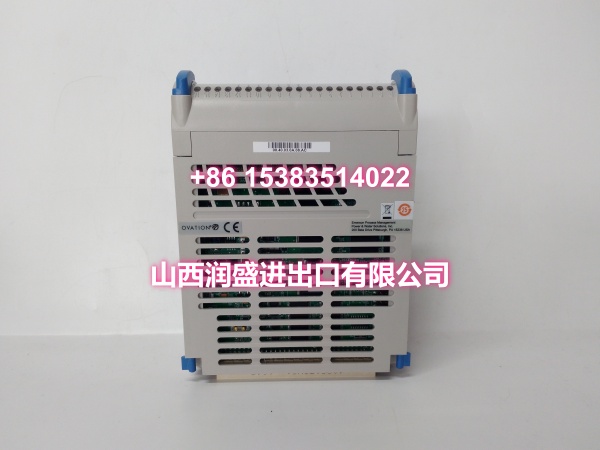
Description
Product Core Brief
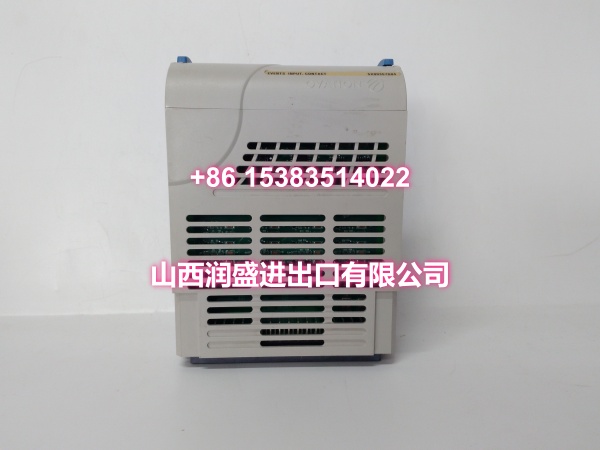
- Model: 5X00106G02
- Brand: EMERSON
- Series: Ovation control system family
- Core Function: Acquires analog process signals from field transmitters and passes conditioned data to the controller, with HART capability reported on most listings.
- Product Type: Analog input I/O module
- Key Specs: HART-capable analog input | Wide current input range reported up to -40mA to +40mA | Rack or base mounted with on-board signal conditioning
- Condition: New Surplus / Factory Sealed on request, confirm per unit
One honest note up front: public documentation for this specific part number is thin. Several sources describe it as a high-speed or fast HART analog input card, while a few reseller pages loosely call it a controller. Trust the card face silkscreen over any listing.
Product Introduction
A dead analog channel can quietly drag a control loop into manual for weeks. Operators blame the transmitter, electricians re-terminate the loop, and the real culprit turns out to be a failed conditioning stage on the input card. This Emerson unit sits in that exact path, converting live 4-20mA or voltage signals into clean process data the controller can act on, and it is commonly tied to the Ovation platform used across power generation, water treatment, and refining.
Where it pays off is downtime math. A rack swap that takes 20 minutes beats a 6-hour hunt for a phantom sensor fault. Plants that keep one spare analog input card plus the matching personality module and terminal assembly routinely cut unplanned loop outages, and avoid the far costlier outcome of running a boiler or turbine on bypassed protection. (Though your mileage may vary if the fault is actually a grounding problem, which is more common than card failure.)
Key Technical Specifications
| Parameter | Value |
|---|---|
| Brand | Emerson |
| Model | 5X00106G02 |
| System Family | Ovation DCS I/O |
| Function | Analog input acquisition |
| Signal Support | HART-capable analog input per most technical listings |
| Reported Input Range | -40mA to +40mA |
| Mounting | Rack or base mounted, plug-in module |
| Power Path | Backplane or base supplied, plus field loop power depending on wiring |
| Protection | On-board signal conditioning and fuse protection typical of Ovation I/O |
| Operating Environment | Industrial rack environment, confirm against your rack thermal profile |
| Assembly Structure | Electronic module plus personality module or cavity plug |
| Documentation Status | No confirmed public factory datasheet found, verify by card silkscreen |
Key Selling Points & Differentiators
- Direct loop replacement value. Swapping a confirmed bad input card restores a point in minutes instead of days of transmitter chasing.
- HART diagnostics access. Where the card truly supports HART, you get device status and diagnostic data, not just a raw 4-20mA value.
- Modular spare strategy. Carrying the electronic module with its matching personality module avoids the classic mistake of buying half a working assembly.
- Bench verified, not shelf promised. Each unit is checked for channel continuity, isolation, and LED status before packing, with a written report on request.
- Clear boundary on use. Not recommended for safety instrumented functions or trip logic unless your original design used this exact part in that role and you can prove proof test coverage. Do not substitute it into an SIS loop on a reseller’s word.
- Contrast with relay output cards. This is an input device. If you need to drive solenoids or interposing relays, an analog input card will not help you at all.

Quality Transparency SOP
- Silkscreen and revision audit. PN, REV, and date code photographed against the card face before any test, so you confirm it is not a relabeled board.
- Personality module match check. Verified against the electronic module, since a missing or wrong personality module makes the assembly useless in the rack.
- Channel injection test. A calibrated process calibrator injects 4mA, 12mA, and 20mA per channel, and readings are logged against expected values to catch drifted conditioning stages.
- HART handshake verification. Where supported, a HART communicator confirms digital polling and device variable readback, not just analog pass-through.
- Isolation and insulation check. Megger testing confirms channel-to-logic isolation, catching degraded opto or barrier components that pass a quick power-on test but fail under field noise.
- Visual and sealing QA. Connector pins inspected for oxidation or bent contacts, boards checked for bulged capacitors, then sealed in anti-static packaging with desiccant.
Technical Risk Avoidance
❗ Configuration address mismatch. Ovation configuration lives in the controller, not on the card. If the slot, module address, or point scaling does not match, the point stays bad quality even on a brand new unit. Check the configuration before blaming the spare.
❗ Wrong personality module or missing cavity plug. Installing without the correct personality module, or leaving a cavity plug out, causes rack communication faults and confusing diagnostic LEDs that look like a dead backplane.
❗ Ground loops and shielding. Floating shields or shields grounded at both ends create drifting readings that mimic card failure. Ground at one point only and keep analog runs away from power cables.
❗ Loop power and fuse confusion. Some analog loops draw field power, others rely on base or auxiliary supply. Blown base fuses are frequently misdiagnosed as failed cards, so check fuses first with a multimeter.
❗ Firmware and system version gaps. Older racks and newer controller builds do not always accept the same module revision. Confirm your Ovation version supports the revision printed on the card before install.
Buyer’s FAQ
Is this a genuine Emerson OEM part? It can be, but only the card silkscreen proves it. Many listings mix brand names loosely, and some even list this part under unrelated brands. We send photos of the actual board, including PN, REV, and serial, before payment.
Is it new, new surplus, or refurbished? It depends on the batch. New surplus means unused stock, often with aged packaging. Refurbished means it was repaired or recapped. We state the exact condition per unit rather than using one label for everything, because the failure risk differs a lot between them.
What is the real lead time? If it is on our shelf, packing and shipping usually take one to two business days. If it has to be sourced, expect longer and less predictable timing, since older Ovation inventory moves through limited channels and can be held by other buyers.
Will it drop into my existing rack without changes? Usually yes, if the electronic module, personality module, slot, and controller configuration all match. Most “it did not work” calls we get are configuration or wiring issues, not dead hardware. Send a rack photo and your point configuration and we will check before you install.
What does the warranty cover? We cover bench-verified functional failure within the agreed warranty window, provided the card was installed with the correct personality module, correct fuses, and within rack power and temperature limits. Damage from ground faults, wrong voltage, or lightning surge is not covered, and that is deliberate rather than a loophole.