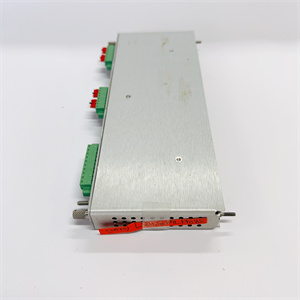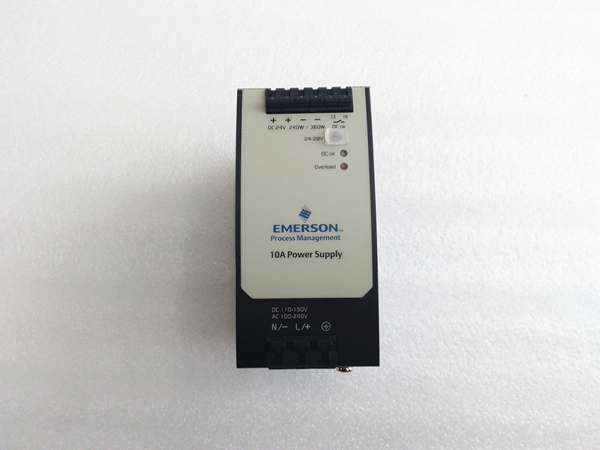
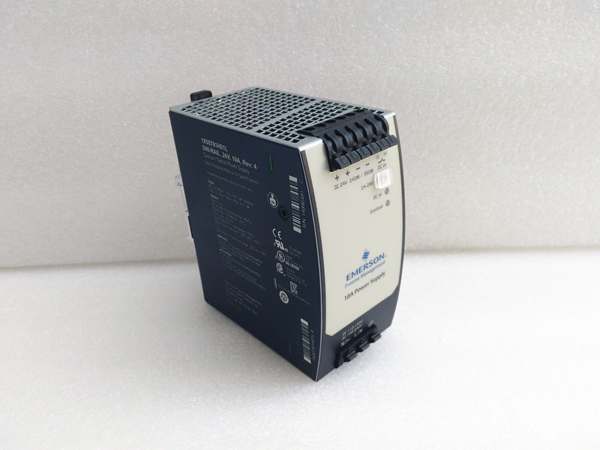
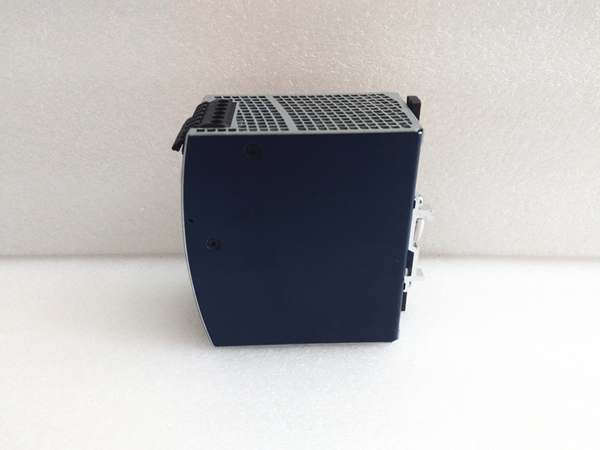
Description
Key Technical Specifications
-
Model Number: 1X00781H01L
-
Manufacturer: Emerson Automation Solutions
-
Channel Count: 4 independent analog output channels
-
Output Range: Configurable 4-20mA DC, 0-10V DC, 0-5V DC
-
Accuracy: ±0.1% of full scale (4-20mA range)
-
Isolation Rating: 1000V AC (channel to channel, channel to ground)
-
Load Capacity: Up to 600Ω for 4-20mA; 10kΩ min for voltage outputs
-
Response Time: <10ms (0-90% of full scale)
-
Operating Temperature: 0°C to 60°C (32°F to 140°F)
-
Power Consumption: 2.5W typical, 4W maximum
-
EMC Compliance: IEC 61000-4-2 (ESD ±8kV), IEC 61000-4-4 (EFT ±2kV)
-
Status Indicators: Module OK (green), Channel Active (green) per channel, Fault (red)
-
Mounting: 3U rack-mount, Ovation DCS I/O chassis compatible

EMERSON 1X00781H01L
Field Application & Problem Solved
In power plant turbine control and refinery valve regulation, analog output modules that drift or fail cause costly process upsets. I was called to a Midwest coal-fired plant in 2022 where a boiler feedwater valve oscillated wildly, leading to a 2-hour unit derate. The root cause? An outdated AO module with 0.5% accuracy that drifted 10% over 6 months. The 1X00781H01L solves this: its ±0.1% accuracy and channel isolation eliminate drift and cross-talk, ensuring valves and actuators respond precisely to DCS commands—critical for maintaining setpoints in high-pressure, high-temperature processes.
You’ll find this module in Ovation DCS racks controlling mission-critical devices: steam turbine governor valves, FCC unit slide valves, chemical reactor temperature control valves, and boiler draft dampers. At a Gulf Coast refinery, we installed 16 of these modules to control their crude distillation unit’s reflux valves. A month later, a lightning strike hit the field wiring—while older modules would have sent erratic signals, the 1X00781H01L’s EMC protection and isolation kept outputs stable. The refinery avoided a $300k unplanned shutdown that day, thanks to the module’s ability to filter out electrical noise.
Its core value is “output certainty.” Process control relies on the DCS’s ability to tell an actuator “open 50%”—if the AO module drifts to 55%, the process goes out of spec. The 1X00781H01L’s precision and stability mean operators trust the output signals, reducing manual intervention. For maintenance teams, it eliminates the “calibrate today, drift tomorrow” cycle—this module holds calibration for 12+ months under normal operating conditions. Unlike generic modules, it integrates with Ovation’s diagnostics, so you can remotely monitor each channel’s output and detect issues like short circuits before they cause process upsets. It’s not just an output card; it’s the link between DCS logic and real-world process control.
Installation & Maintenance Pitfalls (Expert Tips)
Calibration: Don’t Skip the Load Simulation
Rookies calibrate the 1X00781H01L without simulating the field load, leading to inaccurate valve responses. A Pennsylvania chemical plant did this— the module calibrated perfectly at the bench but sent 18mA instead of 20mA to a valve with 600Ω resistance. Always use a precision load resistor (matching the actuator’s impedance) during calibration: 600Ω for 4-20mA valves, 10kΩ for voltage-controlled devices. Use Ovation’s built-in calibration tool to set 4mA (0%) and 20mA (100%) points, then verify the midpoint (12mA) — it should be within ±0.05mA. If not, adjust the module’s trim potentiometer (accessible via the front panel) and recheck.
Wiring: Separate Signal Wires from Power Cables
Running 4-20mA signal wires in the same conduit as 120V AC power cables induces noise, causing valve hunting. I saw this at a Florida power plant— the 1X00781H01L’s output fluctuated 0.5mA, making the boiler feedwater valve chatter. The module’s isolation helps, but it’s not foolproof. Run signal wires in dedicated galvanized conduit, at least 30cm away from power cables. Use twisted-pair shielded wire, and ground the shield only at the module’s shield terminal (not at the valve). After wiring, measure the signal with a precision multimeter—fluctuations should be less than 0.02mA. If noise persists, add a signal conditioner inline (Emerson’s 1X00500H01 works perfectly with this module).
Fault Diagnostics: Don’t Ignore Open-Circuit Alarms
Many teams mute open-circuit alarms to reduce HMI clutter, risking unresponsive actuators. A Texas refinery did this and missed a broken wire to a reactor temperature control valve— the valve stayed closed, leading to a temperature spike and a $150k batch loss. The 1X00781H01L’s open-circuit detection is a safety feature, not a nuisance. Map these alarms to the Ovation event log and set up email alerts for critical channels (e.g., turbine governor valves). For non-critical channels, use a 10-second delay before alerting—this avoids false alarms from temporary wire disconnections during maintenance.
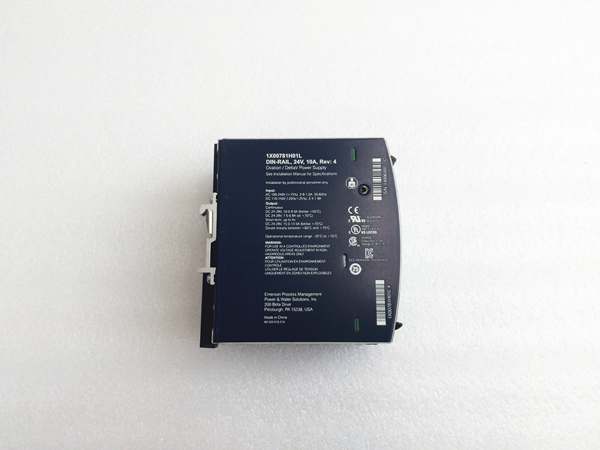
EMERSON 1X00781H01L
Technical Deep Dive & Overview
The 1X00781H01L is a precision analog output module designed for the harsh electrical and environmental conditions of industrial plants. Each channel has its own dedicated DAC (digital-to-analog converter) and signal conditioner, so a fault in one channel doesn’t affect the others. The module receives digital commands from the Ovation controller via the backplane, converts them to precise analog signals, and sends them to field devices—all in under 10ms, fast enough for time-critical applications like turbine speed control.
Its 1000V AC channel isolation is a standout feature—critical in plants with ground loops or mixed-voltage systems. Each channel is isolated from the module’s power supply and other channels, so a short to 120V AC in one valve’s wiring won’t damage the module or corrupt other outputs. The EMC protection uses transient voltage suppressors (TVSs) to clamp lightning-induced spikes, which is essential for outdoor applications like offshore platforms. The module also includes overcurrent protection—if a channel shorts, it limits current to 50mA, preventing damage to the DAC.
Hot-swappable design lets you replace a faulty module without powering down the I/O chassis—critical for 24/7 operations like nuclear power plants or refineries. The per-channel LEDs simplify troubleshooting: steady green means the channel is active and outputting a signal, flashing green means a low-load condition, and red means an open circuit or overcurrent. Unlike legacy modules, it integrates with Ovation’s Asset Management System, so you can run remote calibration checks and track module health over time. It’s a quiet workhorse that does its job reliably—until it needs to alert you to a problem that could take your process out of control.