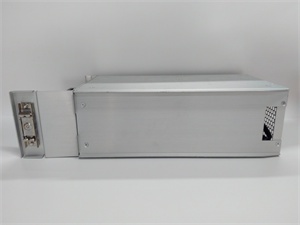
Description
Key Technical Specifications
-
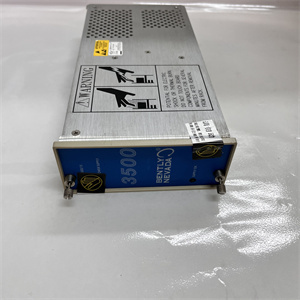
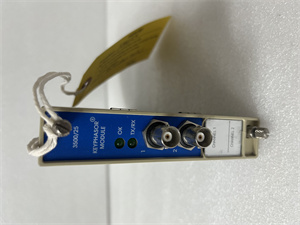
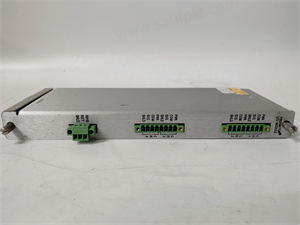
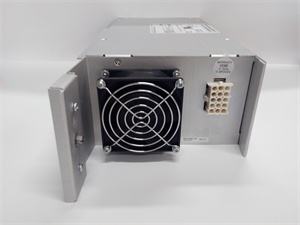
Model Number: 1X00416H01
-
Manufacturer: Emerson Automation Solutions
-
Channel Count: 8 independent analog channels (configurable as input/output)
-
Signal Type: 4-20mA DC, 0-10V DC (software-selectable per channel)
-
Isolation Rating: 2500V AC (channel to channel, channel to ground)
-
Surge Protection: ±2kV (per IEC 61000-4-5)
-
Operating Temperature: -40°C to 70°C (-40°F to 158°F) for standard; -55°C to 85°C for H01-02
-
Wiring Type: Screw terminals (2.5mm² max wire size), spring-clamp optional
-
Form Factor: 1U rack-mount, Ovation DCS I/O rack compatible
-
Response Time: <1ms for signal conversion
-
Accuracy: ±0.1% of full scale (4-20mA range)
-
Status Indicators: Channel-active (green), signal fault (red) per channel
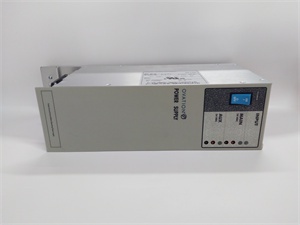
EMERSON 1X00416H01
Field Application & Problem Solved
In refineries and chemical plants, noisy signal lines and crossed wiring are the bane of control systems. I responded to a Texas petrochemical plant in 2022 where a level transmitter’s signal was fluctuating wildly, causing the reactor to overfill. The issue? A non-isolated terminal block that let electrical noise from nearby VFDs bleed into the 4-20mA signal. That’s the problem this module solves: it acts as a barrier between messy field wiring and the sensitive DCS I/O, blocking noise and preventing cross-channel interference.
You’ll find these modules wherever analog signals are critical: power plant boiler feedwater pressure sensors, refinery FCC unit temperature transmitters, and chemical reactor level controllers. At a Midwest power plant, we replaced old non-isolated terminals with 1X00416H01 modules on their turbine control system. Immediately, the steam pressure signal variability dropped from ±5% to ±0.2%, and the turbine’s load stability improved dramatically. During a lightning storm two months later, the surge protection kicked in—none of the connected transmitters or DCS modules failed, saving a potential $150k in replacement parts.
Its core value is “signal integrity.” Cheap terminal blocks just pass wires through—this one conditions and protects the signal. The 2500V isolation means a ground loop in one channel won’t take down the entire rack, and the surge protection handles the electrical transients common in industrial environments. For control engineers, it’s not just a wiring component—it’s a way to eliminate “ghost” signal faults that take hours to troubleshoot. Unlike generic terminals, it’s built to match Ovation DCS’s reliability, so you don’t have to worry about a $20 part taking down a $2M process unit.
Installation & Maintenance Pitfalls (Expert Tips)
Wiring Torque: Don’t Skimp on the Torque Wrench
Rookies tighten terminal screws by hand, leading to loose connections that cause intermittent signal drops. A Colorado refinery had this issue with a level transmitter— the signal would cut out whenever the plant vibrated. Emerson specifies 0.8 N·m torque for 2.5mm² wires. Use a calibrated torque screwdriver, not a regular screwdriver. After wiring, give each wire a gentle tug—if it moves, it’s too loose. Loose connections generate heat, which degrades the terminal and can cause a fire in dusty control rooms.
Shield Grounding: One Ground, Not Multiple
Grounding signal shields at both the field device and the terminal block creates ground loops— the #1 cause of noisy 4-20mA signals. I saw this at a California chemical plant: a pH transmitter’s signal was oscillating because the shield was grounded at both ends. The 1X00489G01 has a dedicated shield ground terminal—connect all shields here, and only here. Leave the field device’s shield ungrounded. After fixing this, the pH signal noise dropped from 0.5mA to 0.01mA, and the reactor’s chemical dosing stabilized.
Channel Configuration: Match I/O Type to Signal
Many teams use the same channel for 4-20mA input and output without reconfiguring, leading to module damage. A Nevada power plant plugged an actuator’s 4-20mA output into a channel set for input—burning out the channel’s signal converter. Use Emerson’s AMS software to set each channel’s mode (input/output) before wiring. Label each channel clearly with the signal type (e.g., “PT-1001: 4-20mA Input”)—this prevents mix-ups during maintenance. After configuration, test with a signal generator: inject 4mA, 12mA, and 20mA to confirm the DCS reads correctly.
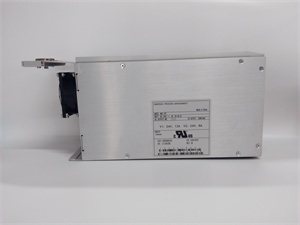
EMERSON 1X00416H01
Technical Deep Dive & Overview
The 1X00416H01 is more than a terminal block—it’s an integrated signal conditioning module. Each channel has its own isolation transformer and surge protection circuit, so issues in one channel don’t affect others. It connects to the Ovation DCS I/O module via a backplane connector, passing conditioned signals directly to the DCS’s analog-to-digital converter (ADC).
The isolation works by using optocouplers to separate the field-side signal from the DCS-side signal—no direct electrical connection. This breaks ground loops and blocks high-voltage transients (like lightning strikes) from reaching the DCS. The surge protection uses metal-oxide varistors (MOVs) that clamp voltage spikes to safe levels in microseconds. Unlike passive terminals, it also buffers weak signals from distant sensors (up to 1000ft away), ensuring the DCS gets an accurate reading.
Its modular design lets you replace a faulty module without rewiring the entire rack—just disconnect the backplane and swap it out. The per-channel status LEDs are crucial for troubleshooting: a red fault light tells you exactly which channel has a problem (e.g., short circuit, overvoltage) instead of making you test every wire. It’s a small component, but it’s the bridge between the messy field and the precise DCS—without it, even the best control system can’t make good decisions.