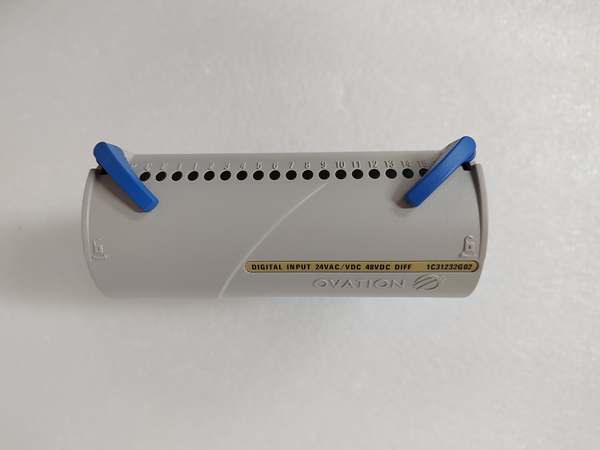
Description
Key Technical Specifications
-
Model Number: 1C31232G02
-
Manufacturer: Emerson Automation Solutions
-
Channel Count: 16 discrete digital input channels (group-isolated)
-
Input Voltage: 24V DC (18V DC min – 30V DC max)
-
Isolation Rating: 500V AC (channel group to ground, channel group to group)
-
Input Current: 8mA typical at 24V DC (on-state)
-
Operating Temperature: 0°C to 60°C (32°F to 140°F)
-
Response Time: 1ms to 100ms (software-adjustable debounce)
-
Form Factor: 3U rack-mount, DeltaV S-series I/O card compatible
-
EMC Protection: IEC 61000-4-2 (ESD ±8kV contact), IEC 61000-4-4 (EFT ±2kV)
-
Status Indicators: Module OK (green), Channel On (green) per channel, Fault (red)
-
Diagnostics: Open-circuit detection, overvoltage detection, module self-test
-
Manufacturer: Emerson Automation Solutions
-
Channel Count: 8 independent analog channels (configurable as input/output)
-
Signal Type: 4-20mA DC, 0-10V DC (software-selectable per channel)
-
Isolation Rating: 2500V AC (channel to channel, channel to ground)
-
Surge Protection: ±2kV (per IEC 61000-4-5)
-
Operating Temperature: -40°C to 70°C (-40°F to 158°F) for standard; -55°C to 85°C for H01-02
-
Wiring Type: Screw terminals (2.5mm² max wire size), spring-clamp optional
-
Form Factor: 1U rack-mount, Ovation DCS I/O rack compatible
-
Response Time: <1ms for signal conversion
-
Accuracy: ±0.1% of full scale (4-20mA range)
-
Status Indicators: Channel-active (green), signal fault (red) per channel
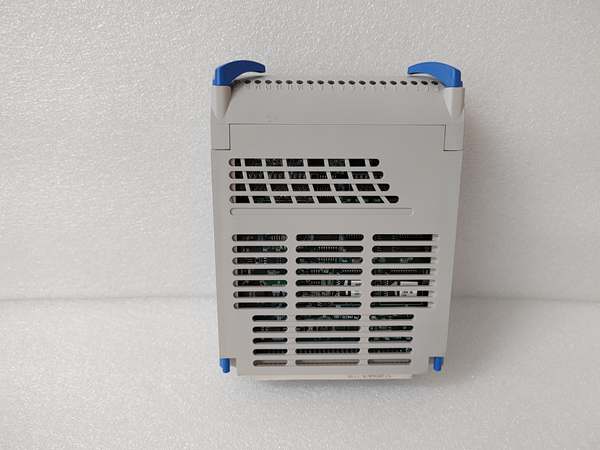
Emerson 1C31232G02
Field Application & Problem Solved
In power plant boiler controls and refinery safety systems, false digital input signals are a nightmare. I was called to a Midwest coal-fired plant in 2023 where a boiler trip occurred because a non-isolated DI module misread a limit switch signal—electrical noise from the feedwater pump VFDs caused a “false on” reading. That’s the problem this module solves: it filters out industrial noise and prevents false signals, which is critical for safety instrumented systems (SIS) and process shutdown logic.
You’ll find this module wherever discrete status monitoring is non-negotiable: boiler high-level limit switches, FCC unit valve position sensors, chemical reactor pressure interlocks, and turbine overspeed trip switches. At a Gulf Coast refinery, we installed 12 of these modules in the SIS for their crude distillation unit. Within a month, a lightning strike hit the field wiring—while older modules would have triggered false trips, the 1C31232G02’s EMC protection kept signals stable. The refinery avoided a $200k unplanned shutdown that day.
Its core value is “signal trust.” Cheap DI modules treat every voltage blip as a valid signal—this one uses configurable debounce and group isolation to distinguish real switch closures from noise. The 500V isolation means a ground fault in one channel group won’t corrupt signals in another, which is essential for meeting IEC 61511 SIS requirements. For control engineers, it’s not just an input card—it’s the difference between a valid shutdown and a costly false trip. Unlike generic modules, it’s fully integrated with DeltaV’s diagnostics, so you can pinpoint a faulty switch instead of troubleshooting miles of wiring.
Installation & Maintenance Pitfalls (Expert Tips)
Debounce Setting: Match to Switch Type
Rookies leave debounce at the default 1ms, leading to false signals from mechanical switches. A Pennsylvania chemical plant had this issue with float level switches— the switch’s contact bounce triggered 3 false trips in a week. Set debounce based on the device: 1-5ms for solid-state sensors, 20-50ms for mechanical limit switches, 50-100ms for vibratory switches. Use DeltaV Explorer to adjust per channel (not globally)—this way, you don’t slow down fast-acting sensors to fix bouncy switches. Test with an oscilloscope: the module should ignore contact bounce and only register a steady on/off signal.
Common Wiring: Avoid Daisy-Chaining Power
Daisy-chaining 24V power to multiple switches from a single module terminal causes voltage drops and open-circuit false alarms. A Texas power plant did this— a distant limit switch showed “open” because the voltage dropped to 17V after powering 8 switches. Use a dedicated power distribution block for field devices, with a separate 24V feed per 4-6 switches. The 1C31232G02’s open-circuit detection should only trigger for actual faults, not voltage starvation. Verify with a multimeter at the switch: voltage should stay above 20V when all switches are on.
Diagnostic Alarms: Don’t Mute Open-Circuit Detection
Many teams mute open-circuit alarms to reduce HMI clutter—big mistake. A Florida refinery muted these alarms and missed a broken wire to a pressure interlock switch; the switch failed to trigger a shutdown during a pressure spike, leading to a small explosion. The 1C31232G02’s open-circuit detection is a safety feature, not a nuisance. Map these alarms to the DeltaV event log and set up email alerts for critical channels (e.g., turbine trip switches). For non-critical switches, use a “delayed alarm” instead of muting—give the maintenance team 10 minutes to fix a loose wire before alerting the control room.
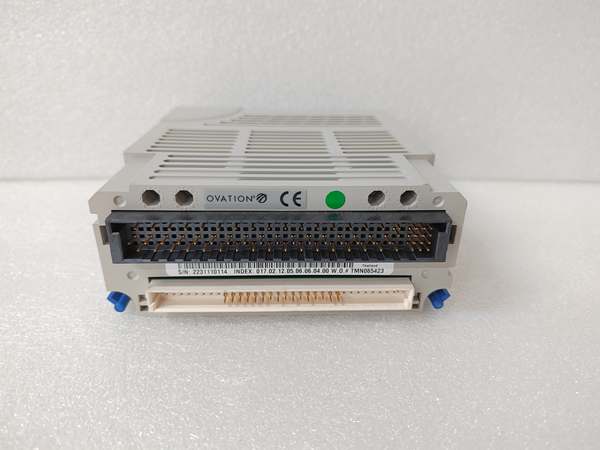
Emerson 1C31232G02
Technical Deep Dive & Overview
The 1C31232G02 is a smart digital input module built for industrial rigor, with a dedicated microprocessor per channel group. It doesn’t just pass on voltage signals—it processes them: first, the input circuit filters out high-frequency noise, then the debounce logic ignores transient blips, and finally, the isolation circuit separates the field signal from the DeltaV backplane. This processing happens in microseconds, so there’s no lag for time-critical applications like emergency shutdowns.
Group isolation (4 channels per group) is key to its reliability. Each group has its own isolation transformer and surge protection, so a fault in one group (e.g., a short to 120V AC) won’t take down the entire module. The EMC protection uses transient voltage suppressors (TVSs) to clamp lightning-induced spikes, which is critical for outdoor applications like offshore platforms. The module communicates with the DeltaV controller via the backplane, sending both signal status and diagnostic data—so you get more than just “on/off”; you get “on, and the wire is intact.”
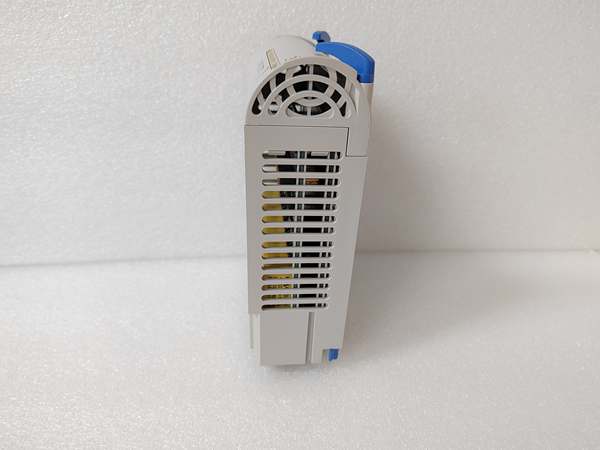
Its hot-swappable design is a lifesaver for 24/7 operations—you can replace a faulty module without powering down the I/O rack. The per-channel LEDs let you troubleshoot at a glance: a green light means the channel is on, no light means off, and a flashing red light means an open circuit or overvoltage. Unlike legacy modules, it integrates with DeltaV’s Asset Management System, so you can run self-tests remotely and track module health over time. It’s a workhorse that does its job quietly—until it needs to alert you to a problem that could shut down your plant.