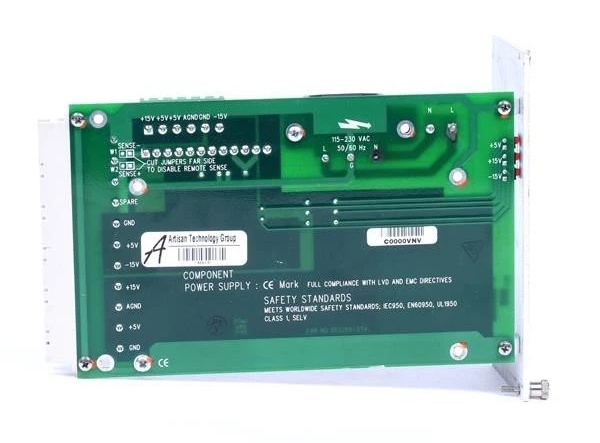
Description
Key Technical & Structural Features
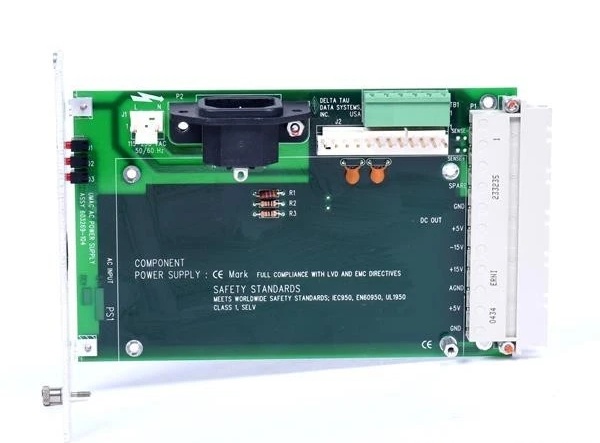
- Voltage Output Configuration: The module has a clear and targeted voltage output design. It can stably provide three groups of DC voltages: +5V, +15V and -15V, and is equipped with GND (ground) and AGND (analog ground) interfaces. This voltage combination is highly compatible with the power demand characteristics of the UMAC system’s CPU board, servo interface board and I/O interface board. Among them, the +5V voltage is usually used to supply power for the logic circuits of each board, while the ±15V voltage is more suitable for the operation of analog circuits such as signal conversion modules on the board, ensuring the normal operation of various functional modules of the system.
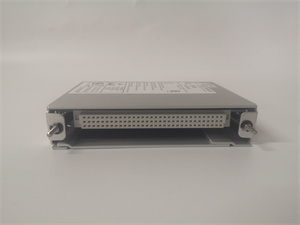
- Backplane Integrated Design: It adopts a dedicated connector design that matches the UMAC UBUS backplane. The UMAC backplane that supports 4 – 18 slots is pre – equipped with a special connection port for ACC – E1. When installing, it can be directly connected without complicated external wiring. At the same time, each voltage output of the power supply module adopts a wide plane connection on the backplane. This design can reduce voltage loss and ensure that each 3U – format circuit board connected to the backplane can obtain stable voltage.
- System Adaptability: It is highly integrated with the UMAC system. The signal traces of the UMAC backplane are terminated in a way optimized for the system when matching with this power supply module. This not only avoids signal interference caused by power supply fluctuations but also ensures the synchronization and stability of data transmission between the UMAC CPU board and other functional boards, laying a foundation for the high – precision motion control of the entire system.
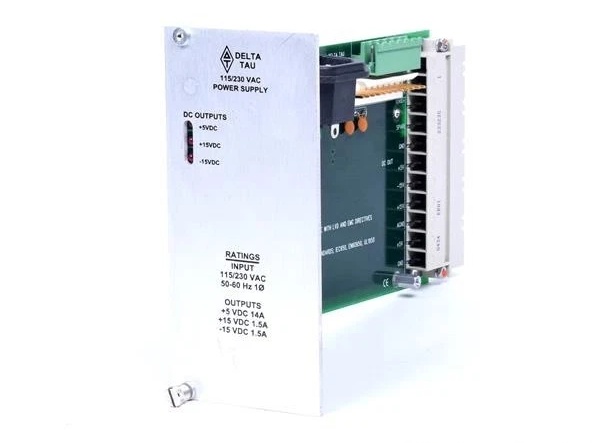
DELTA TAU ACC-E1
Field Application & Problem Solved
In the UMAC – based industrial motion control system, there are multiple functional circuit boards such as servo interface boards and I/O boards working together. These boards have different voltage requirements, and the power supply stability directly affects the control precision and operation reliability of the equipment. If using a universal power supply, it often requires complex wiring to match different voltage demands, and there are hidden dangers such as voltage mismatch and poor stability.
The ACC – E1 solves these problems perfectly. In the precision CNC machining field, it supplies power to the UMAC controller system of the machine tool, ensuring the stable operation of the spindle and feed axis control modules, thus guaranteeing the machining accuracy of workpieces. In semiconductor production equipment, it provides reliable power for the UMAC system that controls the wafer transfer and processing mechanism, avoiding equipment failures caused by power supply problems. In addition, for the UMAC system that needs to expand functional boards, the ACC – E1 can stably support the power demand of the expanded 3U circuit boards on the 4 – 18 slot backplane, meeting the personalized configuration needs of different industrial scenarios without the need to add additional power supply modules.
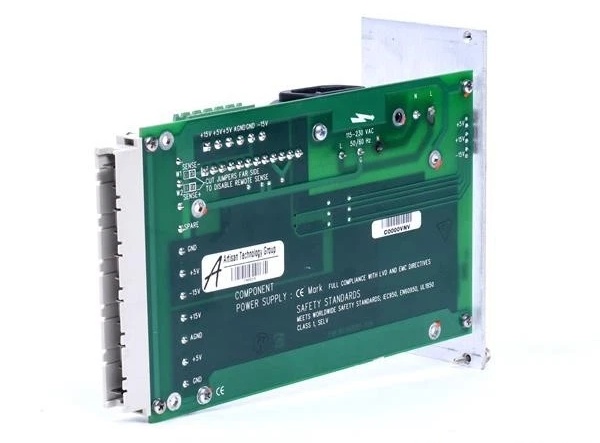
DELTA TAU ACC-E1
Installation & Maintenance Pitfalls (Expert Tips)
- Ignoring Connector Matching: The module uses a special connector for the UMAC backplane. If it is mistakenly connected through a non – dedicated connector or the connector is loose during installation, it will lead to poor contact, resulting in unstable voltage output or even no power supply. During installation, it is necessary to confirm that the connector is aligned with the backplane’s special interface and insert it in place, and check the firmness of the connection.
- Neglecting Input Voltage Compatibility: There is a version of this module with an input voltage of 120V. If it is directly connected to a 220V AC power supply without a voltage converter, the module will be burned out. Before power – on, it is necessary to check the input voltage label of the module, confirm the applicable power supply specifications, and configure a matching power supply or voltage conversion device if necessary.
- Overlooking Grounding Issues: The module is equipped with GND and AGND dual – ground interfaces. If the grounding operation is not standardized during installation, such as poor grounding contact or confused grounding of analog and digital circuits, it will cause electromagnetic interference and affect the stability of the power supply and the signal transmission of the system. It is necessary to strictly follow the UMAC system manual to carry out the grounding wiring to ensure the independence and reliability of the ground loop.
- Neglecting Regular Functional Testing: As a core power component, the aging of internal components of the ACC – E1 will lead to voltage fluctuations. If it is not tested regularly, it may cause hidden dangers to the entire UMAC system. It is recommended to use professional instruments to detect the output voltage of the module regularly. Once the voltage deviates from the rated range, it should be repaired or replaced in time. At the same time, pay attention to the storage of spare modules, as some channels are out of stock occasionally.