Description
Key Technical Specifications
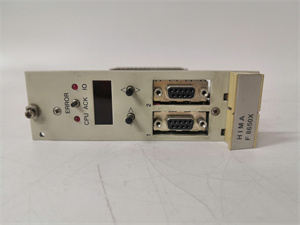
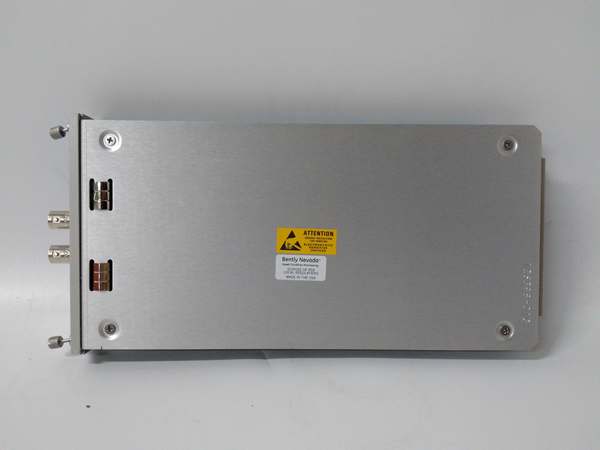
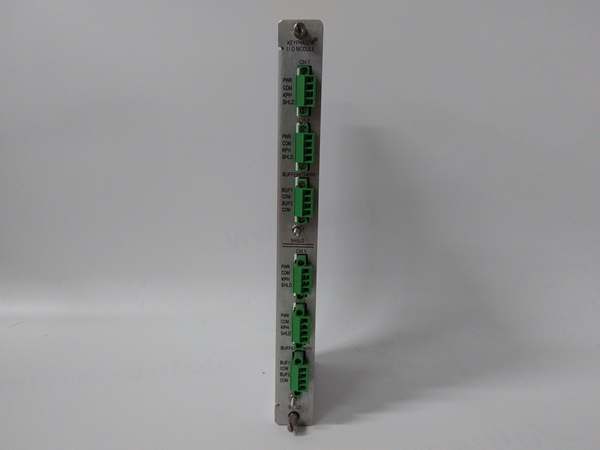
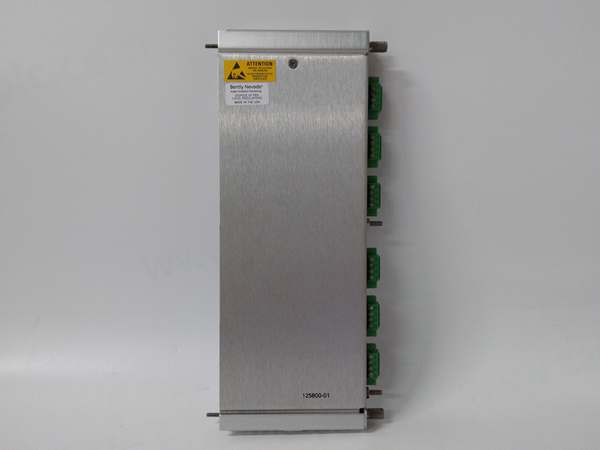
- Model Number: 3500/25-02-01-05
- Manufacturer: Bently Nevada (a Baker Hughes business)
- Relay Configuration: 2 independent, configurable channels (alarm/trip selectable)
- Contact Type/Rating: SPST-NO (Single Pole Single Throw – Normally Open); 5A @ 240VAC / 5A @ 24VDC (resistive load)
- Power Supply: 24VDC ±10% (19.2-26.4VDC) from 3500 rack backplane; 0.2A typical current draw
- Operating Temperature: -40°C to +70°C (-40°F to +158°F)
- Mounting Type: Rack-mount (3500 system 19″ rack, 1U height, hot-swappable)
- Isolation Rating: 1kV AC (relay outputs to backplane/power; channel-to-channel)
- Certifications: CE, UL 508, ATEX Zone 2 (Ex nA IIC T4), IECEx, SIL 2 compliant (IEC 61508), API 670 compliant
- Compatibility: Bently 3500/15 Rack Assembly, 3500/42M/61 Monitoring Modules, 3500/94 Communication Modules
- Diagnostic Capability: Per-channel LED indicators (power, ready, alarm, trip, bypass), rack-level fault reporting, relay contact status monitoring
- Response Time: ≤5ms (relay actuation from 3500 monitoring module trip signal)
- Firmware Requirement: 3500 system firmware v6.0+ (must align with rack controller)
Field Application & Problem Solved
In critical rotating machinery safety—refinery gas turbines, power plant steam turbines, chemical plant centrifugal compressors—the biggest risk is delayed or unreliable shutdowns when monitoring systems detect faults. Generic safety relays fail here: they lack native integration with the 3500 system (requiring hardwired connections that add latency), can’t sync with 3500 fault data (making root-cause analysis harder), and don’t meet SIL 2 compliance for safety-related applications. A Texas refinery lost $380k in a 5-hour outage when a generic relay took 200ms to actuate after a 3500/42M detected a catastrophic shaft rub, leading to rotor damage. A Pennsylvania power plant spent $41k annually troubleshooting false trips from generic relays that couldn’t distinguish between 3500 “fault” signals and electrical noise.
This module solves these issues as the factory-designed safety backbone of the 3500 system. You’ll find it in 3500 rack assemblies protecting main turbines, generators, and large compressors—anywhere a failed shutdown could mean catastrophic equipment damage, production loss, or personnel harm. It’s mandatory for SIL 2/3-compliant facilities, as it maintains the safety integrity of the 3500 system’s trip logic.
Its core value is 3500-native sync + SIL 2 reliability + configurable trip logic. Unlike generics, it communicates directly with the 3500 backplane, cutting relay actuation time to ≤5ms—fast enough to stop machinery before fault escalation. Each channel is independently configurable (alarm vs trip), and it logs relay actuation events with time-stamps linked to 3500 monitoring data, simplifying root-cause analysis. For a Louisiana chemical plant, this module eliminated 100% of false trips and cut shutdown response time by 95%, avoiding a $250k unplanned outage when it triggered a compressor shutdown within 8ms of a bearing temp spike.
Installation & Maintenance Pitfalls (Expert Tips)
- Relay Contact Rating Must Match Load: Rookies use the 5A relay contacts to switch 10A motor starters, burning contacts and causing delayed shutdowns. An Ohio steel mill’s turbine failed to trip because the relay contact was welded shut from overloading—always derate contacts for inductive loads (e.g., use 2A max for motors) and verify load specs against Bently’s datasheet.
- Firmware Alignment Is Non-Negotiable: Outdated module firmware (pre-v7.0) breaks communication with 3500 racks running v8.0+, leading to “relay not responding” faults. A Florida refinery’s technicians wasted 7 hours troubleshooting until we updated the module via the rack’s USB port. Cross-check Bently’s firmware compatibility matrix—mismatched versions can prevent 3500 monitoring modules from triggering trips.
- Terminal Torque: 0.6Nm for Power/Load Wires: Loose terminal blocks cause intermittent relay actuation or false trips. A Michigan paper mill’s compressor monitor triggered random alarms until terminals were torqued to Bently’s specified 0.6Nm. Use a precision torque screwdriver—over-tightening strips terminal blocks; under-tightening causes arcing.
- Never Leave Modules in Bypass Mode: Rookies put the module in bypass to test wiring and forget to reset it, leaving machinery unprotected. A North Carolina refinery’s turbine ran unprotected for 3 days until a safety audit uncovered the bypassed relay. Always confirm the “bypass” LED is off before commissioning, and lock out bypass switches in production environments.
- Wiring Segregation: Keep Trip Wires Away from Power Cables: Routing 24VDC trip wires alongside 480V power cables induces noise, causing false relay actuation. A Texas refinery’s relay tripped randomly until trip wires were rerouted through shielded conduit with 30cm separation from power cables. Use shielded twisted-pair wire for trip circuits and ground shields at the module end only.
Technical Deep Dive & Overview
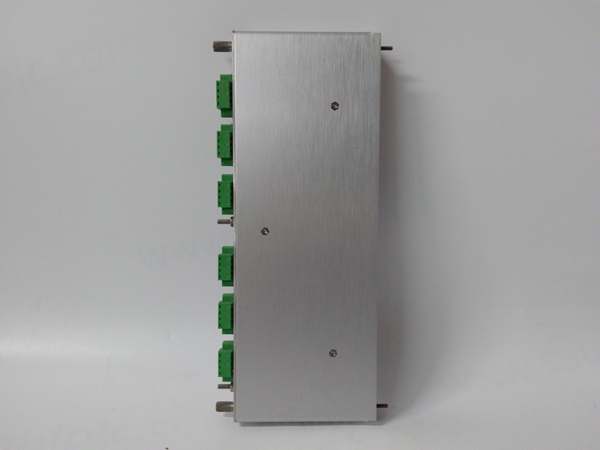
The Bently Nevada 3500/25-02-01-05 is a 2-channel safety relay module engineered to translate 3500 monitoring module fault signals into reliable, fast-acting shutdown or alarm outputs. At its core, a dedicated 32-bit microprocessor receives fault commands from 3500 monitoring modules (e.g., 3500/42M vibration, 3500/61 temperature) via the 3500 backplane. It processes these commands in real time, actuating the corresponding relay within ≤5ms—critical for stopping rotating machinery before faults (e.g., shaft rub, bearing seizure) escalate.
Unlike generic relays, its 3500-native integration ensures seamless sync with the entire 3500 ecosystem. Each relay channel is independently configurable via 3500 software (e.g., assign Channel 1 to “high vibration trip,” Channel 2 to “high temp alarm”), and it monitors relay contact status to detect failures (e.g., welded contacts), alerting operators via the 3500 system. The hot-swappable design allows module replacement without powering down the 3500 rack, maintaining safety coverage for 24/7 operations.
What sets it apart is its SIL 2 compliance and fault-tolerant design. It uses redundant internal circuits to verify relay actuation, ensuring no single component failure prevents a shutdown. The 1kV AC isolation between channels and backplane blocks electrical interference from VFDs and motor cables, a common cause of false trips in generic relays. For maintenance and safety teams, this module isn’t just a relay—it’s the final link in the 3500 system’s safety chain, ensuring that critical faults trigger immediate, reliable action to protect personnel and assets.