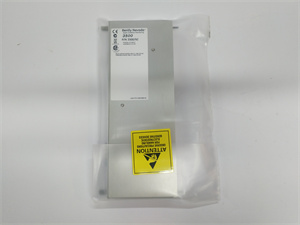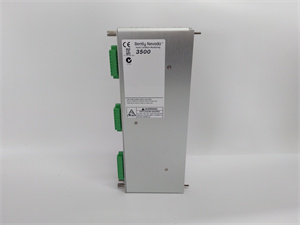
Description
Hard-Numbers: Technical Specifications
- Measurement Channels: 4 independent valve position channels
- Transducer Support: LVDTs (Linear Variable Differential Transformers) or linear RVDTs (Rotary Variable Differential Transformers)
- Measurement Range: 0 to 50 mm (configurable up to 100 mm with sensor selection)
- Measurement Accuracy: ±0.1% of full scale (±0.05 mm typical for 50 mm range)
- DC Output: 4-20 mA per channel (proportional to measured position)
- Alert/Danger Setpoints: Software-configurable with hysteresis (typically ±2% FS)
- Bypass Capability: Manual or automatic bypass per channel
- Communication Interface: Internal VME bus to rack controller (no direct field communication)
- Isolation: 1500V RMS galvanic isolation between channels and backplane circuits
- Operating Temperature: 0°C to +50°C
- Storage Temperature: -40°C to +85°C
- Humidity: 5% to 95% RH non-condensing
- Power Supply: 24V DC via 3500 rack backplane
- Power Draw: 3W typical, 5W maximum
- Dimensions: Standard 3500 module form factor (12.7″ H × 17.8″ D × 3.2″ W)
- Weight: 0.9 lbs (0.4 kg)
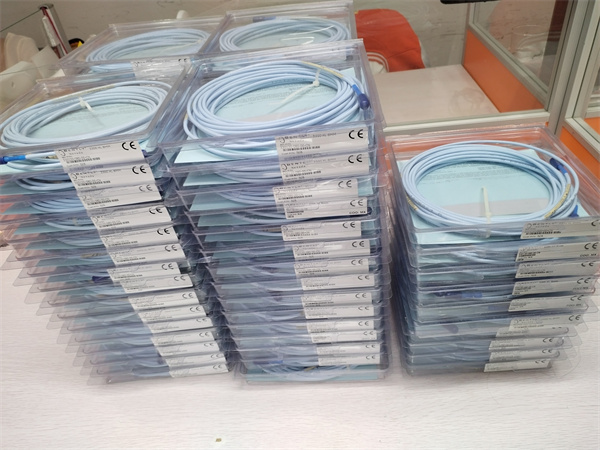
The Real-World Problem It Solves
Your turbine control system uses actuator feedback for position control, but those signals can fail silently with no alarm indication. The 3500/45-09-GCN provides independent monitoring of valve position using redundant LVDT sensors, cross-checking control signals against actual valve position and generating alarms if discrepancies exceed limits.
Where you’ll typically find it:
- Steam turbine governor valve lift monitoring and feedback validation
- Gas turbine fuel control valve position verification
- Emergency shutdown valve (ESV) full open/full closed confirmation
- Process control valve position feedback for regulatory control loops
Bottom line: This is the valve position monitor for the 3500 series, providing redundant valve lift measurement and cross-checking against control system signals for enhanced valve control integrity.
Hardware Architecture & Under-the-Hood Logic
The 3500/45-09-GCN is a 4-channel valve position monitor module that plugs into the 3500 VME backplane and provides valve actuator position measurement using LVDT/RVDT sensors. Each channel has signal conditioning for LVDT/RVDT inputs, ADC conversion, and comparison logic. The module continuously monitors valve position, compares it with control setpoints, and generates alarms on discrepancies. Data is transmitted via the VME bus to the rack controller for display and alarm distribution.
-
Transducer excitation and signal reception: The module supplies 5V AC or 10V AC excitation voltage to LVDT/RVDT sensors. Sensors convert mechanical displacement to AC voltage amplitude proportional to position. The AC signal enters the module through terminal blocks and passes through input conditioning (filtering, surge protection).
-
Signal demodulation: The AC LVDT signal is demodulated to DC voltage proportional to valve position. Demodulation circuitry handles phase and amplitude changes to accurately reconstruct position signal, even with varying LVDT characteristics.
-
Position conversion: The DC position signal is digitized by a high-resolution ADC. Calibration constants stored in module memory convert raw DC voltage to mechanical displacement (mm or inches). The module compensates for LVDT linearity errors using lookup tables.
-
Control signal comparison: When external control signal inputs are configured (typically 4-20 mA from DCS or valve controller), the module compares measured valve position with commanded setpoint. If discrepancy exceeds configured limits (typically ±5% FS), the module generates a Valve Feedback Mismatch alarm.
-
Setpoint comparison: Measured position is continuously compared to software-configured Alert and Danger setpoints. These setpoints are typically Full Open (95% of max range) and Full Closed (5% of max range) for safety valve verification. Alarms can trigger relay outputs via 3500/32/33 modules.
-
Analog output: Each channel provides a 4-20 mA DC output proportional to measured position, scaled to the configured full-scale range. This output is used for continuous trending in DCS or separate recording systems, independent of alarm status.
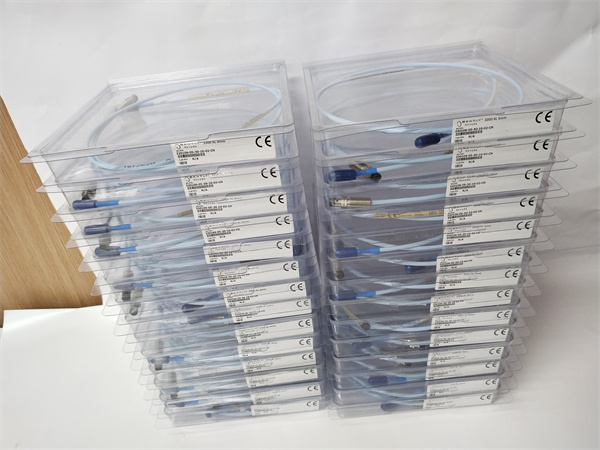
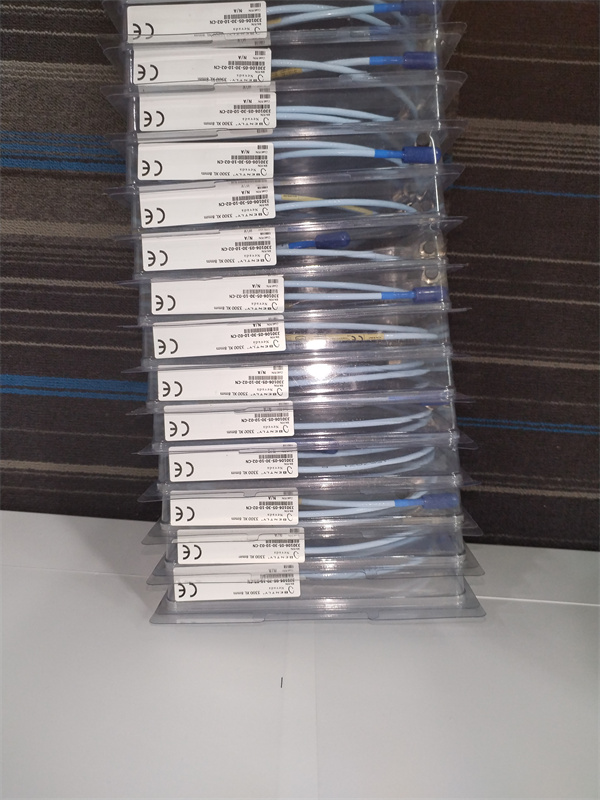
BENTLEY 330130-080-00-CN
Field Service Pitfalls: What Rookies Get Wrong
LVDT Wiring With Incorrect PolarityI’ve seen techs wire LVDT leads reversed—connecting Primary Winding leads to the Secondary Winding terminals and vice versa. The module can’t generate excitation voltage properly, and the LVDT output is either zero or shows noise fluctuations. Valve position shows 0% lift, and the DCS trips the turbine for lost valve feedback.
- Field Rule: Always label LVDT leads during sensor removal (Primary, Secondary A, Secondary B, Ground). Use a multimeter to verify AC resistance—Primary winding typically has 200-300Ω resistance, Secondary windings have similar resistance. Before energizing, confirm excitation voltage on primary terminals matches module spec (5V or 10V AC).
Incorrect LVDT Excitation FrequencyTechs configure the module for 60 Hz excitation, but the installed LVDT is rated for 50 Hz (common in European plants). The LVDT output waveform gets distorted, leading to measurement errors up to 10% of full scale. Valve position shows 85% lift when it’s actually fully open (100% lift).
- Quick Fix: Verify LVDT excitation frequency rating on the sensor nameplate. Set module excitation frequency to match using 3500 Configuration Software. If frequencies differ, either reconfigure the module or replace the sensor to match existing excitation setup.
Not Compensating for LVDT Temperature EffectsLVDT position measurement changes with temperature—typically ±0.05% of full scale per 10°C change. In a steam turbine control room where ambient temps hit 50°C, that’s ±0.25% drift (0.125 mm on a 50 mm range). Techs ignore this and chase phantom valve drift alarms during summer operations.
- Quick Fix: Perform periodic zero checks at different ambient temperatures. If drift exceeds acceptable limits, apply temperature compensation in software using module’s built-in temperature compensation lookup tables. Document the drift curve during commissioning and use it for trending corrections.
Ignoring Control Signal Discrepancy AlarmsRookie engineers disable Valve Feedback Mismatch alarms after a false trigger, thinking they’re nuisance alarms. But these alarms catch critical failures like valve actuator slipping or position feedback wiring failures. I’ve seen a turbine trip due to a stuck governor valve, and the mismatch alarm was disabled so it didn’t alert anyone beforehand.
- Field Rule: Never disable control signal comparison alarms. Use proper setpoint hysteresis (5-10% of range) to avoid nuisance triggers, but keep comparison enabled. Document alarm disabling only after root cause analysis and corrective actions have been verified.
Incorrect Wiring Shielding for LVDT CablesLVDT cables are analog and sensitive to EMI from nearby VFDs or power cables. Techs route LVDT cables through the same conduit as power cables, and the position signal gets saturated with 60 Hz hum. The module shows valve position fluctuating by ±10%, and the turbine control system sees it as actual valve movement.
- Field Rule: Route LVDT signal cables in separate, grounded shielded conduits at least 12 inches away from power cables. Connect shields at rack end only (single-point grounding) to avoid ground loops. Use twisted-pair cables with individual shielding per pair for differential signals.
Calibration Using Software OnlyTechs calibrate valve position by forcing setpoints in software, never using mechanical verification. They set valve to mid-stroke and configure module output to 12 mA, assuming the valve is correctly positioned. In reality, the mechanical valve is at 60% lift (14.4 mA), but software shows mid-stroke. Your control system operates on wrong valve position data, leading to unstable turbine speed control.
- Field Rule: Always verify position measurement mechanically during calibration. Use a mechanical feeler gauge or dial indicator to set valve to mid-stroke or known travel 终止s. Then configure module output to correspond to that mechanical position, adjusting calibration constants as needed. Verify both ends of the range (0% and 100% lift) to confirm linearity.
Commercial Availability & Pricing Note
Please note: The listed price is for reference only and is not binding. Final pricing and terms are subject to negotiation based on current market conditions and availability.