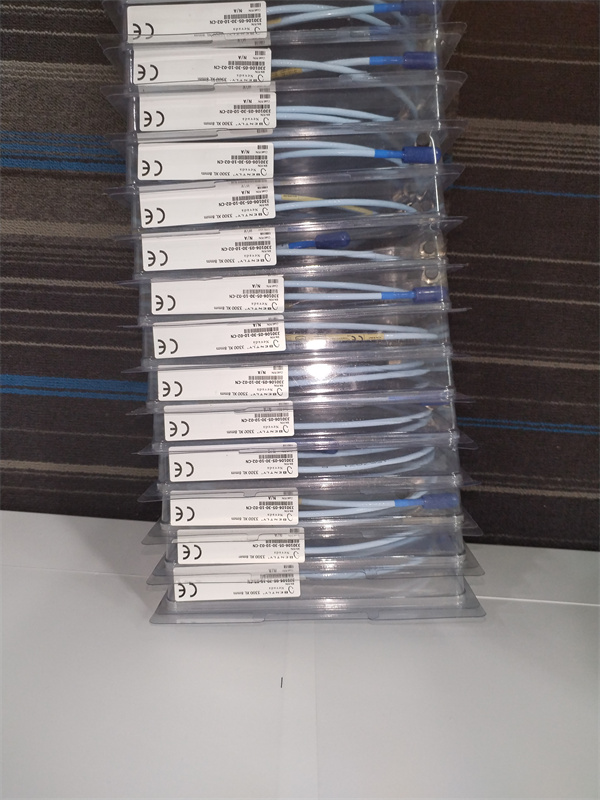
Description
Hard-Numbers: Technical Specifications
- Speed Channels: Typically 2-3 independent speed input channels (firmware dependent)
- Transducer Support: Magnetic pickups (MPU), Optical speed sensors, Hall-effect sensors, or proximity probes observing gear teeth or shaft targets
- Frequency Range: 0.1 Hz to 20 kHz (typical for gas turbine applications: 0-12,000 RPM)
- Measurement Accuracy: ±0.01% of speed reading (typical)
- Overspeed Trip Setting: Software-configurable up to 200% of maximum rated speed
- Trip Response Time: ≤10 ms for overspeed detection and shutdown command
- Communication Interface: Internal VME bus to rack controller (no direct field communication)
- Isolation: 1500V RMS galvanic isolation between speed channels and backplane circuits
- Operating Temperature: 0°C to +50°C
- Storage Temperature: -40°C to +85°C
- Humidity: 5% to 95% RH non-condensing
- Power Supply: 24V DC via 3500 rack backplane
- Power Draw: 3W typical, 5W maximum
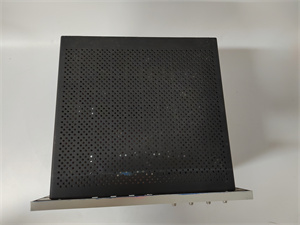
- Dimensions: Standard 3500 module form factor (12.7″ H × 17.8″ D × 3.2″ W)
- Weight: 0.9 lbs (0.4 kg)
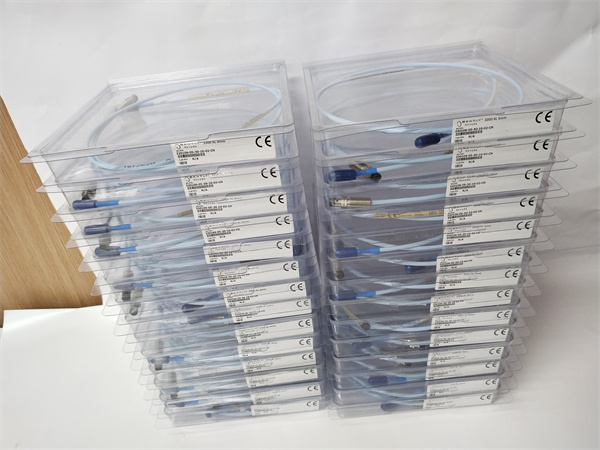
BENTLEY 330130-080-00-CN
The Real-World Problem It Solves
Your turbine trip system requires redundant overspeed detection with voting logic, but separate standalone overspeed modules can’t integrate with your 3500 vibration monitors. The 3500/40-07-GCN provides up to three independent speed channels integrated into the 3500 rack, allowing seamless integration of speed data into overall machinery health monitoring and providing fast, voting-based trip logic directly from your protection rack.
Where you’ll typically find it:
- Steam turbine generator overspeed protection systems requiring 1oo2 or 2oo3 voting logic
- Gas turbine and turbo-compressor trains where speed data is integrated with vibration data for comprehensive health monitoring
- Paper mill and steel plant main motor speed monitoring with local shutdown logic
Bottom line: This is the rack-integrated speed monitor and overspeed trip module for the 3500 series, providing redundant speed measurement and voting trip logic without external modules.
Hardware Architecture & Under-the-Hood Logic
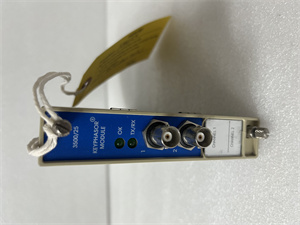
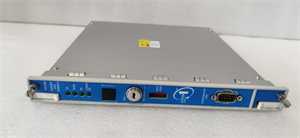
The 3500/40-07-GCN is a multi-channel speed and overspeed detection module that plugs into the 3500 VME backplane and provides speed data to the rack controller. It contains up to three independent speed input channels, each with signal conditioning, frequency counting, and comparison circuits. The module features built-in overspeed trip logic with software-configurable setpoints and voting options (1oo1, 1oo2, 2oo3, etc.). Speed channels are galvanically isolated from each other and from the backplane.
-
Signal conditioning: Raw speed transducer signals (MPU sine wave, optical pulses, proximity probe target crossings) enter the module through terminal blocks. Input circuitry filters noise, limits voltage, and amplifies weak signals. Each channel has configurable filtering options to reject mechanical noise (gear tooth chatter, runout-induced false triggers) and electrical noise (VEMF from power lines).
-
Frequency counting: The converted signal passes through frequency counters that measure the period between pulses (for low speeds) or count pulses over time (for high speeds). This dual-mode measurement ensures high accuracy across the full speed range (from 0.1 RPM to 20,000 RPM or more).
-
Overspeed comparison: The measured speed is continuously compared to software-configured setpoints (typically Overspeed Alert at 110%, Overspeed Pre-trip at 115%, Overspeed Trip at 120% of rated speed). When speed exceeds any setpoint, the module generates an alarm signal that is routed to the rack controller for distribution to alarm modules and shutdown logic.
-
Trip logic evaluation: The module’s internal microprocessor evaluates voting logic for overspeed trips. For example, in a 2oo3 system trip occurs when any two of the three channels detect overspeed exceeding the trip setpoint. This prevents single-channel failure or spurious noise from causing a trip.
-
Shutdown command: When trip conditions are met, the module generates a fast shutdown command that is routed to either integrated relay modules (3500/32, 3500/33) or external shutdown circuits via the rack’s safety output bus. The module bypasses backplane communication delays for shutdown, ensuring the fastest possible response time (≤10 ms in typical configurations).
-
Data logging: The module continuously logs speed history data, including overspeed events, to onboard non-volatile memory. This data can be extracted via the rack controller for post-event analysis and forensic investigation.
Field Service Pitfalls: What Rookies Get Wrong
Misconfigured Filter Settings for Gear Tooth ApplicationsTechs configure a 3500/40 module monitoring gear teeth speed sensors without enabling gear filtering. The module counts every gear tooth pass as a single pulse, leading to a speed reading that’s five times too high (for a 5-tooth gear). Overspeed trip activates at 24,000 RPM instead of 4,800 RPM, shutting down the compressor train prematurely.
- Field Rule: Always enable gear filtering when monitoring gear teeth or multi-tooth targets. The firmware must know how many teeth are on the target to divide the frequency count down to actual RPM. Verify the setting during commissioning by comparing measured speed to actual shaft RPM as observed with a strobe light.
Ignoring Input Signal Quality During CommissioningI’ve seen techs wire speed sensors but never check signal level or waveform during commissioning. On a reciprocating compressor with mechanical runout, the magnetic pickup signal varies by 50% from revolution to revolution due to target eccentricity. The module interprets this variation as speed fluctuation, triggering nuisance overspeed alerts.
- Quick Fix: Use an oscilloscope or vibration analyzer to inspect speed sensor signal quality before commissioning. Look for consistent amplitude and pulse shape across multiple revolutions. If signal varies >10% from peak-to-peak, reposition the pickup, resurface the target, or adjust air gap.
Incorrect Voting Logic SetupRookie engineers set up overspeed protection as 2oo3 when the safety requirements actually call for 1oo2. In 2oo3, trip only occurs if two channels detect overspeed simultaneously—meaning one failed channel could disable the trip entirely if the other two are running normal. You’re supposed to trip if any single channel detects overspeed (fail-safe 1oo2), but they mistakenly configure it for redundancy on detection instead of on output.
- Field Rule: Always verify voting logic with the plant’s safety requirement documents. For overspeed protection, default to fail-safe logic (trip on one channel unless safety analysis dictates otherwise). Document voting logic in the rack manual, and test it by simulating channel failure during commissioning.
Trip Response Time Testing With Simulated Inputs OnlyTechs test trip response time by forcing a speed condition in software during commissioning, never using actual physical sensor inputs. Software-forced speed results in ~10ms response time, but with real sensor inputs, delays from analog signal conversion and filtering can extend that to 40ms. You won’t catch this until a real overspeed event happens, and the trip is too slow.
- Field Rule: Test trip response time using actual sensor inputs by generating a speed signal with a function generator or strobe light, measuring how fast the module activates the trip output. If response time exceeds safety requirements, adjust filter settings (faster response, less filtering) or use faster sensors (e.g., optical instead of magnetic pickups).
Mixing Sensor Types in Voting SystemsI’ve seen a 3500/40 configured with two magnetic pickups and one optical sensor in a 2oo3 system. When the optical sensor lens gets dirty, its signal amplitude drops, and the channel fails. The module doesn’t recognize this as a failed channel because it’s not a magnetic pickup, and now you’re running on two magnetic pickups with potentially correlated failure modes.
- Field Rule: Use identical sensor types for all channels in a voting system to ensure failure independence. If you must use different types, configure channel-specific failure detection in firmware to automatically remove failed channels from voting.
Not Documenting Overspeed Setpoint ChangesDuring maintenance, the plant changes turbine rated speed from 5,000 RPM to 5,500 RPM to increase output, updating the overspeed trip from 6,000 RPM to 6,600 RPM in the DCS. But they forget to update the 3500/40 module’s overspeed setpoint. Two months later, the turbine runs at 6,200 RPM on a transient—DCS sees it as normal, but the 3500/40 trips it because setpoint is still at 6,000 RPM.
- Field Rule: Document every setpoint change in the rack manual, and cross-verify with DCS or overspeed trip system settings after any machine modification. Perform a functional trip test (low-speed trip simulation) after each setpoint change to ensure proper operation.
Commercial Availability & Pricing Note
Please note: The listed price is for reference only and is not binding. Final pricing and terms are subject to negotiation based on current market conditions and availability.