
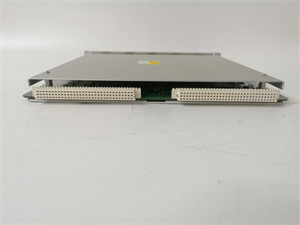
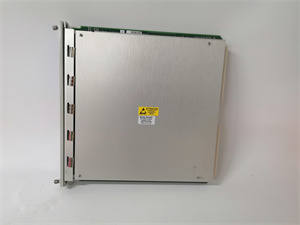
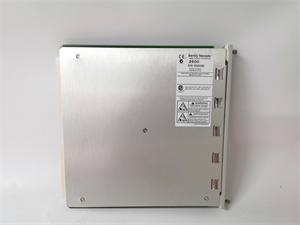
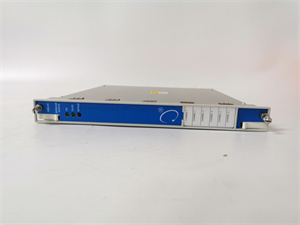
Description
Hard-Numbers: Technical Specifications
- Channels: 4 independent transducer inputs
- Supported Transducers:
- 3300 XL proximity probes (8mm and 5mm systems)
- ICP accelerometers (4-20mA or 0-10V outputs)
- 4-20mA pressure transducers
- RTD temperature sensors (Pt100, Pt1000)
- Excitation: -24V DC for proximity probes (5mA max per channel)
- Input Voltage Range:
- Proximity: -20V to +2V DC
- Accelerometer: 0-10V DC
- Pressure/Temp: 4-20mA (125Ω load max)
- Isolation: 1500V RMS galvanic isolation between channels and backplane
- Operating Temperature: 0°C to +50°C
- Storage Temperature: -40°C to +85°C
- Humidity: 5% to 95% RH non-condensing
- Power Supply: 24V DC via 3500 rack backplane
- Power Draw: 6W typical (4 channels with mixed transducers)
- Dimensions: Standard 3500 module form factor (12.7″ H × 17.8″ D × 3.2″ W)
- Weight: 0.8 lbs (0.36 kg)
- Field Wiring: 20-point removable terminal block for transducer connections
-

BENTLY 3500/60 163179-01
-
The Real-World Problem It Solves
You need to integrate multiple sensor types (vibration, pressure, temperature) into a 3500 rack for comprehensive machinery monitoring, but each sensor requires different excitation and signal conditioning. The 163179-01 provides a unified interface for four transducer types, eliminating the need for separate modules and simplifying rack configuration.
Where you’ll typically find it:
- Turbine generator monitoring with radial vibration, bearing temperature, and lube oil pressure
- Compressor monitoring with vibration, discharge pressure, and thrust bearing temperature
- Pump monitoring with vibration, suction/discharge pressure, and casing temperature
Bottom line: This is the multi-transducer interface module for the 3500 series, enabling mixed sensor integration with a single module.
Hardware Architecture & Under-the-Hood Logic
The 163179-01 is a 4-channel transducer interface module that plugs into the 3500 VME backplane. Each channel provides independent excitation, signal conditioning, and conversion for specific transducer types. The module supports software-configurable channel types (proximity, accelerometer, pressure, temperature) via 3500 Configuration Software. All channels are galvanically isolated from each other and from the backplane.
-
Channel Type Configuration: Each channel is configured in 3500 Configuration Software for a specific transducer type (proximity probe, accelerometer, 4-20mA pressure, or RTD temperature). Configuration sets excitation voltage (-24V for proximity, no excitation for 4-20mA), input range, and signal scaling.
-
Excitation and Signal Reception: Configured channels provide appropriate excitation (e.g., -24V DC for proximity probes) and accept corresponding input signals. For proximity probes, the module measures gap voltage (-20V to +2V DC). For 4-20mA transducers, the module measures current and converts to voltage using a 125Ω shunt resistor. For RTDs, the module measures resistance and converts to temperature using Pt100/Pt1000 lookup tables.
-
Signal Conditioning: Raw transducer signals pass through input conditioning (surge protection, filtering). Proximity probe signals use low-pass filtering (1000 Hz cutoff). Accelerometer signals use band-pass filtering (1 Hz to 10 kHz). Pressure and temperature signals use low-pass filtering (10 Hz cutoff) to remove high-frequency noise.
-
A/D Conversion and Scaling: Conditioned signals are digitized by a 16-bit ADC. Calibration constants (stored in module memory) convert raw values to engineering units (mils for displacement, g for acceleration, PSI for pressure, °C for temperature). Scaling is per-channel to match transducer calibration curves.
-
Data Transmission: Converted data (engineering units + raw values) is transmitted via the VME bus to the rack controller (3500/20 or 3500/22). The rack controller distributes data to monitor modules, relay modules, and communication modules for display, trending, and alarm generation.
-
Health Monitoring: The module continuously monitors transducer signal quality—detecting open circuits, short circuits, out-of-range values, and signal faults. Fault status is reported to the rack controller and can trigger relay alarms via 3500/32/33 modules if configured.
-
BENTLY 3500/60 163179-01
Field Service Pitfalls: What Rookies Get Wrong
Incorrect Channel Type ConfigurationI’ve seen techs configure Channel 1 for a proximity probe but actually connect a 4-20mA pressure transducer. The module outputs -24V excitation to a current-loop sensor, potentially damaging it, and reads meaningless current as gap voltage.
- Field Rule: Always verify transducer type and channel configuration before wiring. Use 3500 Configuration Software to confirm each channel’s configured type matches the connected transducer. Document channel assignments and transducer part numbers in the rack manual.
Not Setting Input Scaling for Different Transducer RangesTechs configure Channel 2 for a 4-20mA pressure transducer but don’t adjust scaling for the actual transducer range (0-5000 PSI vs. default 0-100 PSI). The monitor displays “100 PSI” when actual pressure is 5000 PSI, causing operator confusion and potential safety issues.
- Quick Fix: Always set input scaling in configuration software to match the transducer’s full-scale range. For a 0-5000 PSI transducer, configure the module for 0-5000 PSI scaling. Verify displayed values against a handheld gauge or known reference during commissioning.
Mixing Excitation Wires Between ChannelsTechs mistakenly route -24V excitation from Channel 1 to a 4-20mA transducer connected to Channel 2. The 4-20mA transducer doesn’t expect excitation voltage, and Channel 2’s current measurement is corrupted by the -24V source. The transducer may also be damaged.
- Field Rule: Keep excitation wiring separate for proximity probe channels. Use the dedicated -24V terminal for each proximity channel, and connect only the signal and ground wires for 4-20mA transducers. Never route excitation to a channel not configured for proximity probes.
Ignoring Transducer Temperature EffectsRTD temperature sensors drift with ambient temperature changes if lead resistance isn’t compensated. Techs use 3-wire RTDs but configure the module for 2-wire measurement, leading to a ±1-2°C error as ambient varies between 10°C and 40°C.
- Quick Fix: Configure the module for the correct RTD wiring type (2-wire, 3-wire, or 4-wire) to match the installed sensor. For 3-wire and 4-wire RTDs, enable lead resistance compensation in software. Verify temperature readings against a reference thermometer at multiple ambient temperatures during commissioning.
Forgetting to Set Alarm Thresholds for Each Transducer TypeTechs configure vibration alarm thresholds (e.g., 10 mils) but forget to set thresholds for pressure and temperature channels. The transducer monitors values, but no alarm triggers if pressure exceeds 6000 PSI or temperature exceeds 120°C, potentially missing critical failures.
- Field Rule: Set Alarm and Danger thresholds for all configured channels, not just vibration. For pressure transducers, set thresholds based on equipment limits (e.g., 5500 PSI Alert, 6000 PSI Danger). For temperature, set thresholds based on bearing or lube oil limits (e.g., 90°C Alert, 105°C Danger). Document all thresholds in the maintenance log.
Wiring RTDs Without Considering Lead ResistanceRTD sensors use lead resistance for temperature measurement. Long RTD cables (>30 meters) increase lead resistance, causing measurement errors. Techs run 50-meter RTD cables without accounting for lead resistance, leading to a ±3-5°C error in temperature readings.
- Field Rule: For RTD runs over 30 meters, use 3-wire or 4-wire RTD wiring and enable lead resistance compensation in software. Alternatively, use temperature transmitters that convert RTD signals to 4-20mA at the sensor location, eliminating lead resistance errors. Measure actual lead resistance with a multimeter and apply compensation factors if necessary.
Commercial Availability & Pricing Note
Please note: The listed price is for reference only and is not binding. Final pricing and terms are subject to negotiation based on current market conditions and availability.


