Description
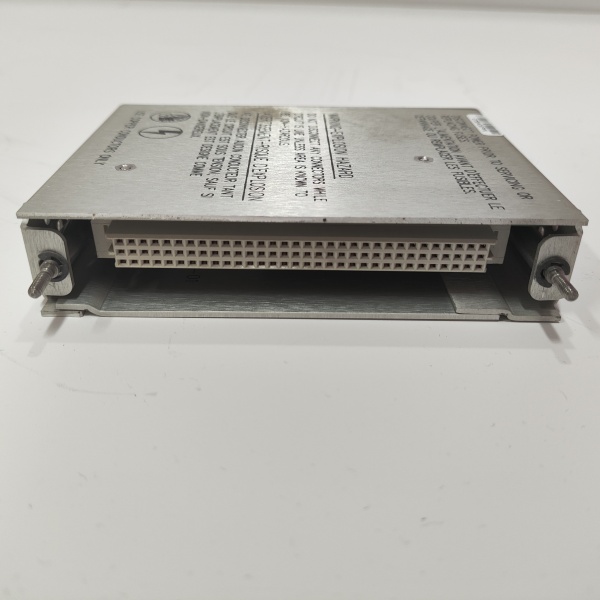
Product Core Brief
- Model: 125840‑02
- Brand: BENTLY
- Series: 3500 Machinery Protection System (3500/15)
- Core Function: Delivers low‑voltage AC input interface for the 3500‑series rack power converter card.
- Product Type: Low‑Voltage AC Power Input Module (PIM)
- Key Specs: 85‑132 VAC input | Half‑height dedicated power slot | Internal fuse protection
Note: OEM discontinued; available as new surplus and field‑tested used stock.
Key Technical Specifications
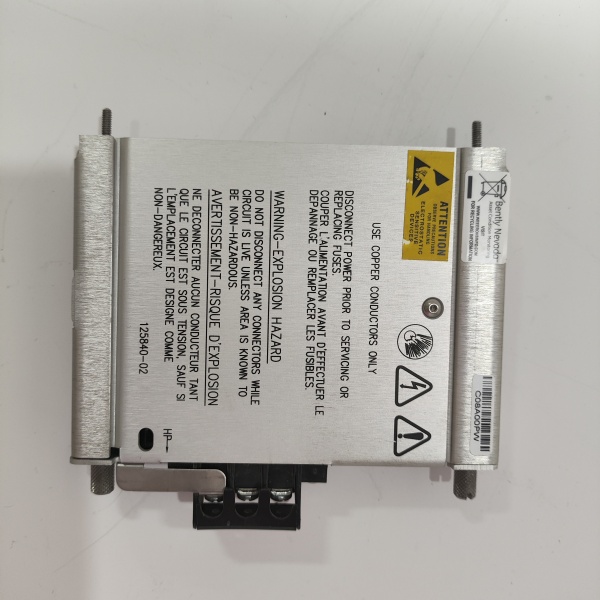
- Input Voltage Range: 85‑132 VAC low‑voltage mains
- Operating Frequency: 47‑63 Hz
- Form Factor: Half‑height, dedicated far‑left rack power slot only
- Internal Fuse Rating: 4 A slow‑blow
- Compatible Mating Card: 106M1079‑01 power converter
- Operating Temperature: 0 °C to +60 °C
- Storage Temperature: ‑20 °C to +70 °C
- Weight: 0.33 kg
- Dimensions: 121 mm × 122 mm × 26 mm
- Agency Compliance: CE, UL for industrial monitoring racks
Product Introduction
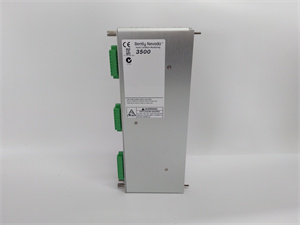
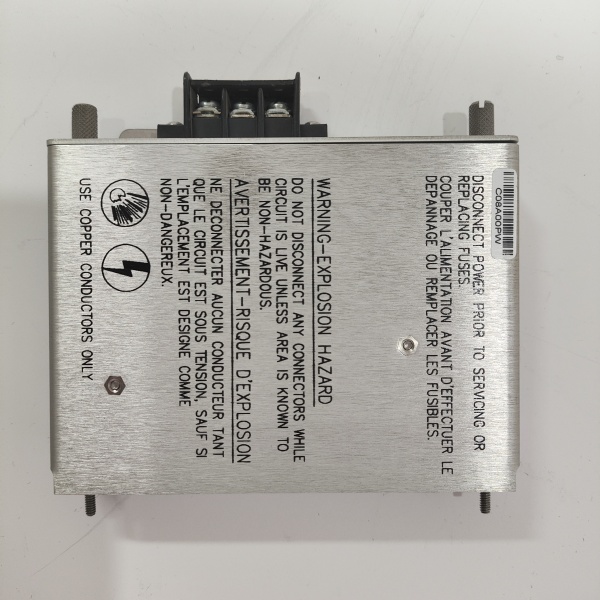
This is a dedicated power‑input hardware unit built exclusively for 3500‑series racks. It accepts low‑range mains AC and passes power to the mating converter card that generates all backplane DC rails for monitoring modules.
It targets sites running 110‑120 VAC mains. This removes the requirement for external step‑down transformers for North‑American‑style cabinet power feeds.
QA & Testing SOP (Transparency Building)
- Incoming Inspection: Match part number and serial number against OEM documentation. Inspect terminal block, PCB traces, and housing for burn marks or counterfeit marking defects. Log serial numbers for traceability.
- Live Testing: Install paired with matching converter card inside genuine 3500 rack. Apply rated LVAC input; validate stable backplane DC voltages through continuous 24‑hour run.
- Electrical Testing: Use Fluke 115 and insulation tester. Verify >10 MΩ isolation between AC input terminals and chassis ground. Confirm low‑resistance earth‑path continuity.
- Firmware/Config Backup: This unit has no firmware or user‑adjustable parameters. Photograph terminal‑block orientation and latch condition for reference records.
- Final QC & Packaging: Seal unit inside anti‑static bag. Attach QC pass tag with test‑date stamp. Pack with shock‑absorbent foam for transit.
Installation Pitfalls & Guide (Engineer to Engineer)
❗ Mating Card Compatibility Error: This hardware must pair with the 106M1079‑01 converter. Mismatched power‑converter parts produce no backplane output, even if the module itself powers up. Photograph existing assembly before removal.❗ Slot Location Error: This unit only fits the dedicated half‑height power slot on the rack’s far‑left position. Insertion into I/O slots causes no operation and risks backplane trace damage.❗ Wiring Incompatibilities: Terminal block pinout differs from high‑voltage 125840‑01 and universal‑voltage 106M1081‑01 PIM. Cross‑reference OEM datasheet before landing field wiring; applying >132 VAC will destroy internal components.❗ Power Draw Changes: Redundant power configurations increase cabinet heat load. Verify cabinet ventilation matches total thermal dissipation of both power channels.❗ ESD Dangers: Static discharge can damage internal input‑filter circuits. Field records show ESD‑ruined spare units valued over $2000 before power‑on. Always use a grounded ESD wrist strap.
4‑step replacement guide1. Pre‑install: Perform lock‑out / tag‑out on rack LVAC mains. Wear ESD wrist strap. Confirm mating converter part compatibility.2. Removal: Release front‑panel latches, slide out old unit, document terminal‑block wiring.3. Install: Slide replacement firmly into dedicated power slot until latches engage. Re‑terminate AC wiring per datasheet pinout.4. Power‑on Test: Restore mains power. Measure backplane rail voltages. Confirm no rack fault LED illumination.
125840-02
FAQ (Frequently Asked Questions)
Q: Does this unit support hot‑swap operation?A: No. Mechanical latches exist, but live removal under LVAC creates voltage transients that can damage adjacent monitoring cards and backplane traces. Full lock‑out of AC input is mandatory.
Q: Can I feed 175‑264 VAC mains into this device?A: No. It is designed for 85‑132 VAC low‑voltage mains. Input above 132 VAC will blow the internal fuse and damage filter circuitry. Use 125840‑01 for high‑voltage mains or 106M1081‑01 for universal‑voltage mains.
Q: What happens if the internal fuse blows?A: No AC power passes to the converter. The fuse is not field‑replaceable. Repair requires component‑level shop work or full‑unit replacement.
Q: Is factory‑new OEM stock available?A: Original OEM manufacturing has ceased. Available stock comes from new‑surplus or field‑tested used inventory. Lead‑times shift with lot availability.
Q: What warranty applies to surplus stock?A: Third‑party inventory carries limited functional warranty covering hardware defects. It excludes damage caused by site‑side over‑voltage events or mis‑wiring. OEM factory warranty is no longer obtainable.
Q: Can this unit be used in SIL‑configured protection racks?A: It supplies rack power for protection modules, but the PIM itself carries no SIL certification. Complete safety‑system assessment must account for power‑path redundancy requirements.
Q: Can I drop‑in replace with the high‑voltage PIM variant?A: Physical slot dimensions match, but site mains voltage must match the PIM rating. Direct mechanical swap is possible, but wrong voltage selection will cause catastrophic power‑supply failure. Verify with OEM datasheet.