Description
Key Technical Specifications
- Model Number: YT203001-AM (3BHB012030R0001)
- Manufacturer: ABB YTC (Young Tech Co., Ltd., Rotork Group)
- Input Signal: 4-20mA DC (HART 7.0 communication protocol)
- Supply Pressure: 0.14-0.7 MPa (1.4-7 bar; 20-101 psi)
- Output Type: Double-acting pneumatic (0.02-0.7 MPa range)
- Positioning Accuracy: ±0.3% of full scale (F.S.) at 25°C
- Repeatability: ±0.1% F.S.
- Response Time: ≤0.5 seconds (for 90° rotation on 80mm stroke)
- Operating Temperature: -40°C to +85°C (ambient); -25°C to +70°C (electronics)
- Protection Class: IP66 (NEMA 4X) – dust tight, water jet proof
- Explosion Protection: ATEX II 2G Ex ia IIC T6; IECEx ia IIC T6
- Mounting: Direct mount to ISO 5211 valve actuator flange (F03-F10 sizes)
- Weight: 1.8 kg (3.97 lb)
- Dimensions: 150mm × 120mm × 85mm (H×W×D)
- Power Consumption: ≤30 mA at 24V DC (including HART communication)
- Fail-Safe Options: Configurable fail-open, fail-close, or fail-freeze via HART or local buttons
- Communication: HART 7.0 (bidirectional digital communication over 4-20mA loop)

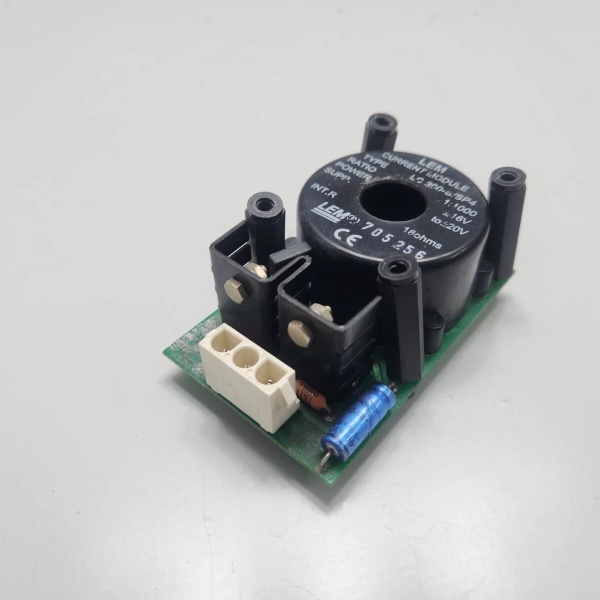
ABB LC300S/SP11
Field Application & Problem Solved
In process industries—refineries, power plants, chemical facilities—the biggest challenge is maintaining precise valve positioning while ensuring safety during abnormal conditions. Legacy pneumatic positioners lack digital diagnostics and remote monitoring, leading to unplanned shutdowns when valves fail to respond correctly. In a Gulf Coast refinery, outdated analog positioners caused 5 unplanned unit trips in 12 months due to calibration drift and lack of diagnostic capabilities, costing $2.3M in lost production.
This piezo smart positioner solves both gaps. You’ll find it in refinery fractionation columns controlling distillation temperatures, power plant boiler feedwater systems maintaining drum levels, and chemical plants regulating reactor pressure. It’s also a staple in offshore oil platforms, where its IP66 rating and explosion-proof design handle harsh marine environments. In a Midwestern coal-fired power plant, replacing legacy positioners with this unit reduced valve-related process variability by 82%, eliminating false safety trips and extending maintenance intervals from 6 months to 3 years.
Its core value lies in its piezo technology and smart features. Unlike traditional torque motor positioners, the piezo design delivers faster response times and lower air consumption (≤0.5 scfm at 0.5 MPa), reducing energy costs by 40%. The HART communication enables remote calibration, diagnostics, and parameter adjustments—critical for hard-to-reach valves in high-temperature or hazardous areas. For field teams, this means safer operations, reduced downtime, and proactive maintenance capabilities. The fail-safe/fail-freeze modes prevent catastrophic process upsets during power loss, while the built-in partial stroke test (PST) functionality allows periodic valve testing without process interruption.
Installation & Maintenance Pitfalls (Expert Tips)
- Piezo Crystal Damage from Static Electricity: Rookies often handle the positioner without proper ESD protection, damaging the sensitive piezo crystals. I saw a chemical plant’s positioner fail within 2 weeks because a technician touched the piezo assembly with ungrounded hands. Always wear an ESD wrist strap and use grounded tools when installing or servicing the unit—this prevents static discharge that can destroy the piezo elements costing $800+ per replacement.
- Supply Air Quality Ruins Performance: Neglecting proper air filtration and drying leads to moisture and oil contamination in the pneumatic circuit, causing sticky valves and erratic positioning. In a refinery’s catalytic cracker unit, poor air quality caused the positioner to hunt for setpoints, leading to product quality issues. Install a 5μm air filter regulator with coalescing dryer upstream, and test dew point monthly—keep it below -40°C to prevent condensation in the pneumatic lines.
- HART Communication Wiring Errors: Incorrect polarity or insufficient wire gauge creates communication dropouts. I troubleshot a power plant where the DCS couldn’t communicate with 12 positioners because technicians used 24 AWG wire instead of the required 18-22 AWG. Use shielded twisted-pair cable (18-22 AWG), ensure correct polarity (+24V to positive terminal), and ground the shield at one end only—this eliminates noise and ensures reliable HART communication.
- Mechanical Linkage Misalignment Causes Dead Band: Improper alignment between the positioner feedback lever and valve stem creates dead band, leading to slow response and control instability. In a paper mill’s pulp bleaching process, 3% dead band caused chemical dosage fluctuations. Use a dial indicator to verify alignment—total indicator runout (TIR) should be ≤0.1mm at the feedback point. Adjust the linkage until the positioner’s internal feedback matches the actual valve position within ±0.2%.
- Calibration Without Process Stabilization: Technicians often calibrate the positioner while the process is unstable, leading to incorrect setpoints. I saw a pharmaceutical plant’s batch reactor temperature control system fail because calibration was performed during a feed rate change. Always stabilize the process at a steady state, isolate the valve if possible, and perform auto-calibration only when there’s no process disturbance—this ensures the positioner learns the correct valve characteristics under normal operating conditions.
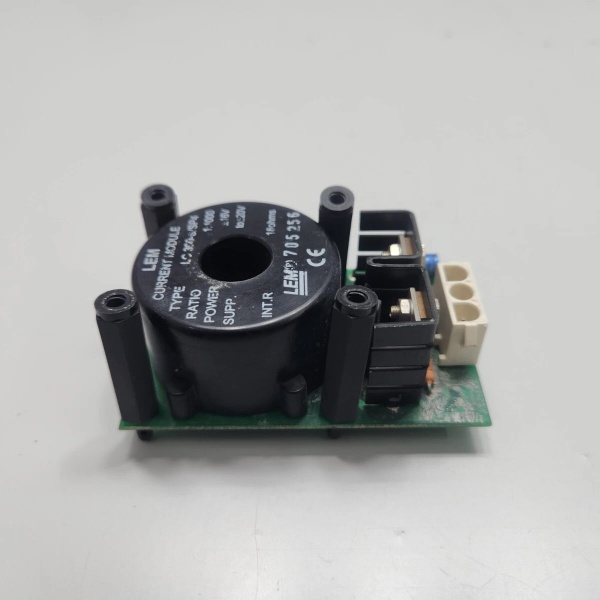
ABB LC300S/SP11
Technical Deep Dive & Overview
This is a piezo-electric smart electro-pneumatic positioner, a precision control device that bridges the gap between the DCS and final control elements (control valves). At its core is a piezoelectric actuator that converts electrical signals into mechanical motion with exceptional speed and accuracy—far faster than traditional torque motor designs.
The positioner’s operation follows a closed-loop control cycle: the DCS sends a 4-20mA setpoint signal, which the onboard microprocessor converts to a proportional voltage for the piezo stack. The piezo elements expand/contract, moving the pilot valve to adjust air pressure to the valve actuator. A feedback potentiometer continuously monitors the actual valve position, sending data back to the microprocessor to compare with the setpoint. Any deviation triggers an immediate correction, ensuring the valve maintains precise positioning.
What makes it stand out in harsh industrial environments is its robust design and smart capabilities. The piezo technology eliminates the need for sliding contacts and springs, reducing wear and extending service life. The HART communication protocol enables remote monitoring of critical parameters like supply pressure, valve position, temperature, and diagnostic alerts—allowing field teams to identify issues before they cause process upsets.
In double-acting applications, it controls both the opening and closing air chambers of the actuator, providing precise control over valve speed and positioning. The fail-safe/fail-freeze modes are configurable via HART or local buttons: fail-safe moves the valve to a pre-determined safe position (open or closed) during power loss, while fail-freeze maintains the current position to prevent process instability.
For predictive maintenance, the positioner stores historical data on valve performance, including cycle counts, friction changes, and response time variations. This data helps identify valves that need lubrication or overhaul before they fail—critical for maintaining reliability in 24/7 process operations.