Description
Key Technical Specifications
-
Model Number: ABB UNITROL1020
-
Manufacturer: ABB Power Generation Division
-
Generator Rating Range: 5MW to 200MW (synchronous generators)
-
Excitation Power Supply: 125VDC/250VDC (battery) or 400V AC (auxiliary)
-
Control Modes: Voltage regulation (AVR), reactive power (VAR) control, power factor (PF) control
-
Response Time: <10ms (field current step response)
-
Redundancy: 1+1 hot standby (controller), N+1 power unit redundancy
-
Communication Protocols: IEC 61850, Modbus TCP, DNP3.0, Profinet
-
Operating Temperature: -20°C to +60°C (-4°F to +140°F)
-
Isolation Rating: 5kV AC (field circuit to control), 2kV AC (communication ports)
-
Grid Compliance: IEEE 421.5, IEC 60034-1, GB/T 7409.3 (China)
-
Certifications: IEC 61508 (SIL 2), CE, UL 508, CCC
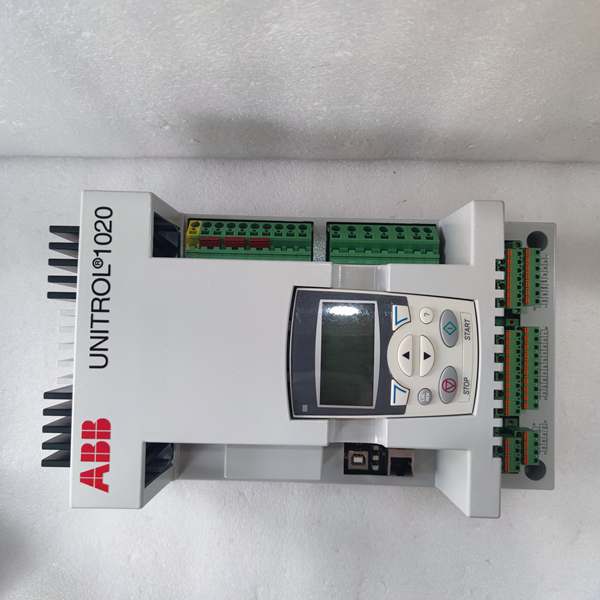
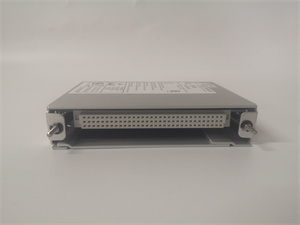
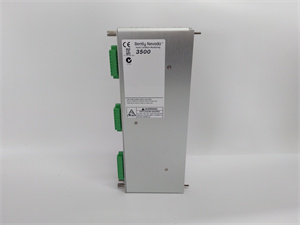
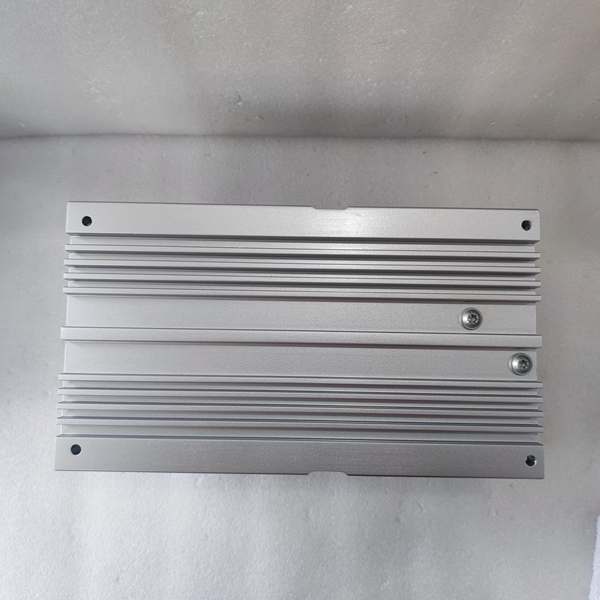
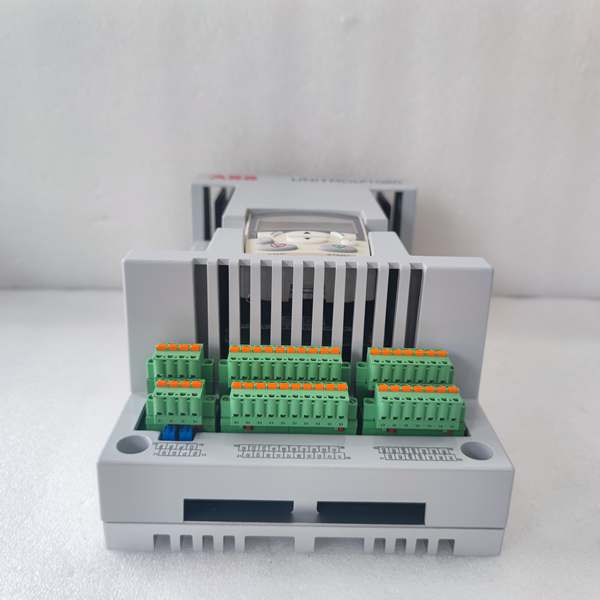
ABB UNITROL 1020
Field Application & Problem Solved
In power generation—whether it’s a 30MW hydro plant or a 150MW thermal unit—the biggest risk from poor excitation control is generator instability or grid disconnection. Legacy analog regulators struggle with slow response to grid voltage fluctuations, often triggering unnecessary under/over-excitation trips. I saw a 50MW industrial cogeneration plant in Shandong trip twice in a month because its old regulator couldn’t handle sudden grid voltage dips, costing $800k in lost power sales. Another thermal plant in Hebei faced grid penalties of $150k/quarter because its excitation system failed to meet the latest GB/T 7409.3 reactive power control requirements.
You’ll find UNITROL1020 as the “brain” of the generator excitation system—mounted in the control room or generator terminal box, regulating the field current of the synchronous generator. It adjusts the generator’s terminal voltage and reactive power output to match grid demands, acting as the link between the generator and the power grid. Its core value is grid compliance plus fail-safe redundancy: it meets global grid codes (including China’s latest standards) for voltage support and fault ride-through, while dual-redundant controllers eliminate single points of failure. A hydro plant in Yunnan retrofitted with UNITROL1020, cutting excitation-related trips from 8/year to 0, and avoiding $1.2M in grid penalties.
Its fast response (<10ms) is a lifesaver during grid faults. Last year, a 100MW thermal plant in Henan experienced a 30% grid voltage dip—UNITROL1020 boosted the generator’s reactive output within 8ms, stabilizing the local grid and avoiding a trip. The built-in IEC 61850 communication also streamlines plant automation: operators can monitor excitation parameters (field current, terminal voltage) and perform remote adjustments via the plant DCS, cutting on-site inspection time by 40%. For old plants, it’s a drop-in replacement—we retrofitted a 1990s-era thermal unit in Liaoning in 3 days, with no modifications to the generator’s field circuit.
Installation & Maintenance Pitfalls (Expert Tips)
Field Circuit Wiring—Avoid Cross-Talk with Power Cables
Rookies run excitation field cables alongside 6kV power cables, causing electromagnetic interference (EMI) that corrupts current signals. UNITROL1020’s field inputs are sensitive—EMI leads to voltage fluctuations and false over-excitation alarms. Use shielded copper cables (minimum 2.5mm²) for the field circuit, and keep them at least 1m away from high-voltage cables. A plant in Jiangsu had constant voltage swings until we rerouted the field cables; post-fix, terminal voltage stability improved from ±0.5% to ±0.1%. Also, ground the cable shield only at the regulator end—double grounding creates loops that amplify noise.
Redundancy Switchover Test—Don’t Skip Monthly Checks
Dual redundancy only works if you test it—many plants skip monthly switchover checks, leading to hidden faults. Use the UNITROL1020 HMI to manually trigger a switch from Controller A to B; verify that field current, terminal voltage, and control mode remain unchanged (switchover time <50ms). A thermal plant in Shanxi skipped these tests for 6 months—when Controller A failed, Controller B didn’t take over because of a loose communication cable, causing a generator trip. Now they test weekly, and we added an automatic test script that runs every Sunday, alerting operators to any issues.
Parameter Backup—Save Before Firmware Updates
Firmware updates fix bugs (e.g., intermittent communication failures) but erase custom parameters if you don’t back up. Use ABB’s UNITROL Connect software to save a full parameter set to a USB drive and plant server—label it with the generator number and date. A plant in Guangdong updated firmware v3.2 to v4.0 without backing up; they lost 2 weeks of custom reactive power control settings, forcing a 4-hour generator shutdown to reconfigure. Always test the backup on a simulation platform first—never apply untested firmware to a live unit.
Excitation Transformer Tap Setting—Match Generator Rating
Incorrect tap settings on the excitation transformer cause under/over-voltage in the field circuit. UNITROL1020’s maximum field voltage is 800V DC—set the transformer tap so that the no-load field voltage is 1.2x the rated value. A hydro plant in Sichuan re-rated their generator from 25MW to 30MW but didn’t adjust the tap; UNITROL1020 tripped on over-excitation during startup. We moved the tap from 6.3kV to 7.2kV, matching the new rating, and the issue was resolved. Always verify tap settings with the generator’s nameplate data before commissioning.
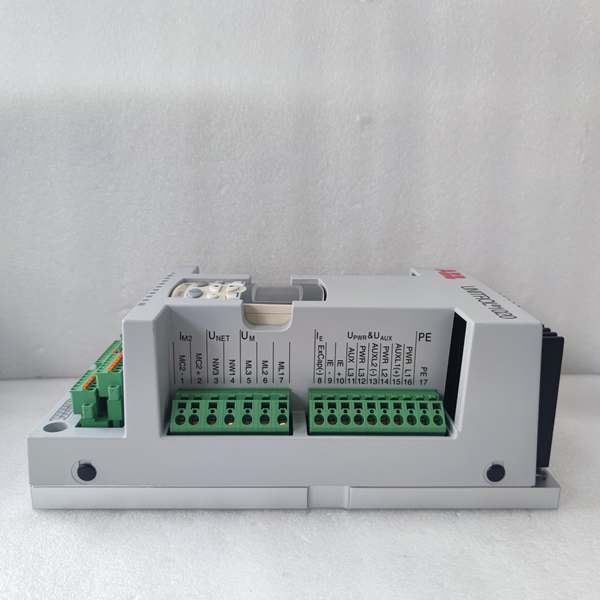
ABB UNITROL 1020
Technical Deep Dive & Overview
UNITROL1020 is a digital static excitation regulator designed for synchronous generators, built on ABB’s decades of experience in power generation control. At its core, a 32-bit dual-core processor runs advanced control algorithms—including PID with derivative filtering for voltage regulation and adaptive VAR control—that outperform legacy analog systems. The dual-redundant controllers (A/B) operate in hot standby: Controller A runs the excitation loop, while B mirrors all parameters and takes over instantly if A fails.
It connects to the generator via voltage transformers (VTs) and current transformers (CTs), sampling terminal voltage and stator current 1000 times per second. When grid voltage dips, the regulator boosts the field current within 10ms to support the grid—critical for fault ride-through compliance. The power stage uses IGBT modules (instead of older thyristors) for smoother current control, reducing generator voltage ripple by 60% compared to legacy systems. It also integrates with plant DCS via IEC 61850, enabling remote monitoring and control from the central control room.
Its rugged design handles the harsh conditions of power plants—-20°C to +60°C operating range works in cold northern hydro plants and hot southern thermal units. The conformal-coated PCB resists dust and moisture in generator terminal boxes, while 5kV isolation between the field circuit and control electronics prevents high-voltage transients from damaging the regulator. With a MTBF of over 200,000 hours and SIL 2 certification, it’s the gold standard for excitation control in modern power plants, ensuring generators operate reliably and comply with strict grid codes.