Description
Key Technical Specifications
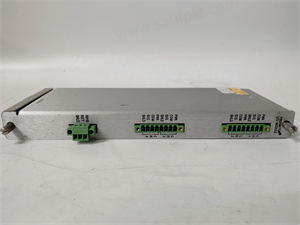
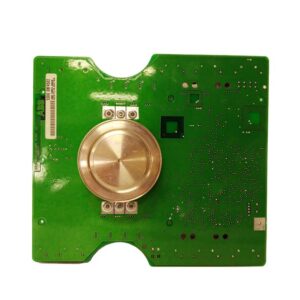
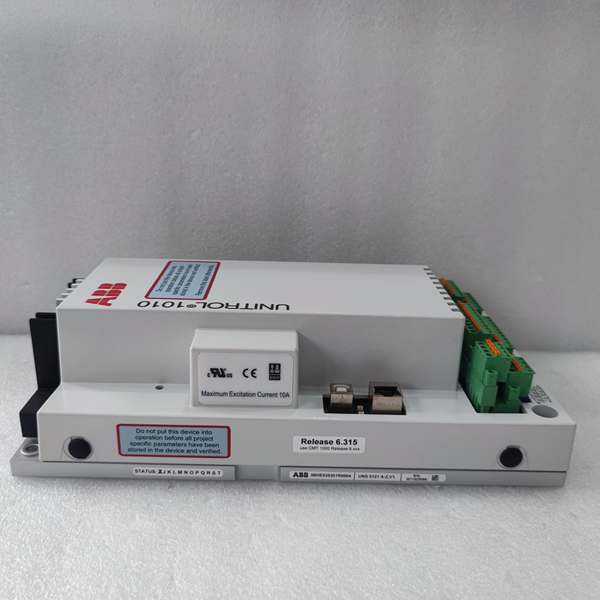
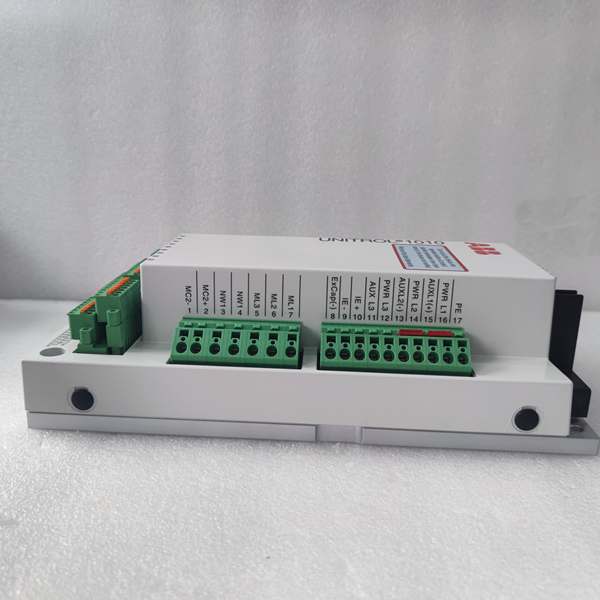
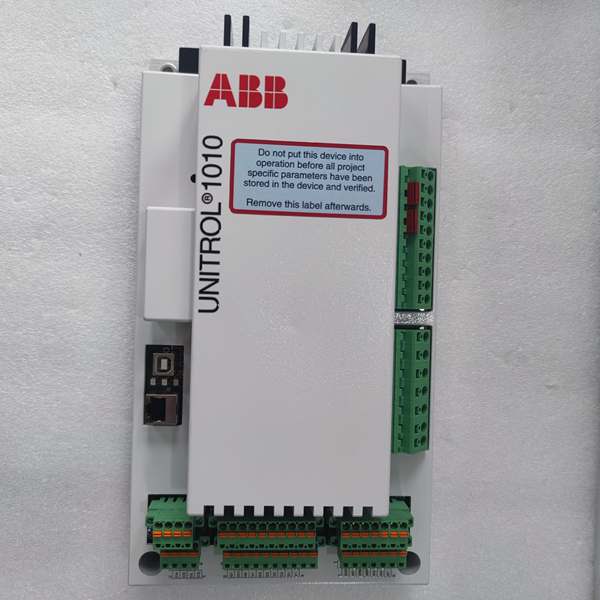
- Model Number: ABB UNITROL 1010 3BHE035301R1002
- Manufacturer: ABB Power Grids Division
- Excitation Control Type: Compatible with brushless and static excitation systems (software-configurable)
- Generator Rating Compatibility: 1MVA to 1000MVA (synchronous generators, 50/60Hz)
- Control Modes: Voltage regulation, reactive power control, power factor control, manual excitation control
- Voltage Regulation Accuracy: ±0.2% of rated voltage (steady state); ±0.5% during transients
- Redundancy Configuration: 1+1 hot-standby, automatic failover <5ms, sync via dedicated 1Gbps link
- Power Supply: Dual 110/220V AC/DC ±15% (switch-selectable), 30W max power consumption
- Operating Temperature: -25°C to +70°C (-13°F to +158°F)
- Isolation Rating: 2kV AC (power input to control circuit); 1kV AC (communication ports)
- Certifications: IEC 61508 (SIL 2), IEC 60034, CE, UL 508, ATEX Zone 2, RoHS 2.0
- Communication Ports: 2 × 10/100/1000Mbps Ethernet (IEC 61850 GOOSE/MMS), 1 × RS485 (Modbus RTU)
- Compatibility: ABB 800xA DCS, Symphony Plus, third-party SCADA systems, synchronous generators (2-pole to 16-pole)
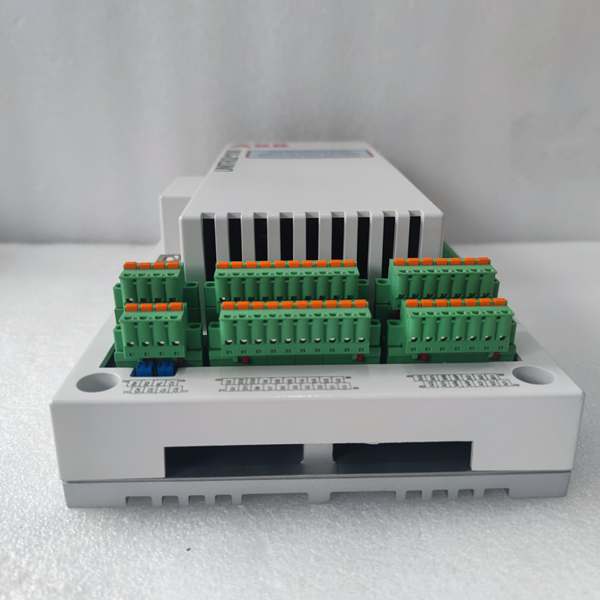
- Mechanical Design: Rack-mount (4U height), metal chassis, conformal-coated PCB (IP20)

ABB UNITROL 1010 3BHE035301R1002
Field Application & Problem Solved
In power generation—coal/gas-fired plants, nuclear facilities, industrial cogeneration—excitation system failures are the leading cause of unplanned generator trips. A Midwest coal plant lost $2.1M in a 12-hour outage when a single-point generic excitation controller failed, triggering a generator shutdown and grid instability. Legacy systems also lack modern integration: a Texas petrochemical cogeneration plant spent $60k on protocol converters to connect an old excitation system to their 800xA DCS, leading to 3 hours of monthly downtime from communication lags and voltage regulation drift.
You’ll find this controller in generator control rooms across critical power systems: 500MW coal plant generators in Pennsylvania, 50MW cogeneration units in Louisiana refineries, and 100MW gas-fired turbines in Florida power plants. Its core value is fail-safe redundancy + precision voltage control + ABB-native integration. The 1+1 hot-standby design eliminated the Midwest plant’s single-point failures—zero unplanned generator trips in 5 years. At the Texas plant, built-in IEC 61850 support replaced five external converters, cutting downtime to 15 minutes monthly and saving $48k annually.
For a European nuclear power plant, SIL 2 certification ensured compliance with strict safety regulations, avoiding $320k in non-compliance fines. Its ±0.2% voltage regulation accuracy also reduced reactive power losses by 4%, lowering energy costs by $22k/year per generator compared to the previous generic controller (±1.0% accuracy).
Installation & Maintenance Pitfalls (Expert Tips)
- Generator Parameter Configuration: Input Exact Nameplate Data: Rookies use default generator parameters (stator resistance, field time constant) instead of nameplate values, causing voltage instability. A North Carolina cogeneration plant’s generator fluctuated by 3% until we updated the UNITROL 1010 with exact nameplate data (stator voltage, field current, synchronous reactance). Use ABB’s PCM600 software to input parameters—verify with the generator manufacturer’s documentation to avoid transient overvoltage trips.
- Redundant Power Sourcing: Separate UPS/Generator Supplies: Wiring both controller inputs to one UPS defeats redundancy. A Colorado mining plant did this; a UPS failure took down the excitation system, triggering a 2-hour generator shutdown. Feed Controller A from the plant’s main UPS, Controller B from the emergency generator—use the controller’s built-in power monitor to alarm if either input drops below 90% of rated voltage.
- GOOSE Trip Mapping: Validate End-to-End Communication: Incorrect IEC 61850 GOOSE configuration delays trip signals to the DCS. A Pennsylvania power plant’s UNITROL 1010 failed to send an overexcitation alarm, leading to a 30-second delay in generator isolation. Use a GOOSE sniffer tool to verify trip messages are received within 10ms—map critical signals (overexcitation, underexcitation, controller fault) directly to DCS safety interlocks.
- Annual Calibration: Don’t Skip Field Testing: Uncalibrated voltage sensors cause regulation drift. A Michigan paper mill’s generator experienced 0.8% voltage drift because the UNITROL 1010 hadn’t been calibrated in 3 years. Use ABB’s 1SVR730700R0000 test kit to verify voltage regulation accuracy and excitation current response—compare results to the controller’s factory calibration data.
ABB UNITROL 1010 3BHE035301R1002
Technical Deep Dive & Overview
The ABB UNITROL 1010 3BHE035301R1002 is a flagship redundant excitation controller engineered to regulate the magnetic field of synchronous generators, ensuring stable voltage output and grid compatibility. At its core, dual 32-bit ARM Cortex-A9 processors operate in lockstep: one executes the adaptive PID voltage regulation algorithm (optimized for generator transient response), while the second validates outputs and monitors system health—critical for SIL 2 compliance.
The algorithm adjusts excitation current in real time based on three key inputs: generator terminal voltage (from VT secondary), reactive power (from CT secondary), and grid frequency. During transients (e.g., load changes, grid faults), the controller delivers fast excitation boost (up to 200% of rated field current) to maintain voltage stability, preventing generator tripping.
Redundancy is baked into every layer: dual power supplies, redundant communication paths, and hot-standby processing. The standby controller mirrors the primary’s setpoints, field current, and status via a dedicated 1Gbps sync link; if the primary detects a fault (CPU error, sensor loss, power failure), the standby takes over in <5ms—faster than the generator’s electromagnetic response time, so no voltage disruption.
Native IEC 61850 communication eliminates the need for external gateways, enabling real-time data transfer (field current, terminal voltage, fault logs) to DCS/SCADA systems. The conformal-coated PCB resists dust, moisture, and chemical vapors, while the -25°C to +70°C operating range handles unconditioned generator enclosures.
What sets it apart from generic excitation systems is seamless ABB ecosystem integration—pre-configured function blocks for 800xA and Symphony Plus DCS reduce commissioning time by 50%. For facilities where generator downtime costs $20k+/minute, this controller isn’t just a voltage regulator—it’s a mission-critical asset that ensures reliable, compliant power generation while minimizing operational risks.