Description
Key Technical Specifications
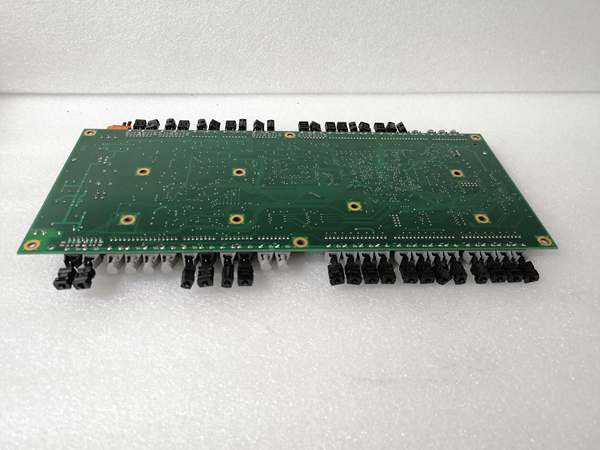
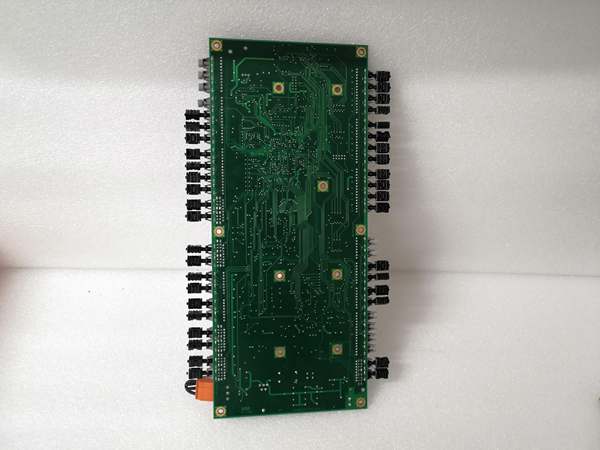
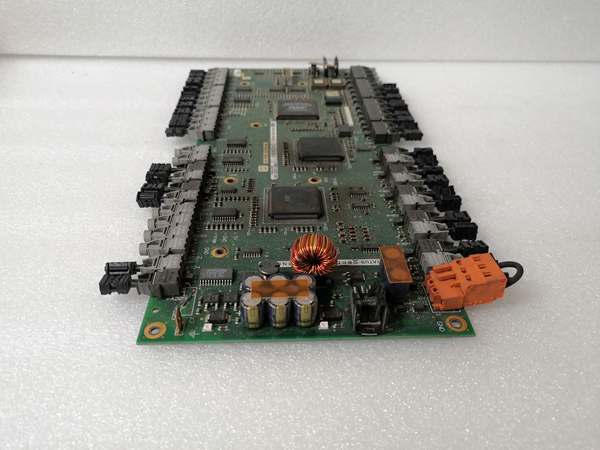
- Model Number: ABB UFC760BE41 3BHE004573R0041
- Manufacturer: ABB Power Generation Division
- Rated Output Current: 200A continuous, 600A peak (10-second duration)
- Input Voltage: 3-phase 380–480V AC (control power); 10–30kV AC (field supply, via excitation transformer)
- Control Modes: Automatic Voltage Regulation (AVR), Reactive Power (VAR) control, Power Factor (PF) control, Manual (MAN) mode
- Response Time: <5ms (field current step response to 90% of setpoint)
- Redundancy: 1+1 hot-standby controller redundancy; N+1 power unit redundancy
- Communication Protocols: IEC 61850 (GOOSE/MMS), Modbus TCP, DNP3.0, Profinet
- Operating Temperature: -20°C to +60°C (-4°F to +140°F)
- Isolation Rating: 10kV AC (field circuit to control electronics); 2kV AC (communication ports)
- Physical Dimensions: 500mm × 800mm × 300mm (W×H×D), cabinet-mount (IP21 protection)
- Grid Compliance: IEEE 421.5, IEC 60034-1, NERC PRC-024, GB/T 7409.3
- Certifications: IEC 61508 (SIL 2), CE, UL 1740, ATEX Zone 2

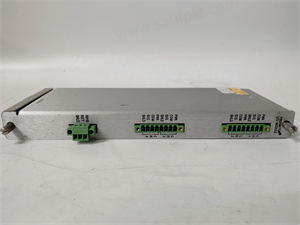
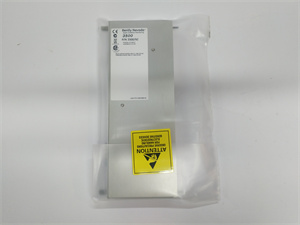
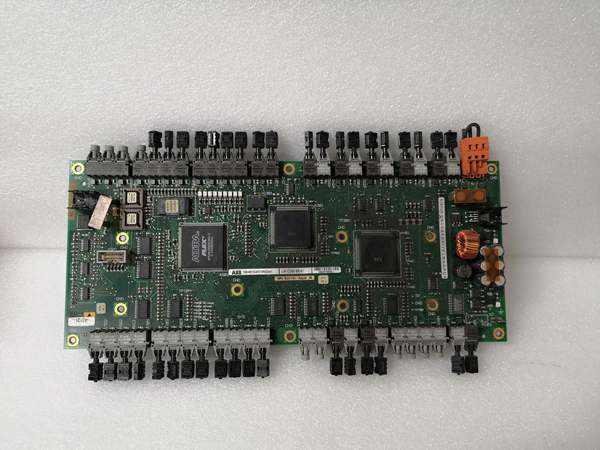
ABB UFC760BE41 3BHE004573R0041
Field Application & Problem Solved
In power generation—whether it’s a 50MW hydro plant or a 80MW industrial cogeneration unit—excitation system failures are catastrophic. A Midwest thermal plant lost $1.2 million in a single outage when its legacy excitation controller failed to stabilize voltage during a grid dip, triggering a generator trip. Older systems struggle with two critical issues: slow response to grid disturbances (≥20ms) that violate modern grid codes, and lack of redundancy that turns minor component faults into full shutdowns. Industrial cogeneration facilities face additional pressure—non-compliant excitation systems result in costly grid penalties (up to $50k/quarter) for poor reactive power support.
This controller lives in the generator terminal building or control room, acting as the “nerve center” of the excitation system. It regulates the generator’s field current to maintain terminal voltage and reactive power output, ensuring compliance with grid operator requirements. You’ll find it in coal-fired power plants in Pennsylvania, hydroelectric facilities in the Pacific Northwest, and natural gas cogeneration plants in Texas. Its core value is grid compliance plus fail-safe reliability. The <5ms response time meets NERC’s strict fault ride-through requirements, while 1+1 redundancy eliminates single points of failure. A California cogeneration plant swapped its outdated controller for this model, cutting grid penalties by 100% and reducing excitation-related outages from 3/year to zero over two years.
Installation & Maintenance Pitfalls (Expert Tips)
- Field Wiring Polarity—Double-Check Before Power-Up: Rookies reverse the field winding connections, causing the generator to “hunt” for voltage and trip on overexcitation. A New York hydro plant made this mistake, delaying commissioning by 8 hours. Use color-coded wires (red for positive, black for negative) and verify with a multimeter—field current should flow from the controller’s “F+” terminal to the generator rotor.
- Redundancy Switchover Tests—Monthly, Not Annually: Many plants skip monthly redundancy checks, leading to hidden faults. Use the HMI to trigger a manual switch from Controller A to B; verify field current, terminal voltage, and control mode remain unchanged (switchover time <10ms). A Florida plant ignored this for 6 months—when Controller A failed, Controller B didn’t take over due to a loose communication cable, causing a 2-hour outage.
- Parameter Backup—Save Before Firmware Updates: Firmware updates (critical for grid code compliance) erase custom settings if unbacked. Use ABB’s UNITROL Connect software to save parameters to a USB drive and plant server. A Texas cogeneration facility lost 3 weeks of calibrated VAR control settings during an update, costing $20k in avoidable penalties. Always test backups on a simulation platform first.
- Excitation Transformer Tap Setting—Match Generator Rating: Incorrect taps cause under/over-voltage in the field circuit. A Colorado coal plant re-rated its generator from 40MW to 50MW but didn’t adjust the transformer tap— the controller tripped on overexcitation during startup. Set the tap to deliver 1.2x the generator’s rated field voltage at no load.
ABB UFC760BE41 3BHE004573R0041
Technical Deep Dive & Overview
The UFC760BE41 3BHE004573R0041 is a modular excitation controller designed to regulate the magnetic field of synchronous generators, converting AC grid power to controlled DC current for the generator rotor. At its core, a dual-core 32-bit processor runs advanced control algorithms—including adaptive PID with anti-windup logic—that outperform legacy analog systems. The power stage uses IGBT-based rectifier bridges (instead of older thyristors) for faster switching and smoother current control, reducing generator voltage ripple by 70%.
Redundancy is baked into its design: two identical controllers operate in hot standby, with real-time data synchronization via a dedicated fiber-optic link. If the primary controller detects a fault (e.g., processor error, power loss), the standby unit takes over in <10ms—fast enough to avoid voltage deviations. The controller communicates with the plant DCS via IEC 61850, enabling remote monitoring and control of key parameters (field current, terminal voltage, reactive power) from the central control room.
Its rugged construction handles harsh power plant environments: a conformal-coated PCB resists dust and moisture, while the -20°C to +60°C operating range suits both arctic hydro plants and desert cogeneration facilities. The 10kV isolation between the high-voltage field circuit and low-voltage control electronics prevents transients from damaging sensitive components. With a MTBF of over 250,000 hours and SIL 2 certification, it’s engineered for 24/7/365 operation—critical for power generation where downtime directly impacts revenue and grid stability.