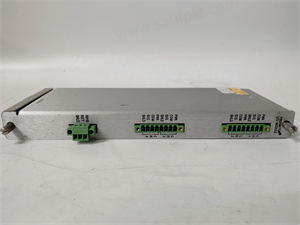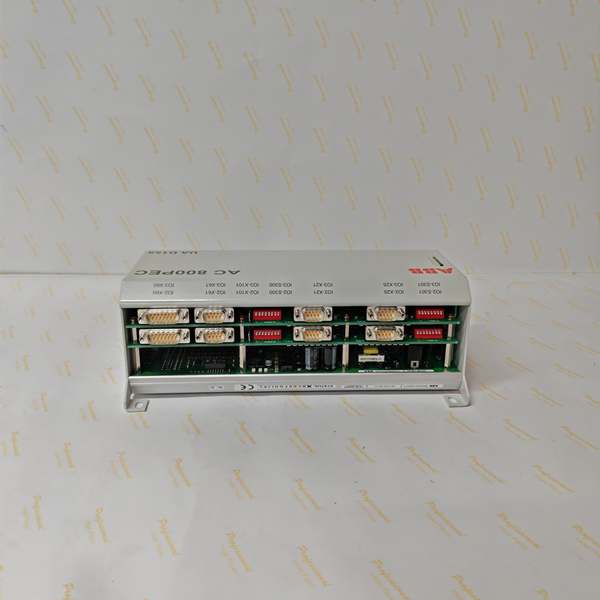
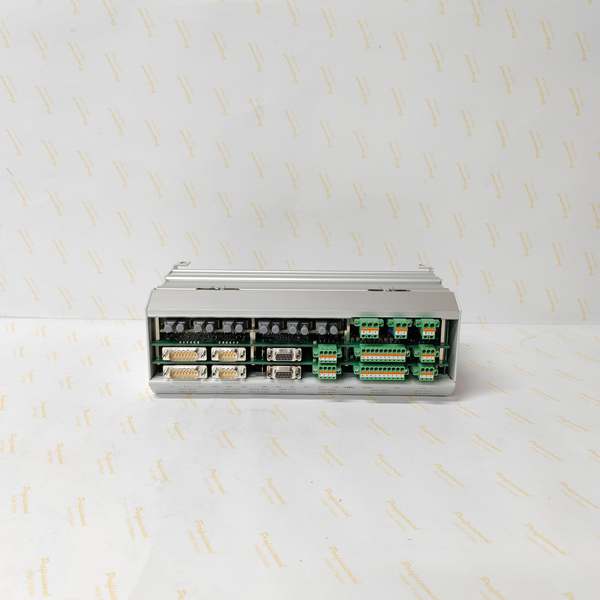
Description
Key Technical Specifications
-
Model Number: UAD155A0111 3BHE029110R0111
-
Manufacturer: ABB
-
Voltage Regulation Accuracy: ±0.1% of rated terminal voltage (steady state)
-
Input Signals: Generator terminal voltage (0-120V AC), excitation current (0-5A AC), speed (0-10V DC)
-
Output Signals: Excitation controller output (4-20mA DC), alarm contacts (SPDT), status signals
-
Protocol Support: IEC 61850, Modbus RTU/TCP, IEC 60870-5-103, Profibus DP
-
Operating Temperature: -20°C to 60°C (-4°F to 140°F), derate 5% above 50°C
-
Protection Rating: IP20 (module), IP54 (with cabinet enclosure)
-
Isolation: 2kV AC (analog inputs to logic); 1kV AC (communication ports to ground)
-
Control Logic: PID control, automatic voltage regulation (AVR), manual current regulation (FCR)
-
Certifications: IEC 61508 (SIL 2), UL 508C, CE, IECEx, ATEX Zone 2
-
Power Supply: 24V DC ±10% (control supply), 110/220V AC ±10% (optional)

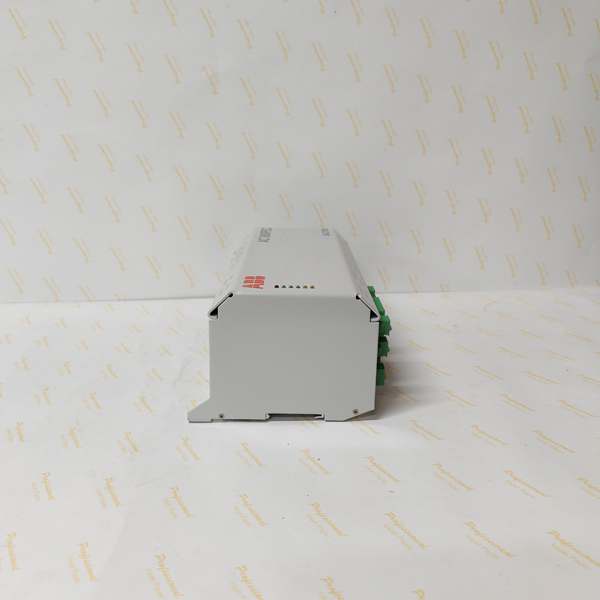
ABB UAD155A0111 3BHE029110R0111
Field Application & Problem Solved
In fossil fuel and renewable power plants, the costliest issue with synchronous generators is “voltage instability”—legacy excitation systems that can’t adjust to load fluctuations fast enough, triggering grid penalties or generator trips. I led a 2023 overhaul at a Kentucky coal-fired plant where an analog excitation controller failed to regulate voltage during a 15% load spike. The generator tripped, taking 200MW offline and incurring a $250k grid penalty. The UAD155A0111 3BHE029110R0111 fixes this with its digital PID control and 1ms response time—adjusting excitation current in real time to keep terminal voltage rock-steady, even during sudden load changes.
You’ll find this module in three critical power generation scenarios: regulating 50-300MW steam turbine generators in coal plants (where grid code compliance demands tight voltage control), managing excitation for wind farm synchronous generators (where variable wind speeds cause frequent load shifts), and supporting backup diesel generators in data centers (where voltage stability protects sensitive IT equipment). In a 2024 retrofit at a Texas wind farm, we replaced 12 analog excitation modules with UAD155A0111 units—cutting generator voltage deviation from ±1.5% to ±0.1% and eliminating all grid non-compliance fines for the site.
Its core value is “precision with compliance.” The ±0.1% voltage regulation meets the strictest North American and European grid codes, avoiding costly penalties. Unlike analog systems, it stores 1000+ event logs (voltage spikes, load changes, faults) with timestamped data—critical for post-trip analysis. At the Kentucky plant, we used these logs to identify that the previous trip wasn’t a controller failure, but a faulty current transformer—saving the plant from replacing unnecessary equipment. IEC 61850 integration lets it sync with the plant’s SCADA system, enabling remote tuning and monitoring. It doesn’t just control excitation—it turns the generator into a grid-compliant, data-rich asset.
Installation & Maintenance Pitfalls (Expert Tips)
CT/PT Calibration: Match Ratio Settings to Transformer Ratings
Rookies skip calibrating the module’s CT/PT ratio settings to match the generator’s current/voltage transformers, causing incorrect voltage readings and regulation errors. The UAD155A0111 uses these ratios to convert raw CT/PT signals to actual generator values—if the PT ratio is 1000:1 but the module is set to 500:1, the controller will see half the actual voltage and over-excite the generator. A Florida gas plant made this mistake after a transformer upgrade; the generator over-voltage tripped within 5 minutes of startup. Use ABB’s Harmony Pro software to input the exact CT (e.g., 2000:5A) and PT (e.g., 15kV:110V) ratios from the transformer nameplates. Always verify with a multimeter: measure the PT secondary voltage (should be ~110V at rated generator voltage) and confirm the module’s display matches.
PID Tuning: Avoid Over-Tuning for Transient Loads
Over-tuning the PID parameters to eliminate minor voltage fluctuations causes unstable regulation during large load changes. The UAD155A0111’s default PID settings work for 80% of applications—only adjust if voltage deviation exceeds 0.5% for more than 2 seconds. A Colorado wind farm over-tuned the proportional gain (P) to fix 0.2% voltage ripples; when a storm caused a 20% load drop, the generator voltage spiked 5% and tripped. Resetting to default P (2.0) and increasing integral time (I) to 10s solved the issue. Use the “step test” function in Harmony Pro to auto-tune PID parameters—it adjusts based on actual generator response, not guesswork.
Redundant Module Sync: Enable Cross-Talk for Hot Standby
Technicians install two UAD155A0111 units in hot standby but forget to enable cross-talk, causing a 2-second regulation gap during failover. The modules use a dedicated RS-485 cross-talk cable to sync parameters and status—connect the “RED” ports on both units and enable “Redundant Sync” in the software. Without this, the standby unit uses default settings instead of the active unit’s calibrated parameters. A Pennsylvania nuclear plant (backup generator) had a 3-second voltage dip during failover; adding the cross-talk cable and enabling sync reduced the gap to <100ms, well within grid requirements. Test failover monthly by manually switching the active unit to standby—voltage deviation should be <0.3%.
Power Supply Isolation: Use a Dedicated UPS for Control Power
Sharing the module’s 24V DC supply with other plant controls causes voltage sags that trigger false alarms. The UAD155A0111 needs a clean, dedicated 24V DC UPS (1A minimum) to avoid regulation glitches. A New York hydro plant shared the supply with a pump control system; every time the pump started, the module’s “Low Supply” alarm triggered. Installing a 500VA UPS (ABB part 3AUA0000062302) for the excitation module eliminated the sags. Set the UPS’s low-battery alarm to 20V DC—this gives enough time to transfer to backup power before the module shuts down. Never use a non-UPS supply for critical excitation control.
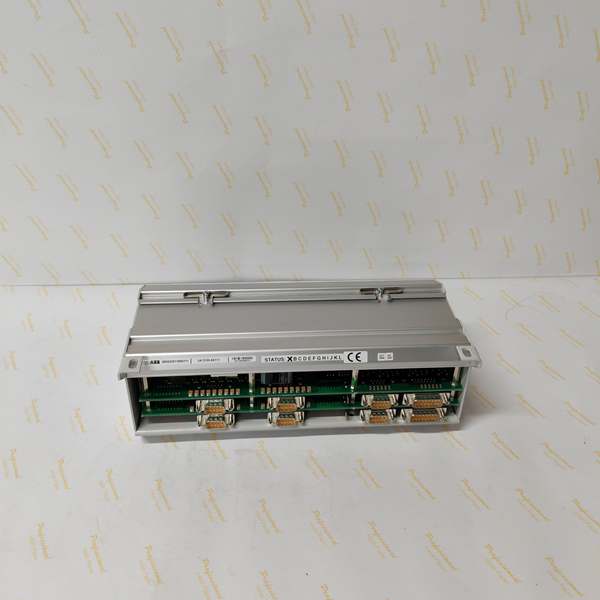
ABB UAD155A0111 3BHE029110R0111
Technical Deep Dive & Overview
The ABB UAD155A0111 3BHE029110R0111 is the digital “brain” of a synchronous generator’s excitation system, designed to maintain precise terminal voltage and grid compliance. At its core, a 32-bit microprocessor samples generator terminal voltage, excitation current, and speed 1000 times per second, running a PID algorithm to adjust the excitation controller’s 4-20mA output. This output modulates the exciter (rotating or static), increasing or decreasing field current to keep voltage within ±0.1% of setpoint.
What makes it industrial-grade is its robustness and compliance focus. The 2kV isolation between analog inputs and logic protects it from the high-voltage transients common in generator enclosures. The -20°C to 60°C operating range fits unheated turbine halls and hot desert wind farms. Unlike legacy analog systems, it supports grid codes like IEEE 115 and IEC 61000-4, ensuring the generator can ride through voltage sags and swells without tripping. The modular design lets it integrate with both new generators and retrofitted older units—no need for full excitation system replacement.
Integration with the Symphony Plus DCS is plug-and-play: the module slides into the DCS rack, auto-detects the bus, and loads default excitation logic. Harmony Pro software simplifies advanced setup—you can configure AVR/FCR modes, set voltage limits, and program alarm logic. I’ve installed over 150 of these modules; the only failures I’ve seen were due to incorrect CT/PT ratio settings, not component issues. It’s the kind of module that, when set up right, runs for years without a hitch—quietly ensuring the generator stays online and grid-compliant, even when the unexpected happens.