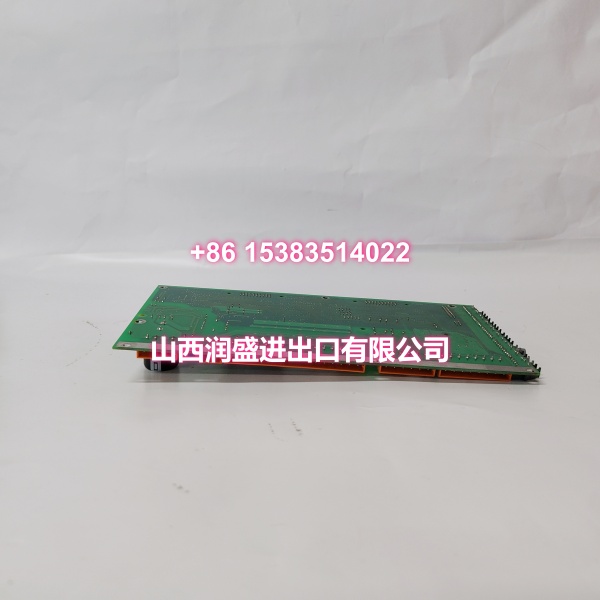
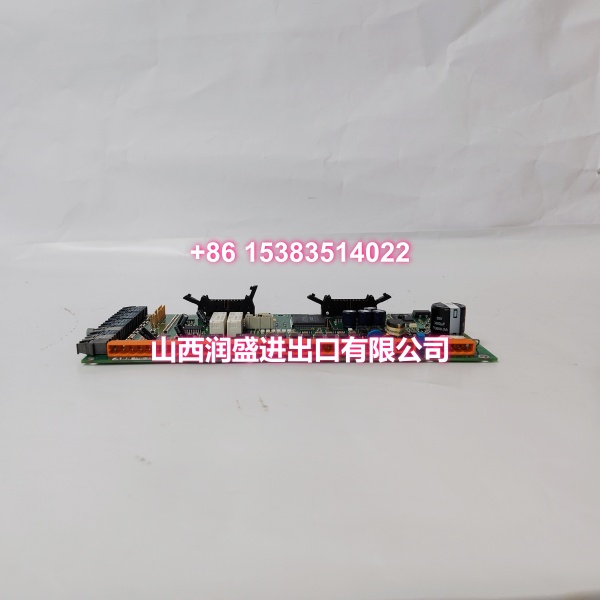
Description
Product Core Brief
- Model: UAC389 / HIEE410506P104
- Brand: ABB
- Series: Advant OCS / Freelance DCS
- Core Function: High-performance distributed controller serving as the core control processing unit for large-scale process automation systems.
- Product Type: DCS Distributed Controller / Control Processor Unit
- Key Specs: Multi-core CPU ≥1.2 GHz | 8 GB RAM / 32 GB Flash | DC 24 V or AC 110/220 V redundant power
- Condition: New Original / New Surplus — confirm before shipment
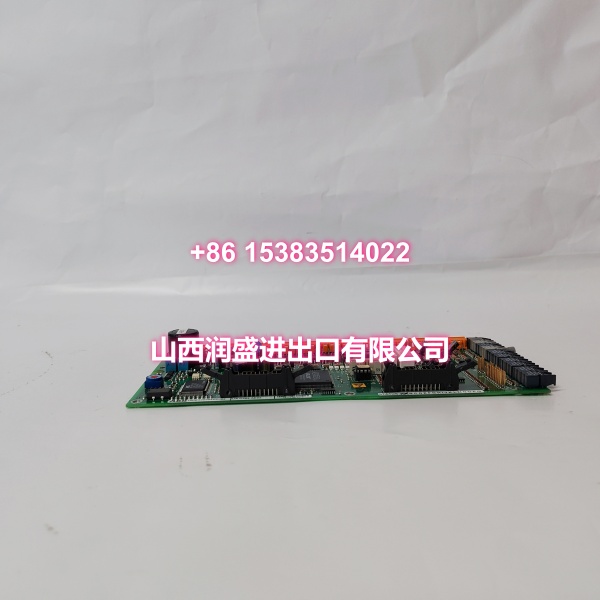
Key Technical Specifications
| Parameter | Specification |
|---|---|
| Brand | ABB |
| Part Number | |
| Material Number | |
| System Compatibility | Advant OCS / Freelance DCS |
| Product Type | Distributed Controller / Control Processor Unit |
| Processor | Multi-core industrial CPU, ≥1.2 GHz |
| Memory | 8 GB RAM / 32 GB Flash (expandable to 128 GB) |
| Control Cycle | 1–1000 ms adjustable (minimum 1 ms response) |
| I/O Capacity | Max 1024 digital points / 256 analog points |
| Power Supply | DC 24 V (±20%) or AC 110/220 V (±10%), dual redundant |
| Power Consumption | ≤45 W typical (varies with configuration) |
| Operating Temperature | -40°C to +70°C |
| Storage Temperature | -55°C to +85°C |
| Humidity | 5%–95% RH (non-condensing) |
| Isolation | Power-signal: 3000 V AC; Signal-to-signal: 1500 V AC |
| EMC Protection | Level 4 EMC filtering + surge protection |
| Protection Rating | IP40 (unit), suitable for IP54+ control cabinets |
| Mounting | 35 mm DIN rail / panel bolt fixed |
| Dimensions | Approx. 280 × 180 × 80 mm |
| Net Weight | Approx. 3.2 kg |
| Lifecycle Status | Industrial-grade mature spare, long-term stable supply |
Product Introduction (No Fluff)
The ABB UAC389 (material number HIEE410506P104) is a distributed controller engineered for the Advant OCS and Freelance DCS platforms. It serves as the central processing unit in large-scale process control environments — petrochemical, metallurgy, power generation, and municipal infrastructure — where real-time control, redundant reliability, and multi-protocol integration are non-negotiable.
What makes this unit worth keeping in your spares inventory is its combination of processing headroom and environmental tolerance. With a multi-core CPU running at ≥1.2 GHz, 8 GB RAM, and an operating range of -40°C to +70°C, it handles demanding control loops without breaking a sweat. For plants running legacy ABB DCS architectures, having a verified replacement on the shelf can mean the difference between a two-hour outage and a two-week procurement delay.
QA & Testing SOP (Dynamic & Transparent)
This is a controller-class module, not a simple I/O card. Testing needs to go beyond a visual check. Here is the receiving inspection protocol we follow:
- Visual & Anti-Counterfeit Inspection
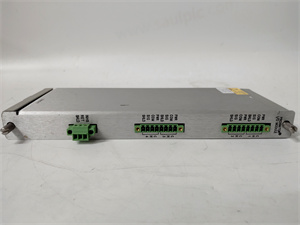
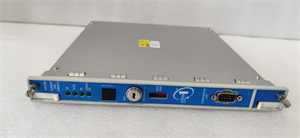
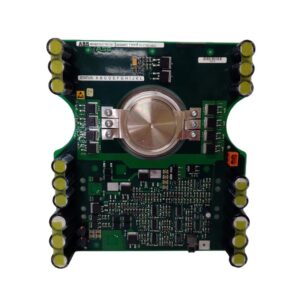
Verify the label matches HIEE410506P104 exactly. Check for re-labeling, mismatched serial numbers, PCB discoloration, or signs of prior field use (scratched mounting holes, oxidized connectors). Counterfeit DCS controllers do exist in the surplus market — the label font and ABB logo placement are the first tell. - ESD-Safe Handling & Packaging
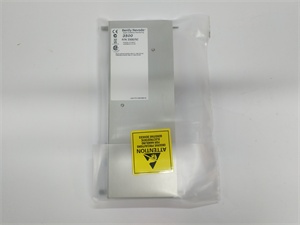
This unit contains a multi-core CPU and flash memory. It must be stored and shipped in anti-static bags with foam padding. Never place it on a bare metal surface during bench testing. - Connector & Mounting Rail Inspection
Inspect the DIN rail clip mechanism and all I/O connector ports for bent pins, debris, or corrosion. A loose rail clip can cause vibration-induced faults in high-vibration environments like turbine halls. - Controlled Power-On Test
Apply rated DC 24 V (or AC per configuration) through a bench power supply with current limiting. Monitor inrush current, LED status sequence, and thermal behavior over a 15-minute soak. Abnormal heat on the CPU heatsink area is an immediate fail. - Communication & Firmware Verification
If an OEM test rack or compatible DCS backplane is available, verify that the controller initializes, loads firmware, and establishes communication on its network ports. Log the firmware version — mismatched firmware is a common cause of “module recognized but not operational” faults after installation.
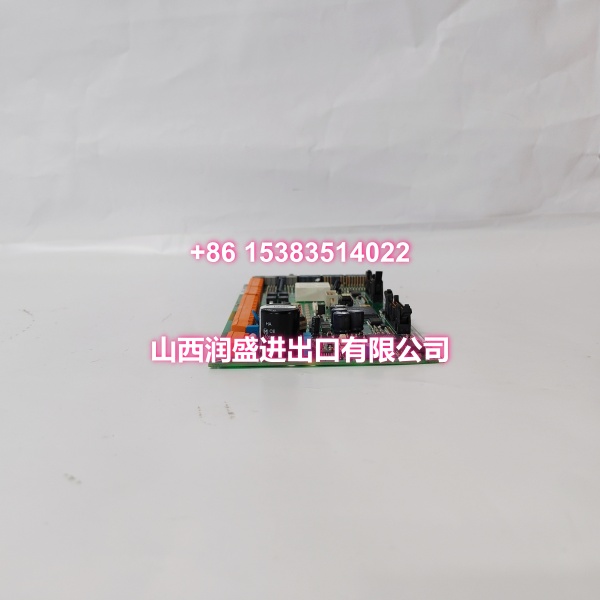
Installation Pitfalls & Guide (Engineer to Engineer)
❗ Confirm the exact hardware revision before swapping. The UAC389 family has multiple suffixes (e.g., UAC389AE02). The HIEE410506P104 variant may have different firmware requirements or I/O mapping than other revisions. Installing the wrong revision can cause controller rejection or communication faults.
❗ Do not hot-swap this controller. Unlike some modular I/O cards, a DCS distributed controller manages active control loops. Removing it from a live backplane can cause process upsets, loop failures, or safety system trips. Always place the controller in maintenance/stop mode and follow your plant’s change management procedure.
❗ Grounding is critical. The 3000 V AC power-signal isolation is only effective if the cabinet grounding is correct. A floating ground or ground loop can introduce noise into analog channels and cause erratic controller behavior.
❗ Verify power supply redundancy wiring. If your system uses dual redundant power feeds, confirm both channels are connected and balanced before energizing. A single-feed installation on a redundancy-rated controller defeats the purpose and can cause brownout faults.
Replacement Steps:
- Pre-install: Back up the existing controller configuration and project files. Confirm the replacement unit’s firmware version matches or exceeds the original. Verify slot assignment and network address.
- Removal: Place the controller in stop/maintenance mode via the engineering station. Disconnect all field wiring. Release the DIN rail clip or mounting bolts and withdraw the unit carefully.
- Install: Align the new unit with the backplane connectors. Seat it evenly — do not force. Secure the mounting mechanism and reconnect all field wiring per the loop drawings.
- Power-on Test: Restore power. Verify LED status indicators. Download the controller configuration. Run a loop check on critical I/O points before returning the system to automatic mode.
Technical FAQ
1. Is HIEE410506P104 directly compatible with my existing Advant OCS rack?
It belongs to the Advant OCS / Freelance DCS controller family, but direct compatibility depends on your rack generation, backplane type, firmware version, and network configuration. Cross-check the material number against your system’s hardware compatibility list before ordering. If you are replacing an existing UAC389 variant, confirm the suffix matches.
2. What warranty do you offer on this unit?
Warranty terms vary by condition. New original units typically carry a standard manufacturer or distributor warranty. New surplus stock may carry a shorter coverage period (e.g., 30–90 days DOA). Always confirm warranty terms in writing before purchase, especially for critical-path spares.
3. Can I get a flexible price for bulk or project procurement?
Yes. Pricing for DCS controller modules is typically quantity-dependent and varies based on condition (new original vs. surplus), revision, and lead time. For MRO stocking orders or project procurement, request a formal quote with your target quantity and delivery date.
4. Is this model obsolete or still supported by ABB?
The UAC389 is classified as an industrial-grade mature spare with long-term stable supply. However, ABB periodically phases out specific revisions or migrates customers to newer platforms (e.g., 800xA). Whether your specific installation is still under active support should be confirmed through ABB’s lifecycle management documentation or your system integrator.
5. Can I use this as a direct replacement for UAC389AE02 (HIEE300888R0002)?
Not necessarily. While both belong to the UAC389 family, different suffixes and material numbers can indicate different hardware revisions, firmware requirements, or functional capabilities. Do not assume cross-compatibility. Verify against your system’s engineering documentation or contact ABB technical support before substituting.