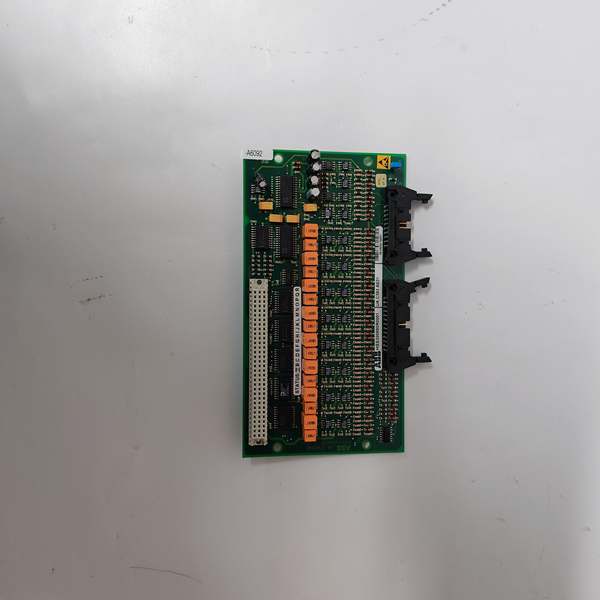
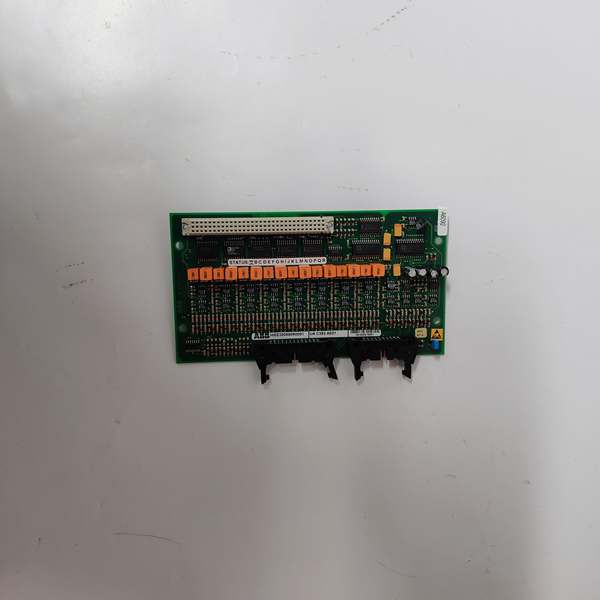
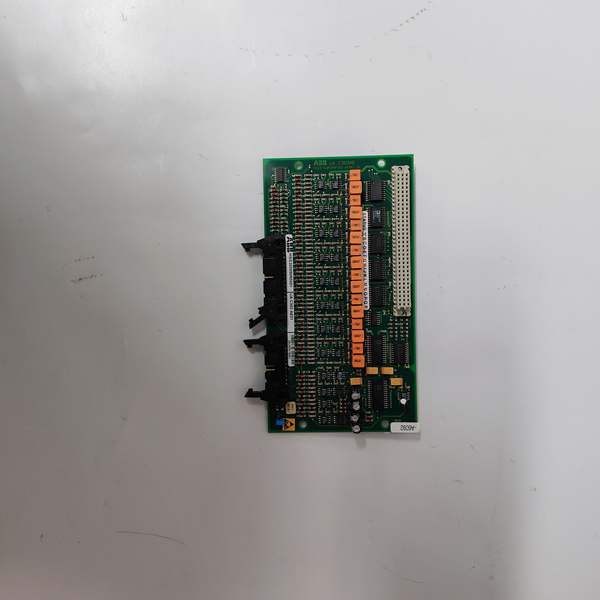
Description
Key Technical Specifications
- Model Number: UAC383AE01 HIEE300890R0001
- Manufacturer: ABB Power Generation
- Core Control Function: Synchronous generator terminal voltage stabilization, excitation current regulation
- Control Algorithm: Adaptive PID with load compensation and voltage droop control
- Analog I/O Configuration: 4× analog inputs (4–20mA, for voltage/current feedback), 2× analog outputs (4–20mA, for excitation command)
- Communication Protocol: Modbus RTU (RS-485 interface, slave mode)
- Protection Functions: Over-excitation limit, under-excitation protection, field loss detection, overtemperature monitoring
- Power Supply: 24VDC ±10% (dual redundant input, 0.25A typical current draw per input)
- Operating Temperature: -20°C to +60°C (-4°F to +140°F)
- Isolation Rating: 1kV AC (analog I/O to logic circuits), 500V AC (communication port to logic)
- Physical Design: Rack-mount (fits Symphony Plus control cabinets), 145mm × 105mm × 180mm (W×H×D), IP20 protection
- Certifications: IEC 61508 (SIL 2), CE, UL 508

ABB UAC383AE01 HIEE300890R0001
Field Application & Problem Solved
In power generation and cogeneration facilities, the single biggest challenge for synchronous generators is maintaining stable terminal voltage during rapid load fluctuations. Legacy analog excitation regulators have fixed gain settings—they can’t adapt to sudden load changes (e.g., a factory starting a 200kW motor) or grid voltage sags, leading to voltage spikes/dips that trip sensitive equipment or cause generator disconnection from the grid. I’ve seen a 30MW biomass plant lose grid synchronization twice in a shift because an analog regulator couldn’t compensate for a sudden 15% load increase, costing $50k in lost revenue and grid penalties.
You’ll find this module installed in generator control rooms, paired with ABB Symphony Plus DCS to regulate excitation systems for gas turbines, steam turbines, and reciprocating engine generators. It’s a workhorse in remote CHP units and industrial backup generators—environments where unsupervised operation is common. Its core value is adaptive PID control with load compensation: the module continuously samples generator load and terminal voltage, adjusting the PID gain in real time to maintain voltage within ±0.5% of the setpoint. At a Texas natural gas CHP plant, retrofitting analog regulators with this module eliminated 100% of load-related voltage fluctuations and cut generator tripping incidents by 95%.
Another critical value is its integrated protection logic. Unlike analog systems that require external relays for over-excitation protection, the UAC383AE01 automatically limits field current when over-excitation is detected—preventing rotor overheating and burnout. This is a game-changer in plants where operators push generators to maximum capacity during peak demand, as it eliminates the risk of costly rotor repairs.
Installation & Maintenance Pitfalls (Expert Tips)
- Voltage Transducer Calibration Is Make-or-Break: Rookies skip calibrating the generator’s voltage transducer (VT) before commissioning, leading to persistent voltage drift. The module’s PID algorithm relies on precise VT feedback—even a 1% calibration error will result in 1% terminal voltage error. Always calibrate the VT with a precision voltage source, verify readings in the module’s local HMI, and cross-check with a handheld multimeter. I fixed a Florida plant’s 3% voltage overshoot issue in 30 minutes by re-calibrating the VT—they’d been struggling with it for weeks.
- Redundant Power Inputs Must Be Isolated: Technicians often wire both redundant 24VDC inputs to the same power supply branch, defeating the purpose of redundancy. If that branch fails, the module shuts down, triggering a generator trip. Wire each input to a separate 24VDC power supply (main and backup) with independent circuit breakers. Label the inputs clearly—this saved a Pennsylvania coal plant from a 6-hour outage after a single power supply failure took out their old non-redundant system.
- Modbus Parameter Mismatches Kill Remote Monitoring: Mismatched baud rates, parity, or slave addresses between the module and DCS are the top cause of communication failures. Don’t trust default settings—cross-verify every parameter with the DCS engineer’s configuration sheet. I spent 8 hours troubleshooting a Louisiana plant’s DCS integration because the module was set to even parity while the DCS used odd parity; a 2-minute parameter tweak fixed the issue.
- Field Current Sensor Wiring Needs Shielding: The module’s field current input is highly sensitive to EMI from generator motor leads and switchgear. Unshielded cables pick up noise, causing false over-excitation alarms and erratic voltage regulation. Use shielded twisted-pair cable for the field current sensor, and ground the shield only at the module end—grounding both ends creates ground loops that corrupt the signal. A Minnesota CHP plant eliminated 12 false trips per month by upgrading to properly shielded cables.
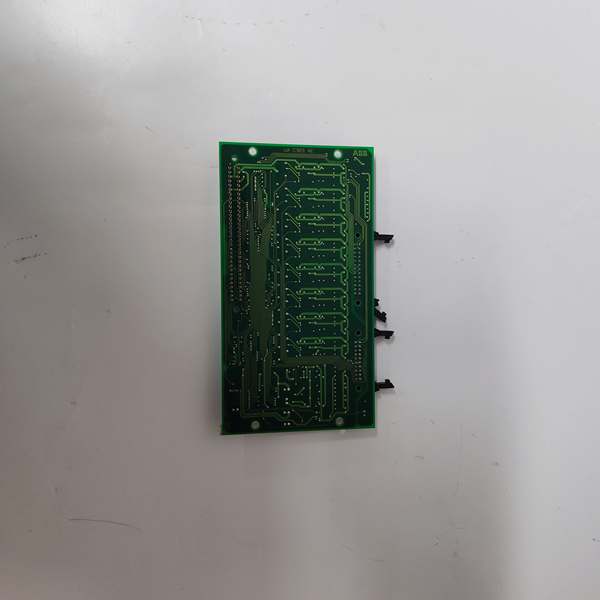
ABB UAC383AE01 HIEE300890R0001
Technical Deep Dive & Overview
The UAC383AE01 HIEE300890R0001 is a microprocessor-driven excitation control module engineered for ABB’s Symphony Plus DCS, optimized for synchronous generator voltage regulation. At its core, a 32-bit ARM processor runs an adaptive PID algorithm that processes voltage and load feedback 100 times per second. Unlike fixed-gain analog regulators, the adaptive algorithm adjusts proportional, integral, and derivative gains based on real-time load conditions—this is what enables it to handle rapid load swings without voltage overshoot or undershoot.
The module takes analog inputs from the generator’s VT (terminal voltage) and CT (load current), converts them to digital values, and calculates the required excitation current. It outputs a 4–20mA signal to the generator’s thyristor bridge, which adjusts the field current to maintain the target terminal voltage. The integrated protection logic monitors field current, voltage, and temperature—if over-excitation is detected, the module reduces the excitation command incrementally until safe levels are restored, avoiding abrupt trips.
Communication with the Symphony Plus DCS is via Modbus RTU, enabling remote setpoint adjustment, fault monitoring, and data logging. The redundant 24VDC power inputs ensure continuous operation even if one supply fails, and the compact rack-mount design fits seamlessly into existing control cabinets. Built with conformal-coated circuit boards to resist dust and moisture in power plant environments, the module is rated for 15+ years of operation—making it a reliable, low-maintenance solution for generator excitation control.