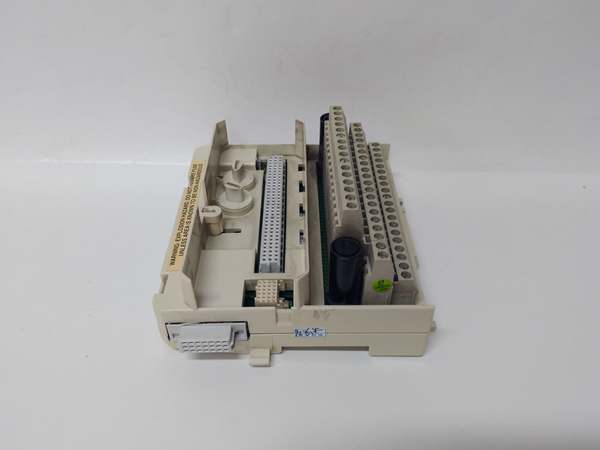
Description
Key Technical Specifications
- Model Number: TU830V1 3BSE013234R0001
- Manufacturer: ABB Process Automation
- Terminal Type: Screw-clamp terminals (accepts 0.5–2.5 mm² / AWG 24–14 wire)
- Terminal Torque Requirement: 0.5 N·m (critical for vibration resistance)
- Mounting: DIN EN 50022 (35 mm) rail mount (compact design, 1 module width = 18 mm)
- Protection Rating: IP20 (indoor use only; requires enclosure for harsh environments)
- Compatible I/O Modules: ABB AI830, AO820, DI830, DO820 (AC 800M standard I/O)
- Operating Temperature: -20°C to +60°C (-4°F to +140°F)
- Storage Temperature: -40°C to +85°C (-40°F to +185°F)
- Isolation: 2500V AC (field terminals to backplane; per I/O module specs)
- Connection Interface: Front-side field wiring, back-side connector to I/O module
- Certifications: UL 508, CSA C22.2 No. 142, CE compliant

ABB TU830V1 3BSE013234R0001
Field Application & Problem Solved
In refineries, chemical plants, and power stations running AC 800M DCS, the biggest headache with I/O racks is messy field wiring—loose connections, mislabeled terminals, and tangled cables lead to intermittent faults that take hours to troubleshoot. Legacy terminal blocks are generic, don’t lock into I/O modules, and require manual wiring to backplane connections. The TU830V1 solves this by acting as a dedicated, module-matched termination unit: it locks directly to ABB I/O modules, organizes field wiring into labeled terminals, and eliminates the need for messy backplane jumpers.
You’ll find this unit in every AC 800M I/O rack—typically paired with AI modules for temperature/pressure sensors, DI modules for limit switches, and DO modules for valve actuators. It’s the critical link between field devices and the DCS I/O system, and it’s designed for high-density rack configurations where space is at a premium. Its core value is wiring organization paired with module compatibility: the terminal labels exactly match the I/O module’s channel numbering, so technicians don’t have to cross-reference wiring diagrams during troubleshooting. I’ve seen a refinery cut I/O rack wiring time by 40% during a turnaround by switching from generic terminal blocks to the TU830V1—no more guessing which terminal goes to which channel.
Another hidden value is its vibration resistance. In pump skids or turbine enclosures, generic terminal blocks loosen over time, causing signal drops. The TU830V1’s screw-clamp terminals, torqued to 0.5 N·m, stay tight even in high-vibration environments. For maintenance teams, this means fewer “floating signal” faults and more time spent on proactive tasks instead of chasing loose wires.
Installation & Maintenance Pitfalls (Expert Tips)
Terminal Torque Is Non-Negotiable for Vibration Resistance: Rookies grab a regular screwdriver and tighten terminals until they “feel tight”—this is a disaster in high-vibration areas. Under-tightened terminals loosen over time, causing intermittent signal loss; over-tightened terminals strip threads or damage wire insulation. The spec calls for 0.5 N·m—use a torque screwdriver, not guesswork. I’ve fixed a dozen DI signal faults in turbine control racks caused by loose terminals that failed to meet torque specs.
Don’t Mix Terminal Unit and I/O Module Models: The TU830V1 is only compatible with ABB’s standard AC 800M I/O modules (AI830, DI830, etc.). Rookies often pair it with safety I/O modules (e.g., AI835S), which have different pinouts—this leads to reversed signals or no communication at all. Always verify the I/O module model before mounting the TU830V1; safety I/O requires the TU840V1 terminal unit. Mixing models is the #1 cause of wiring errors during commissioning.
Label Wires Before Removing the Unit: When replacing a failed I/O module, technicians often yank the TU830V1 off without labeling wires. This leads to hours of re-wiring and cross-referencing diagrams. Always label each wire with its channel number before disconnecting—use pre-printed wire markers or a permanent marker. This 5-minute step saves hours of troubleshooting and ensures wires go back to the correct terminals.
IP20 Rating Means No Outdoor Installation: The TU830V1 has an IP20 rating, which means it’s only protected against large objects (fingers, tools)—not dust or moisture. Rookies often mount it in unenclosed outdoor racks, leading to corrosion of terminals and signal loss. If you need to install it outdoors or in a dusty environment, mount it in a NEMA 4X enclosure with proper ventilation. Ignoring the IP rating will reduce the unit’s service life from 10 years to less than 2.
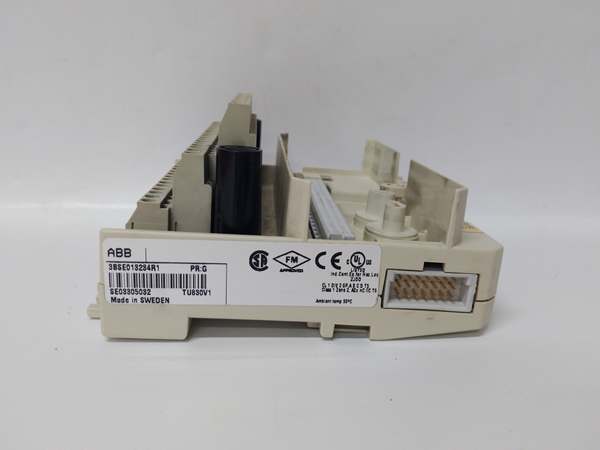
ABB TU830V1 3BSE013234R0001
Technical Deep Dive & Overview
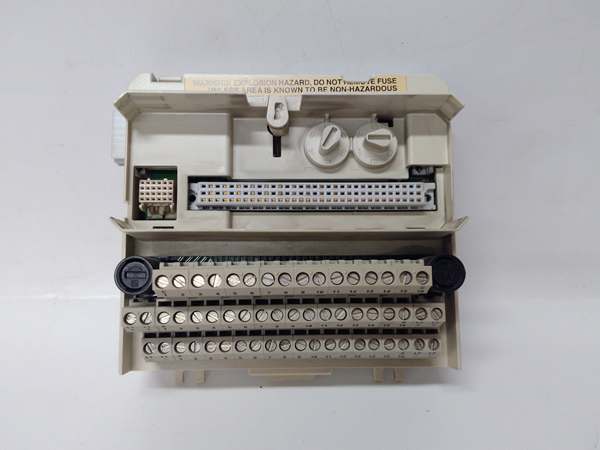
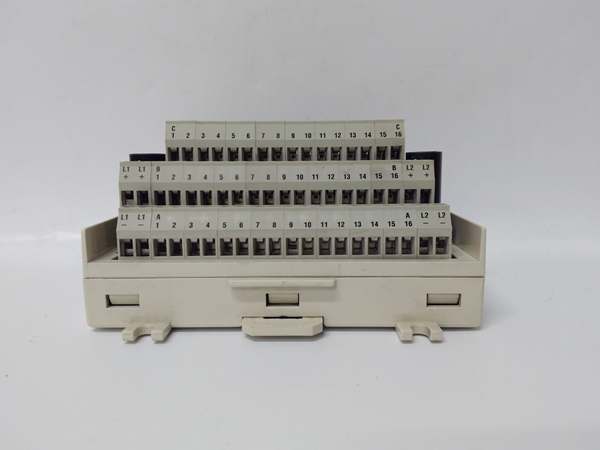
The ABB TU830V1 3BSE013234R0001 is a compact, module-specific terminal unit designed to simplify field wiring for AC 800M I/O modules. At its core, it’s a passive interface—no power, no processing, just a dedicated wiring bridge between field devices and the I/O module’s backplane connector. The unit locks into the front of the I/O module via a mechanical latch, ensuring a secure connection even in high-vibration environments. The screw-clamp terminals are arranged in a 1:1 mapping with the I/O module’s channels, so channel 1 on the module corresponds to terminal 1 on the TU830V1—eliminating wiring confusion.
Unlike generic terminal blocks, the TU830V1 is optimized for ABB’s I/O module pinouts. For example, AI modules use 4-wire connections (power, signal, ground), and the TU830V1’s terminals are spaced to accommodate shielded sensor cables without cross-talk. DI modules use 2-wire connections, and the terminals are grouped to simplify wiring from limit switches or proximity sensors. The unit’s compact design (18 mm width per module) maximizes rack density—you can fit more I/O channels in the same rack space compared to generic terminal blocks.
The 2500V AC isolation between field terminals and the backplane is not a feature of the TU830V1 itself—it’s provided by the paired I/O module—but the unit’s terminal layout ensures isolation barriers are not compromised during wiring. The front-side wiring design means technicians don’t have to access the back of the rack to connect field devices, reducing the risk of accidental damage to backplane connectors.
In the field, this unit’s strength is its simplicity and reliability. It has no moving parts, no firmware to update, and no settings to configure—install it, wire it, and forget it. For AC 800M users, it’s the standard terminal unit for I/O racks because it eliminates wiring errors, reduces installation time, and improves maintainability. It’s not a flashy component, but it’s the one that keeps field wiring organized and I/O modules communicating reliably.