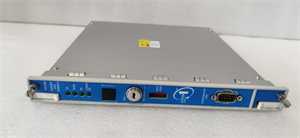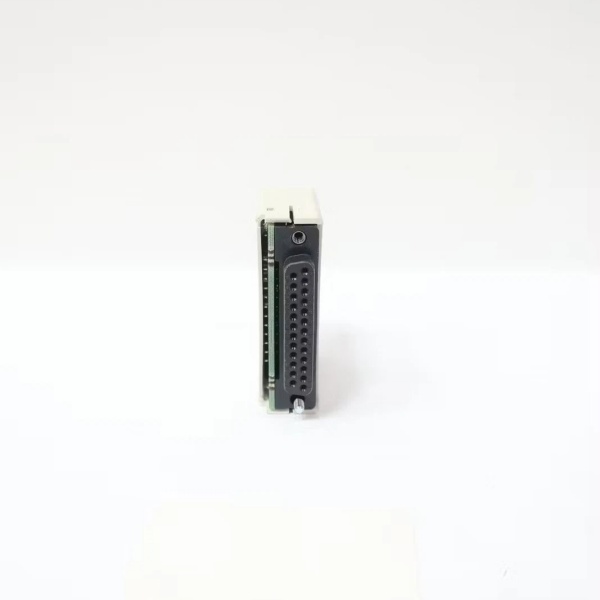
Description
Key Technical Specifications
| Parameter Name | Parameter Value |
|---|---|
| Communication Performance | Supports 100Mbps full-duplex communication, end-to-end transmission delay <10μs; up to 20km for single-mode fiber and 550m for multi-mode fiber |
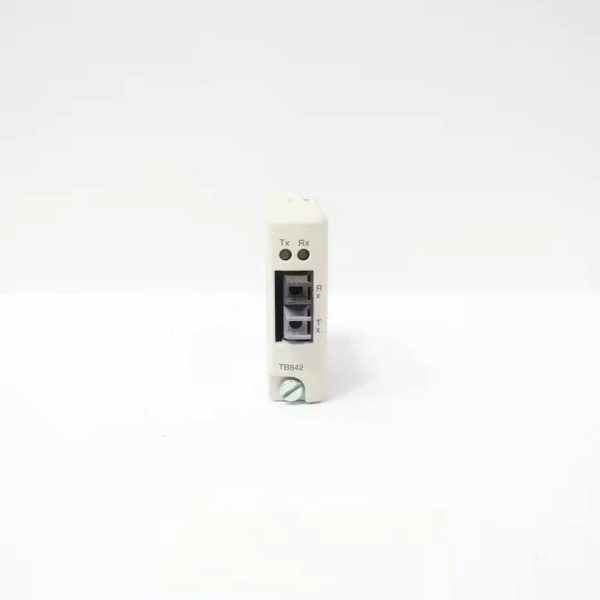
| Interface Configuration | Dual SC-type fiber interfaces (supports single-mode/multi-mode); integrated RJ45 Ethernet interface |
| Working Voltage | 220V |
| Output Frequency | 50kHz |
| Installation & Size | Weighs about 0.2kg; compact structure, suitable for matching installation with TU846 modules; supports horizontal DIN rail mounting |
| Operating Environment | Operating temperature -10°C – 55°C, ambient humidity 5% – 95% (non-condensing) |
| Core Design | Hot-swappable design; equipped with LED indicators for real-time monitoring of module status |
| Certification | Has CCC and other related product certifications |
Field Application & Problem Solved
In industrial environments such as petrochemical plants and power stations, traditional copper cable communication is prone to electromagnetic interference from high-voltage equipment and motor groups, and signal attenuation is serious during long-distance transmission. For example, in a large cement plant, the copper cable used to connect the I/O cluster and the drive unit often had signal loss, resulting in delayed execution of equipment control instructions and frequent shutdowns of the production line. In addition, in the communication of remote oil pipelines, copper cables are easily corroded by the external environment, leading to frequent maintenance and high costs.
The TB842 module solves these pain points through fiber optic communication technology. It can be used as a communication interface between CI840 FCI and TB820 module bus modems, realizing stable data transmission between I/O clusters. In the substation automation system, it isolates strong electrical interference through fiber optics to ensure the reliable communication between protection devices and the dispatch center. In the remote valve room of the oil pipeline, it realizes real-time transmission of pressure and flow data with the central control room through long-distance fiber optic transmission, reducing the failure rate of the communication system by more than 80% compared with the traditional copper cable scheme.
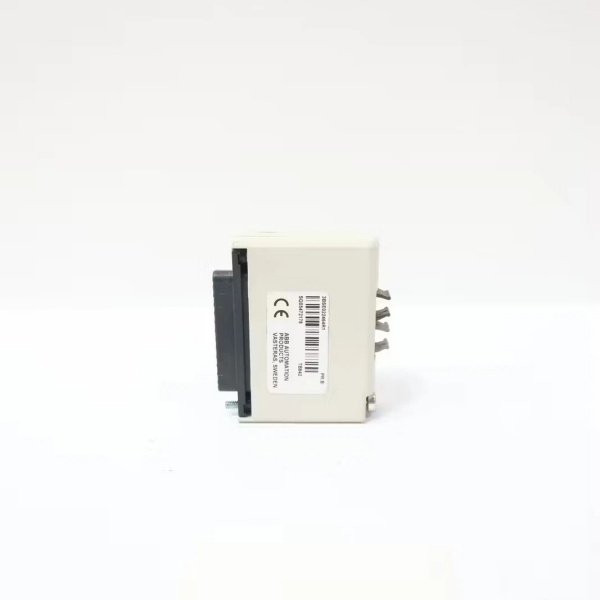
ABB TB842
Installation & Maintenance Pitfalls (Expert Tips)
- Pay Attention to Matching with Supporting Modules: The module needs to be used with CI801, CI840 FCI and TB820 series modems. Using mismatched module bus modems will lead to communication disconnection. For example, when connecting with the TU846 module, it is necessary to confirm the configuration of the mechanical key of the TU846 in advance to ensure that it is compatible with the TB842, so as to avoid the problem of unstable signal transmission.
- Standardize Fiber Optic Wiring Operations: When connecting fiber optic interfaces, avoid excessive bending or pulling of the fiber optic cable, otherwise it will cause signal attenuation or interface damage. It is recommended to keep the bending radius of the fiber optic cable above 30mm. At the same time, distinguish single-mode and multi-mode fibers during wiring, and do not mix them, so as to prevent the problem that the transmission distance and speed cannot meet the requirements.
- Make Good Use of Hot-Swapping and Pay Attention to Operation Timing: Although the module supports hot-swapping, it should not be operated randomly during the peak period of system data transmission. Before hot-swapping, it is necessary to check the module status through the LED indicator. Only when the system is in a stable idle state should the replacement be carried out to avoid data loss caused by sudden interruption of communication.
- Regularly Check the Status Indicators: The LED indicators of the module can reflect the operating status. During daily maintenance, pay attention to observing the indicator lights. If there is an abnormal light (such as a flashing fault light), timely check whether the fiber optic interface is loose, the power supply is stable, etc. It is recommended to conduct a comprehensive inspection of the module and the connected fiber optic lines every month to eliminate hidden dangers in advance.