Description
Key Technical Specifications
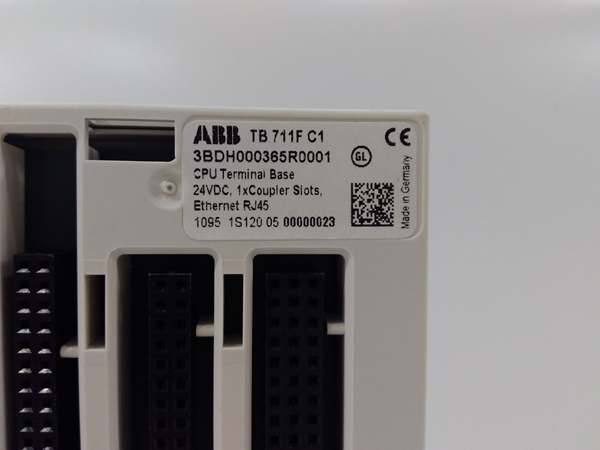
- Model Number: TB711FC1
- Manufacturer: ABB
- Communication Protocols: RS-232, RS-485 (software configurable), fiber optic (EIA/TIA compliant)
- Fiber Type: Multi-mode (62.5/125μm or 50/125μm)
- Transmission Distance: Up to 2km (multi-mode, 850nm wavelength)
- Data Rate: Up to 115.2 kbps (serial), 10Mbps (fiber optic)
- Operating Temperature: -10°C to +60°C (14°F to +140°F)
- Storage Temperature: -40°C to +85°C (-40°F to +185°F)
- Isolation: 2.5kV AC (serial ports to fiber interface)
- Power Supply: 12–24V DC (100mA typical)
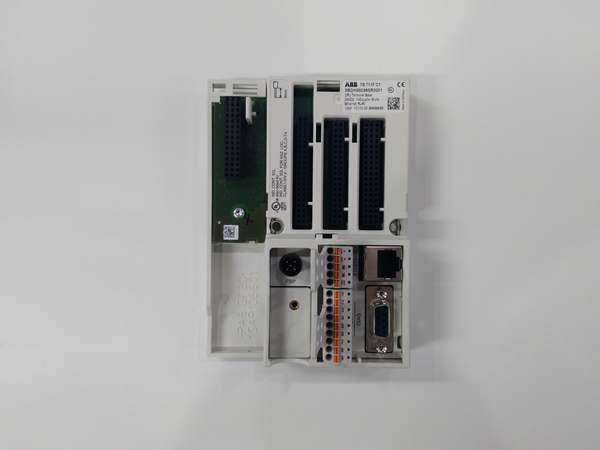
- Serial Interface: 1 x RS-232/RS-485 (terminal block connection)
- Fiber Interface: 2 x ST connectors (transmit/receive)
- Dimensions (W x H x D): 75mm x 120mm x 50mm
- Weight: Approx. 180g
- Protection Features: ESD protection (±15kV contact), surge protection on serial ports
- Compliance: IEC 61000-4 (EMC), UL 508 (industrial control)
- Mounting: DIN rail (35mm) or panel-mount
- Status Indicators: Power (PWR), serial activity (TX/RX), fiber activity (FO TX/RX)
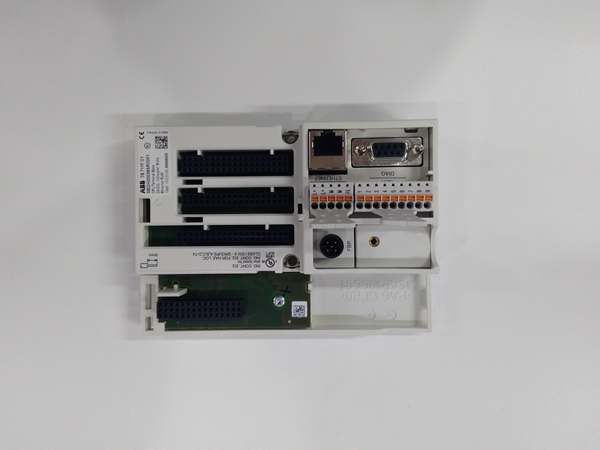
ABB TB711FC1
Field Application & Problem Solved
In industrial settings—refineries, pulp mills, and power plants—the biggest communication challenge is transmitting serial data over long distances without interference. Copper cables (like RS-485) suffer from signal degradation beyond 100m and are vulnerable to electromagnetic interference (EMI) from motors, transformers, and power cables. This often causes data corruption, dropped signals, and unreliable control system communication—issues that lead to incorrect sensor readings or failed actuator commands. The TB711FC1 solves that by converting serial signals to fiber optic, eliminating EMI and extending transmission range to 2km.
You’ll typically find this module connecting remote sensors, PLCs, or HMIs to central control systems. In refineries, it links tank level transmitters (located hundreds of meters from the control room) to the main PLC. In pulp mills, it connects motor control centers (MCCs) to the DCS, bypassing EMI from large drives. It’s also used in water treatment plants, where it transmits data from remote pump stations to the central SCADA system. For retrofits, it’s a drop-in solution to upgrade existing copper-based serial networks to fiber, without replacing entire control systems.
Its core value is reliability and noise immunity. Fiber optic signals don’t conduct electricity, so they’re unaffected by EMI, ground loops, or lightning strikes—common hazards in industrial environments. The 2km transmission range eliminates the need for signal repeaters, reducing installation complexity and failure points. For plant operators, this translates to consistent data flow, fewer communication-related faults, and easier troubleshooting—critical when downtime from bad data can cost thousands per hour.
Installation & Maintenance Pitfalls (Expert Tips)
Fiber Connector Polarity Is Critical
Rookies often cross the transmit (TX) and receive (RX) fiber connectors. This results in no communication, but diagnosing polarity issues wastes hours in the field. Remember: the module’s TX must connect to the remote device’s RX, and vice versa. Use color-coded cables (e.g., red for TX, blue for RX) and label connectors during installation. If communication fails, swap the two fiber connectors first—this fixes 90% of polarity-related issues.
Ignoring Serial Port Configuration Mismatch
The module’s RS-232/RS-485 port is software-configurable, but technicians frequently skip matching baud rate, parity, and stop bits with the connected device. A 9600bps module paired with a 4800bps sensor will result in garbled data. Always confirm the serial settings (via DIP switches or software) match the remote device—this is the #1 cause of serial-to-fiber communication failures. For RS-485, don’t forget the 120-ohm termination resistor at the last module in the chain.
Poor Fiber Cable Handling Damages Connections
Fiber optic cables are fragile—bending them beyond their minimum bend radius (typically 25mm for multi-mode) or pulling them too tight cracks the fiber core. This causes signal loss or complete failure. Route fiber cables with gentle bends, avoid kinks, and use cable ties with soft edges to secure them. During maintenance, never disconnect fibers without cleaning the ST connectors—dust or oil on the ferrule blocks light transmission. Use lint-free wipes and fiber cleaning fluid to clean connectors before reconnection.
Overlooking Power Supply Stability
The module requires 12–24V DC, but unregulated power supplies or voltage drops from long cables cause intermittent operation. A 24V supply dropping to 11V under load will shut down the module, leading to random communication drops. Use a regulated power supply and size cables appropriately (minimum 18AWG for distances over 5m) to prevent voltage loss. Install a surge protector on the power input—transients from motor startups can damage the module’s internal power supply.
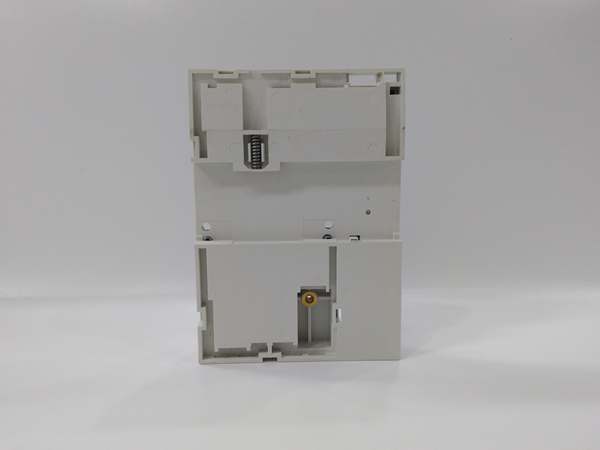
ABB TB711FC1
Technical Deep Dive & Overview
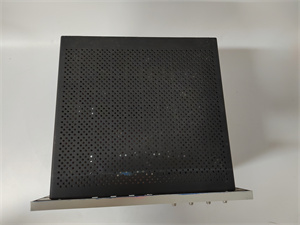
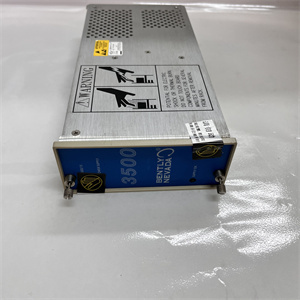
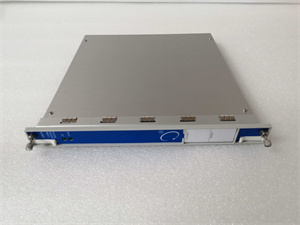
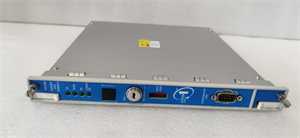
The ABB TB711FC1 is a compact, industrial-grade serial-to-fiber optic interface module designed to solve long-distance, noise-prone communication challenges in control systems. It acts as a bridge between traditional serial devices (RS-232/RS-485) and fiber optic networks, converting electrical serial signals into light signals for transmission, then converting them back to electrical signals at the receiving end.
At its core, the module uses a low-power transceiver chip that handles the serial-to-fiber conversion. The RS-232/RS-485 port is configurable via DIP switches, allowing compatibility with most industrial serial devices (sensors, PLCs, HMIs). The fiber optic interface operates at 850nm wavelength (standard for multi-mode fiber) and 10Mbps, ensuring fast, reliable data transmission up to 2km. Internal signal conditioning circuitry minimizes noise on the serial side, while ESD and surge protection guards against industrial electrical hazards.
The module’s design prioritizes simplicity and durability. The DIN rail/panel-mount options fit into standard control cabinets, and the terminal block connections for serial and power are vibration-resistant—critical in high-vibration environments like mills or refineries. The status LEDs (PWR, TX/RX, FO TX/RX) provide instant visibility into operation: a flashing FO TX/RX LED confirms fiber activity, while a solid serial TX/RX LED indicates data flow. This allows technicians to quickly diagnose issues (e.g., no fiber activity means a broken cable or polarity mismatch).
Integration is seamless—no special software is required. Simply configure the serial settings to match the connected device, wire the power and serial cables, and connect the fiber optic cables. The module’s 2.5kV isolation between serial ports and fiber interface prevents ground loops, a common source of serial communication interference. Overall, it’s a reliable, cost-effective solution for extending serial communication distances while eliminating EMI—engineered to meet the harsh realities of industrial field service.