Description
Key Technical Specifications
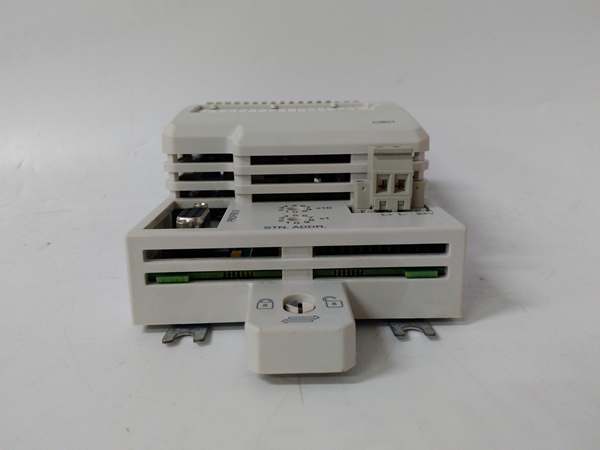
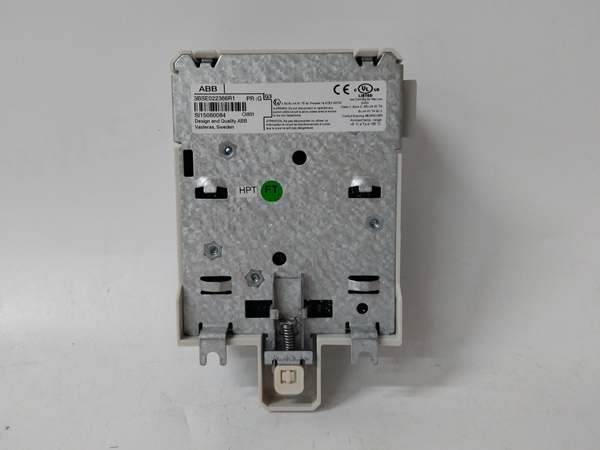
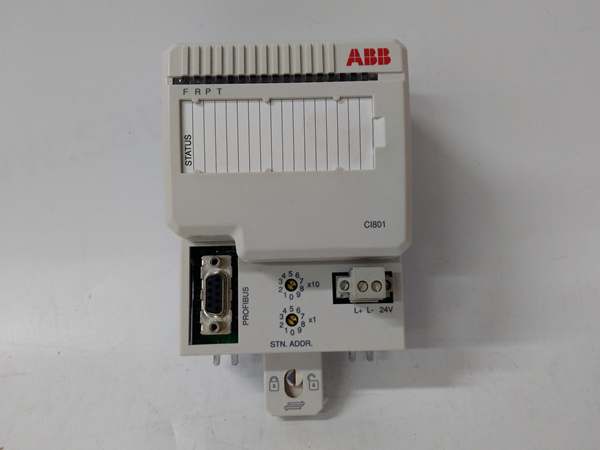
- Model Number: ABB SPICI800
- Manufacturer: ABB Industrial Automation Division
- Safety Certification: IEC 61508 (SIL 3), IEC 61511 (SIS compliance)
- Redundancy: 1+1 hot-standby, automatic failover <5ms
- CPU Architecture: Dual-core 32-bit ARM Cortex-A9, 1GHz clock speed
- Memory Configuration: 1GB RAM (error-correcting), 4GB eMMC Flash
- Communication Ports: 2 × 10/100/1000Mbps Ethernet (RJ45), 2 × RS485
- Protocol Support: Modbus RTU/TCP, Profinet IO, HART 7, OPC UA, IEC 61850 GOOSE
- Power Supply: 24VDC ±10% (18-32VDC), dual redundant inputs, 0.8A typical current draw
- Operating Temperature: -20°C to +60°C (-4°F to +140°F)
- Isolation Rating: 2kV AC (safety circuits to control circuits)
- I/O Capacity: Up to 4,096 safety I/O points (via 800xA SIS I/O modules)
- Certifications: CE, UL 508, ATEX Zone 2, RoHS 2.0

Field Application & Problem Solved
In process industries—refineries, chemical plants, power generation—safety instrumented systems (SIS) are the last line of defense against catastrophic events like explosions, toxic releases, or equipment failures. Generic safety controllers fail two critical tests: seamless integration with ABB 800xA DCS and SIL 3 reliability. A Louisiana refinery lost $3.2M in a 12-hour outage when a generic SIS controller failed to trigger an emergency shutdown during a crude oil overpressure event, damaging a distillation column. Legacy systems also force costly workarounds: a Pennsylvania chemical plant spent $85k on protocol gateways to connect a third-party safety controller to 800xA, leading to 3 hours of monthly downtime from communication lags.
You’ll find this controller as the core of 800xA SIS systems in: refinery crude distillation ESD loops, chemical reactor overpressure protection, and power plant boiler trip systems. Its core value is ABB-native integration + SIL 3 compliance + fault-tolerant redundancy. The direct 800xA DCS connection eliminates gateway failure points, while dual-core lockstep processing ensures safety logic isn’t compromised by single-component failures. For a Texas petrochemical plant, the redundant design prevented an outage when one CPU module failed—failover occurred in <5ms, with no process disruption.
Installation & Maintenance Pitfalls (Expert Tips)
- Redundancy Wiring: Use ABB-Certified Cables: Rookies use generic Ethernet cables for controller sync, causing failover failures. A Michigan power plant’s SIS went offline during a storm when sync cables couldn’t handle electrical noise. Use ABB’s 1SFL500003R0001 shielded redundant cables (max length 2m) and secure with strain relief—no daisy-chaining or extension cords.
- Firmware Mismatch Breaks SIS-DCS Sync: Outdated SPICI800 firmware (pre-v5.1) with 800xA v9.0+ corrupts safety logic data. A Florida chemical plant’s ESD system failed an audit until both redundant controllers were updated to v6.3 via Control Builder M. Always batch-update both CPUs to the same firmware version—mismatched versions void SIL 3 certification.
- Safety Loop Testing: Validate with ABB Test Kit: Rookies rely on generic testers that don’t simulate real-world fault conditions. A North Carolina refinery missed a faulty safety input during commissioning, leading to a near-miss when the ESD failed to activate. Use ABB’s 1SVR730700R0000 SIS test kit to simulate short circuits, open circuits, and signal drift—document results for regulatory compliance.
- Dedicated Safety Ground Is Mandatory: Sharing the controller’s ground with VFDs or power equipment introduces noise, causing false ESD triggers. An Ohio steel mill’s SIS shut down weekly until a dedicated 16mm² safety ground bar was installed (ground resistance <0.5Ω). Keep safety grounds isolated from power grounds and route them separately from high-voltage cables.
Technical Deep Dive & Overview
The ABB SPICI800 is a fault-tolerant safety controller engineered for 800xA SIS, designed to execute safety logic with zero single points of failure. At its core, dual ARM Cortex-A9 processors operate in lockstep—each core runs identical safety logic, and outputs are only enabled if both cores agree, ensuring SIL 3 compliance. The 1GB error-correcting RAM (ECC) detects and corrects memory errors, while 4GB wear-leveled Flash stores firmware, safety logic, and event logs (up to 100,000 events).
Unlike generic safety controllers, it communicates directly with 800xA DCS via the internal backplane, eliminating latency from external gateways. Safety I/O modules (digital, analog, HART) connect via Profinet, with real-time data transfer ensuring safety loops respond within 10ms—critical for stopping fast-developing process upsets. The dual redundant power supplies accept 24VDC from separate sources, and the controller automatically switches to the backup if the primary fails.
What sets it apart is its seamless integration with ABB’s 800xA engineering environment: safety logic is configured using Function Block Diagrams (FBD) per IEC 61131-3, and diagnostics are accessible via the same HMI as the process DCS. For facilities where a single safety failure could cost millions in downtime or fines, the SPICI800 isn’t just a controller—it’s a regulatory-compliant, reliable backbone that keeps workers safe and processes protected.