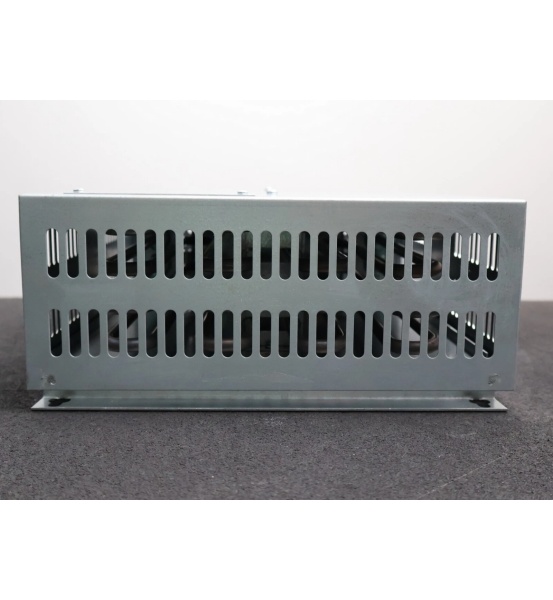
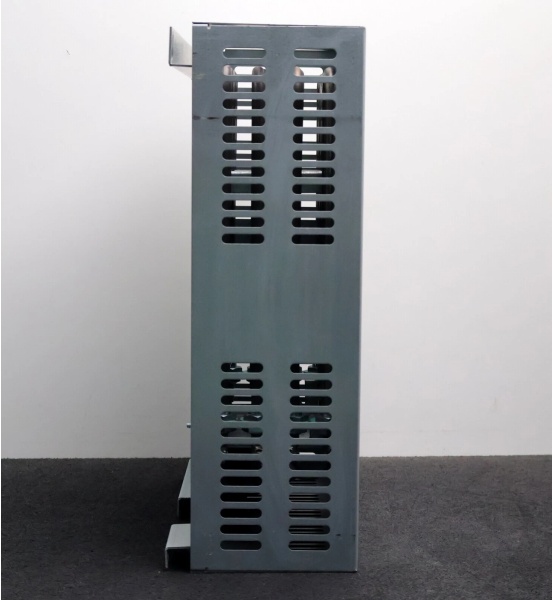
Description
Key Technical Specifications
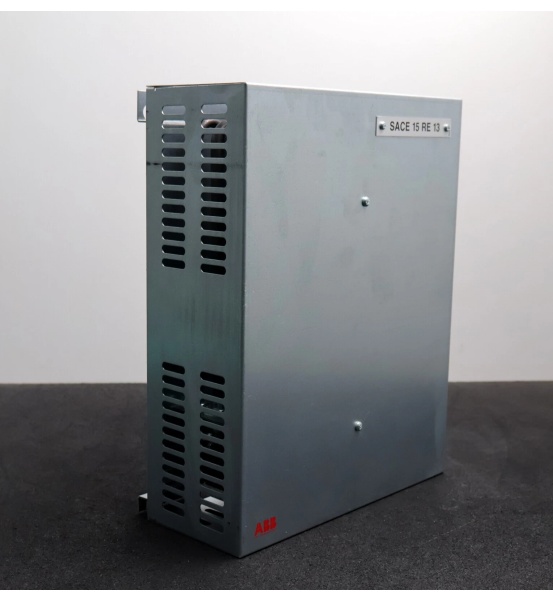
- Model Number: SACE15RE13
- Manufacturer: ABB Low Voltage Division
- Protection Functions: Long-time overload protection (5s–1000s delay), short-time fault protection (0.1s–1s delay), instantaneous short-circuit protection (0ms trip)
- Control Voltage Options: 24VDC ±10%, 110VAC ±10% (factory-configurable; no field reconfiguration)
- Trip Setting Range: Long-time pickup (0.4×–1× rated breaker current), short-time pickup (2×–10× rated current), instantaneous pickup (5×–20× rated current)
- Current Sensing: Integrates with breaker-mounted current transformers (CTs; 100A–1600A rated breaker range)
- Isolation Rating: 1kV AC (control circuits to power circuits)
- Operating Temperature: -25°C to +60°C (-13°F to +140°F)
- Mounting Type: Plug-in module for SACE E15/E20/E25 LV circuit breakers (mechanical lock for secure engagement)
- Certifications: CE, UL 489, IEC 60947-2, RoHS 2.0
- Compatibility: SACE E15/E20/E25 molded case circuit breakers (MCCBs), LV motor control centers (MCCs), switchgear panels, data center UPS distribution systems
- Diagnostic Capability: LED status indicators (power, overload, short-circuit trip), trip cause memory (non-volatile)

ABB SACE15RE13
Field Application & Problem Solved
In industrial low-voltage power distribution—refinery pump stations, manufacturing MCCs, data center UPS backup systems—reliable fault clearing is non-negotiable to prevent equipment damage and downtime. Generic electronic trip units fail to integrate with ABB SACE E-Series breakers, leading to misaligned trip settings, nuisance trips, or catastrophic failure to clear short circuits. A Chicago data center lost $220k in a 4-hour outage when a generic trip unit delayed tripping during a UPS short circuit, damaging 12 server racks. Legacy thermal-magnetic trip units also lack flexibility: a Texas refinery spent $18k annually on breaker replacements to adjust protection settings for variable pump loads.
You’ll find this trip unit installed in SACE E-Series MCCBs across: refinery crude oil transfer pump MCCs, automotive plant assembly line power distribution panels, and cloud data center UPS output switchgear. Its core value is ABB-native mechanical/electrical integration + adjustable trip logic + reliable fault clearing. The plug-in design ensures seamless engagement with SACE breaker CTs, eliminating calibration errors common with generic units. For a Pennsylvania food processing plant, the adjustable long-time delay prevented nuisance trips during startup surges of 50HP conveyor motors—something thermal-magnetic trip units couldn’t achieve, reducing downtime by 90% for that line.
Installation & Maintenance Pitfalls (Expert Tips)
- Trip Setting Calibration: Match to Load, Not Breaker Rating: Rookies set trip points to the breaker’s maximum rating (e.g., 1600A for a 800A load), leading to delayed overload trips and motor burnout. An Ohio metal fabricator’s 200HP compressor failed until the SACE15RE13’s long-time pickup was set to 800A (1× load current). Use a clamp meter to measure actual load current and adjust settings per ABB’s application guide—never rely on breaker nameplate ratings alone.
- Control Voltage Mismatch: Verify Before Wiring: Installing a 220VAC control signal on a 24VDC-configured trip unit fries the control circuit instantly. A Florida bakery destroyed three units ($1,200 total) before checking the unit’s voltage label. The label is located on the side of the module—confirm it matches your panel’s control voltage before making connections.
- Mechanical Interlock Alignment: Listen for the “Click”: A partially seated trip unit won’t engage the breaker’s trip mechanism, leaving the circuit unprotected. A Michigan paper mill’s boiler feed pump ran unprotected for 2 weeks until a technician noticed the module wasn’t locked in place. Push firmly until you hear a distinct click—this ensures the trip unit’s mechanical latch is engaged with the breaker’s release mechanism.
- Trip Cause Memory: Check Before Resetting: Rookies reset tripped breakers without checking the trip unit’s LED indicators, missing root causes (e.g., repeated overloads vs. single short circuit). A North Carolina chemical plant’s reactor pump tripped weekly until technicians used the LED status to identify a recurring short circuit in the motor wiring. Always document trip causes before resetting—this is critical for predictive maintenance.
- Annual Testing: Don’t Skip Thermal Imaging & Trip Simulations: Rookies only test trip units during outages, but thermal cycling degrades CTs and trip logic over time. A Texas wind farm’s substation MCCB failed to trip during a fault because the SACE15RE13’s CTs had degraded—something annual thermal imaging would have detected. Use ABB’s trip test kit to simulate overloads and short circuits yearly, and perform thermal scans to check for loose connections or CT heating.
ABB SACE15RE13
Technical Deep Dive & Overview
The ABB SACE15RE13 is a plug-in electronic trip unit engineered exclusively for ABB’s SACE E-Series LV circuit breakers, serving as the “brain” of the breaker’s protection system. At its core, a microprocessor samples current data from the breaker’s built-in CTs, comparing it to user-configured trip settings (long-time, short-time, instantaneous) to determine if a fault exists. For overloads (slight current excess), it triggers a delayed trip to avoid nuisance shutdowns during motor startup surges. For moderate short circuits, it uses a short-time delay to coordinate with upstream breakers and isolate only the faulty circuit. For catastrophic short circuits, it trips the breaker instantly (0ms delay) to prevent equipment damage.
Unlike generic trip units, the SACE15RE13 features a mechanical interlock that ensures it can’t be removed while the breaker is closed—eliminating a common safety hazard in industrial panels. It also has non-volatile memory that stores the cause of the last trip, accessible via LED indicators (no external tools needed). The module’s control circuit is isolated from the power circuit by 1kV AC, blocking electrical noise from VFDs and motors that can cause false trip signals.
What sets it apart is its seamless integration with SACE E-Series breakers: no adapters or custom wiring are needed, reducing commissioning time by 50% compared to third-party trip units. While it lacks modern communication features (e.g., Modbus), it excels at its core job—providing reliable, adjustable overcurrent protection for LV circuits. For facilities where LV power distribution reliability directly impacts productivity, this trip unit isn’t just a component—it’s a critical safety device that keeps industrial processes running while protecting expensive equipment from electrical faults.