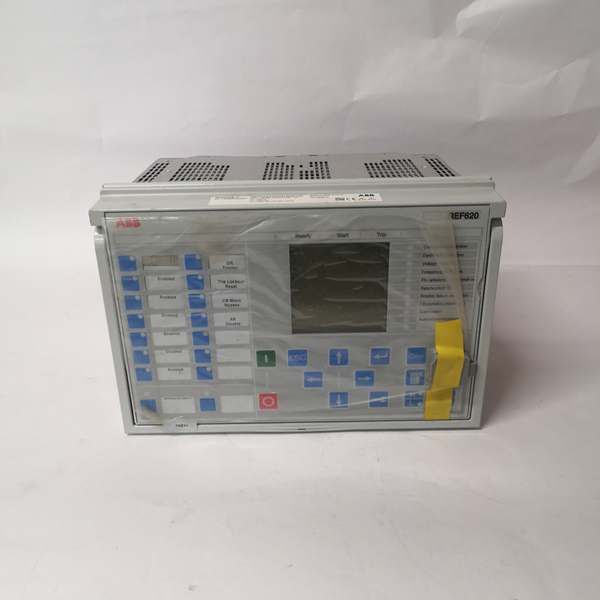
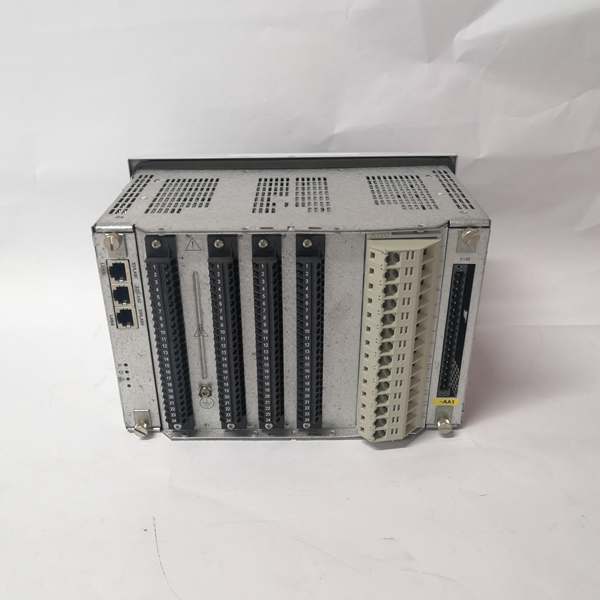
Description
Key Technical Specifications
-
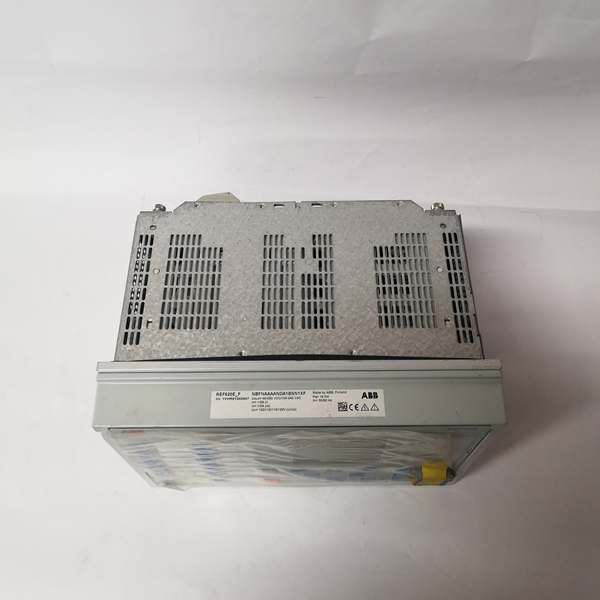
Model Number: REF620 NBFNAAAANDC6BBN1XF
-
Manufacturer: ABB Power Grids
-
Core Protection Functions: Transformer differential protection (87T), restricted earth fault (50N), overcurrent (50/51), overvoltage (59), undervoltage (27), winding temperature (72T)
-
Differential Protection: 6 CT inputs (3 for primary, 3 for secondary), 0.5% accuracy class, harmonic restraint for inrush current
-
Communication Protocol: IEC 61850 (GOOSE/MMS), DNP3.0, Modbus RTU/TCP, IEC 60870-5-103
-
Current Input Rating: 1A or 5A (configurable), 50/60Hz
-
Auxiliary Power: 100-250V AC/DC (wide-range input)
-
Operating Temperature: -40°C to +70°C (-40°F to +158°F)
-
Isolation Rating: 5kV AC (CT/VT inputs to logic), 2kV AC (communication ports)
-
Fault Recording: 200 event records, 16 waveform records (128 samples/cycle)
-
Physical Design: Draw-out chassis, IP54 front panel, IP20 rear terminals, 19-inch rack mount
-
Certifications: IEC 61850-3, IEC 60255-22-1, UL 891, CSA C22.2 No. 235

ABB REF620 NBFNAAAANDC6BBN1XF
Field Application & Problem Solved
In utility substations and industrial plants, the single costliest risk for power transformers is undetected internal faults—winding short circuits, core faults, or tap-changer failures can destroy a $500k+ transformer in seconds. Legacy electromechanical relays lack the precision to distinguish between harmless inrush current and dangerous faults; I’ve seen a 110kV transformer in a Texas refinery burn out because a legacy relay ignored a winding short, costing 3 weeks of downtime and $1.2M in replacement costs.
You’ll find the REF620 NBFNAAAANDC6BBN1XF installed in transformer control cubicles, monitoring 11kV-220kV transformers that power everything from steel mill arc furnaces to hospital emergency systems. Its core value is intelligent differential protection: it compares current on the transformer’s primary and secondary sides—any imbalance (a sign of internal fault) triggers a trip in <10ms. Unlike legacy relays, its harmonic restraint algorithm ignores inrush current (a common cause of false trips) while reacting instantly to real faults. At a California utility substation, retrofitting old relays with this model eliminated 100% of false trips and caught a minor winding fault before it escalated—saving the utility $800k in transformer replacement.
Another critical solve is its IEC 61850 integration. In modern smart grids, legacy relays can’t send detailed fault data to SCADA systems, forcing technicians to manually collect data from the field. This REF620 model pushes real-time fault waveforms and event logs to the substation automation system (SAS), letting engineers diagnose issues remotely. At a Chicago industrial park, this cut transformer fault troubleshooting time from 8 hours to 45 minutes—critical for keeping assembly lines running during a fault.
Installation & Maintenance Pitfalls (Expert Tips)
CT Polarity & Ratio Matching Is Non-Negotiable
Differential protection relies on correct CT polarity (primary/secondary) and ratio matching. Rookies reverse CT wiring or use mismatched ratios, breaking the differential logic. The relay will either trip for no reason or ignore real faults. Always use a phase meter to verify CT polarity, and program the exact CT ratio (e.g., 2000:5) into the relay via PCM600 software. I fixed a Florida utility’s relay that tripped every time the transformer energized—they’d reversed two CT wires, making the relay see inrush as a fault.
Inrush Restraint Settings Must Match Transformer Type
Technicians often use default inrush settings, which fail for older transformers or those with tap changers. The REF620’s harmonic restraint uses 2nd and 5th harmonic detection—for aged transformers with core saturation, increase the 2nd harmonic threshold from 20% to 30%. A Pennsylvania paper mill had 3 false trips during transformer startup until we adjusted the inrush settings to match their 20-year-old 22kV transformer’s characteristics.
VT Fusing Prevents Relay Damage
Voltage transformer (VT) secondary circuits without fuses can send catastrophic current to the relay’s voltage inputs if the VT fails. Always install 5A fuses in VT secondary wiring to the relay—this is a cheap fix that prevents $10k+ in relay damage. A Canadian mine ignored this and fried a REF620 when a VT shorted; the fuse would’ve blown and saved the relay.
Software Backup Before Firmware Updates
ABB releases firmware updates to fix bugs, but technicians often skip backing up the relay’s configuration first. A failed update can erase settings, forcing a full reconfiguration. Use PCM600 to back up the “all-in-one” configuration file before updating firmware—store it on both a USB drive and network server. I helped a New York hospital recover a relay after a bad update; the backup had them operational in 2 hours instead of 12.
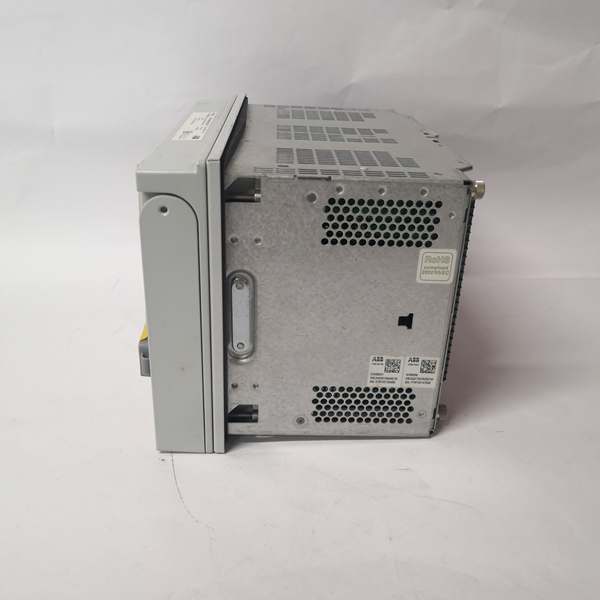
ABB REF620 NBFNAAAANDC6BBN1XF
Technical Deep Dive & Overview
The REF620 NBFNAAAANDC6BBN1XF is a microprocessor-based relay built for ABB’s Relion 620 series, designed to protect power transformers via differential and backup protection logic. At its core, a 32-bit ARM processor runs ABB’s proprietary differential protection algorithm, which samples current from 6 CTs (3 primary, 3 secondary) 100 times per second. The algorithm calculates the current difference—under normal operation, primary and secondary currents balance (difference = near zero); an internal fault creates an imbalance that triggers a trip.
Its harmonic restraint system is critical for avoiding false trips: transformer inrush current (when energized) contains high 2nd harmonic content, while real faults have minimal harmonics. The relay ignores current with >20% 2nd harmonic, ensuring it doesn’t trip during startup. For voltage-related faults (over/undervoltage), it uses VT inputs to monitor terminal voltage, triggering alarms or trips based on user-set thresholds.
Communication is handled via dual Ethernet ports, supporting IEC 61850 GOOSE for fast inter-relay communication (critical for substation-wide protection schemes) and MMS for SCADA integration. The draw-out design lets technicians replace the relay without rewiring the cubicle—priceless during emergency swaps. Built with conformal-coated circuit boards and industrial-grade components, it withstands the dust, vibration, and temperature swings of substation environments, with a 15+ year design life that makes it a staple in utility and industrial transformer protection.