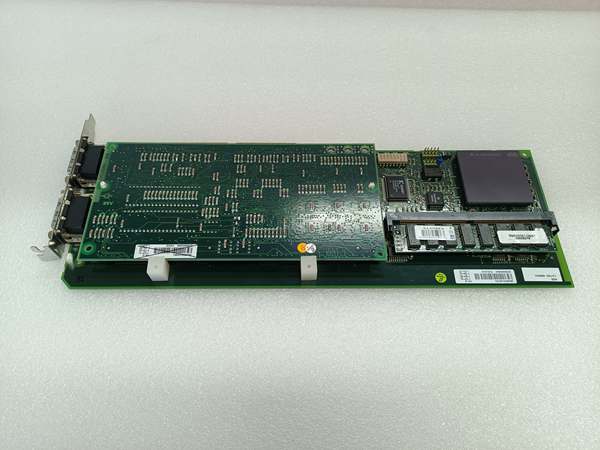
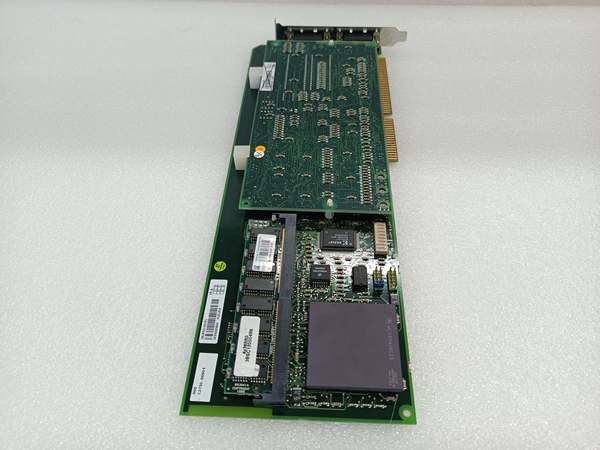
Description
Key Technical Specifications
-
Model Number: PU512V2 3BUR001401R1
-
Manufacturer: ABB
-
Processor: 32-bit multi-core RISC/DSP, ≥ 500 MHz
-
Memory: 128 MB RAM, 256 MB Flash
-
On-board I/O: 16-bit AI (≤ 100 µs conv.), 12-bit AO (≤ 1 ms), DI/DO ≤ 0.5 ms
-
High-Speed Counter: Single-/dual-phase encoder, max 2 MHz
-
Pulse Output: AB quadrature, 0-200 kHz for servo/stepper
-
Comm. Ports: EtherCAT, PROFIBUS, RS-232/485, 100 Mb Ethernet
-
Supply Voltage: 24 VDC (19.2-30 V) or 110/230 VAC option
-
Power Draw: 25 W typical, ≤ 50 W full load
-
Operating Temp: –20 °C…+70 °C
-
Mounting: DIN-rail, 150 × 225 × 180 mm, 0.5 kg
-
Protection: IP20 (IP65 with cover), IEC 61000-4-6 EMC

ABB PU512V2 3BUR001401R1
Field Application & Problem Solved
High-speed wrappers and cartoning machines hate waiting for the main PLC scan. A 10 ms swing-arm motion profile eats into throughput when the CPU is also juggling HMI trends and temperature PID. Park a PU512V2 in the same rack and let the RTA board handle the cam table and registration correction; scan drops to sub-millisecond while the base PLC keeps chugging at 8 ms. I’ve used it on a 400 ppm beverage line—encoder feedback runs straight into the 2 MHz counter, the on-board DSP calculates corrective position in 250 µs, and EtherCAT pushes new set-points to nine servo drives every 500 µs. Result: registration accuracy ±0.2 mm at full speed without touching the main CPU load. Same module works for turbine governors where you need 1 ms loop closure on speed and inlet guide-vane position; the RTA handles the math and sends a single-process value back over the internal bus, keeping the safety PLC free to manage protection logic.
High-speed wrappers and cartoning machines hate waiting for the main PLC scan. A 10 ms swing-arm motion profile eats into throughput when the CPU is also juggling HMI trends and temperature PID. Park a PU512V2 in the same rack and let the RTA board handle the cam table and registration correction; scan drops to sub-millisecond while the base PLC keeps chugging at 8 ms. I’ve used it on a 400 ppm beverage line—encoder feedback runs straight into the 2 MHz counter, the on-board DSP calculates corrective position in 250 µs, and EtherCAT pushes new set-points to nine servo drives every 500 µs. Result: registration accuracy ±0.2 mm at full speed without touching the main CPU load. Same module works for turbine governors where you need 1 ms loop closure on speed and inlet guide-vane position; the RTA handles the math and sends a single-process value back over the internal bus, keeping the safety PLC free to manage protection logic.
Installation & Maintenance Pitfalls (Expert Tips)
Forget the Shield Ground and You’ll Count Noise – High-speed encoder cables must be shielded at the RTA end only. Ground both ends and the 2 MHz input sees 50 Hz circulating current; you’ll chase phantom position jumps every time the VFD starts.
EtherCAT Needs Cat-5e Minimum – Cheap 24 AWG patch cords work at 1 ms until someone steps on them; then the distributed clock drifts and drives fault. Use stranded-shield EtherCAT cable and keep the stub under 100 mm.
Battery-backup RAM Not Included – The 128 MB is volatile. Save your cam tables to Flash or download again on power-up; otherwise the machine defaults to “home” and crashes tooling.
Firmware Twins – Main CPU and RTA must share the same Automation Builder rev or tag mapping fails silently. I’ve seen techs upgrade the PLC but forget the RTA—result: perfect scan, zero outputs.
Forget the Shield Ground and You’ll Count Noise – High-speed encoder cables must be shielded at the RTA end only. Ground both ends and the 2 MHz input sees 50 Hz circulating current; you’ll chase phantom position jumps every time the VFD starts.
EtherCAT Needs Cat-5e Minimum – Cheap 24 AWG patch cords work at 1 ms until someone steps on them; then the distributed clock drifts and drives fault. Use stranded-shield EtherCAT cable and keep the stub under 100 mm.
Battery-backup RAM Not Included – The 128 MB is volatile. Save your cam tables to Flash or download again on power-up; otherwise the machine defaults to “home” and crashes tooling.
Firmware Twins – Main CPU and RTA must share the same Automation Builder rev or tag mapping fails silently. I’ve seen techs upgrade the PLC but forget the RTA—result: perfect scan, zero outputs.
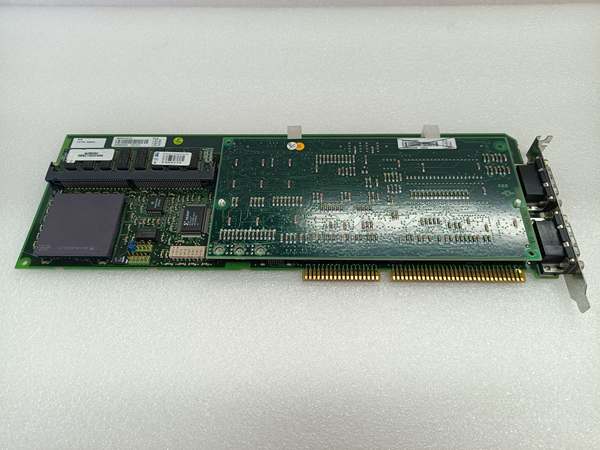
ABB PU512V2 3BUR001401R1
Technical Deep Dive & Overview
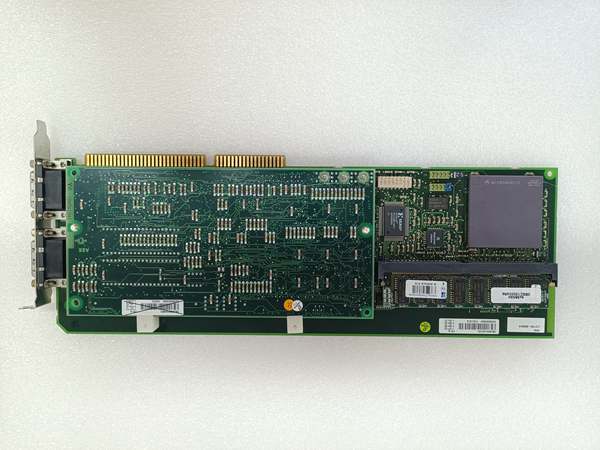
The PU512V2 is a co-processor module that plugs onto the Freelance DIN-rail bus. A 32-bit RISC/DSP core (100–500 MHz depending on rev) runs a real-time kernel independent of the base PLC scan. Dual-port RAM maps I/O and variables so the main CPU can read results without interrupting the RTA task. On-board peripherals include a 2 MHz quadrature counter, 200 kHz pulse train output, and 16-bit ADCs for instantaneous torque or pressure capture. Communication is handled by a separate PHY—EtherCAT for deterministic motion, PROFIBUS for legacy drives, and standard IP for parameter upload. The board boots from 256 MB Flash in < 3 s; if you need deterministic restart, strap the “auto-run” jumper and it begins executing cam tables before the PLC finishes its own cold-start.
The PU512V2 is a co-processor module that plugs onto the Freelance DIN-rail bus. A 32-bit RISC/DSP core (100–500 MHz depending on rev) runs a real-time kernel independent of the base PLC scan. Dual-port RAM maps I/O and variables so the main CPU can read results without interrupting the RTA task. On-board peripherals include a 2 MHz quadrature counter, 200 kHz pulse train output, and 16-bit ADCs for instantaneous torque or pressure capture. Communication is handled by a separate PHY—EtherCAT for deterministic motion, PROFIBUS for legacy drives, and standard IP for parameter upload. The board boots from 256 MB Flash in < 3 s; if you need deterministic restart, strap the “auto-run” jumper and it begins executing cam tables before the PLC finishes its own cold-start.