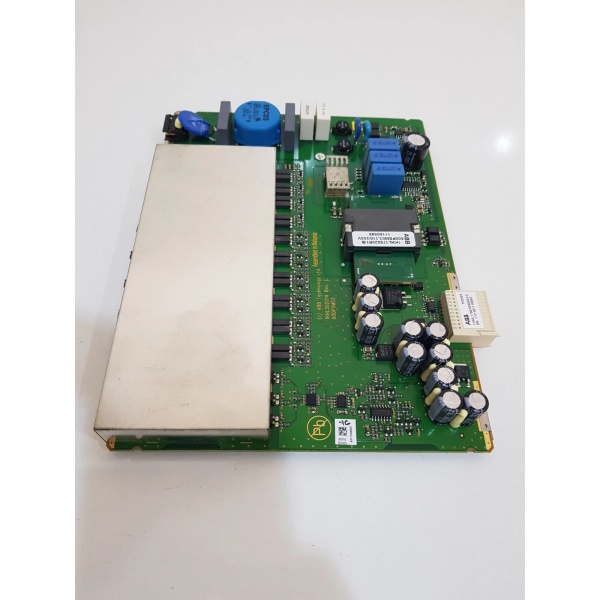
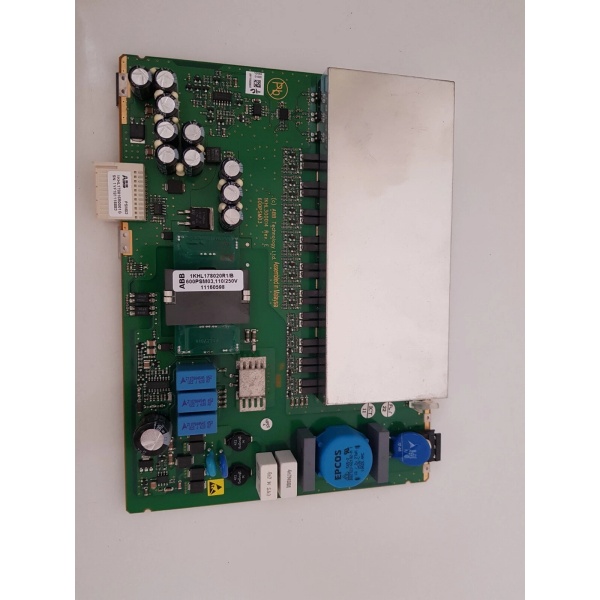
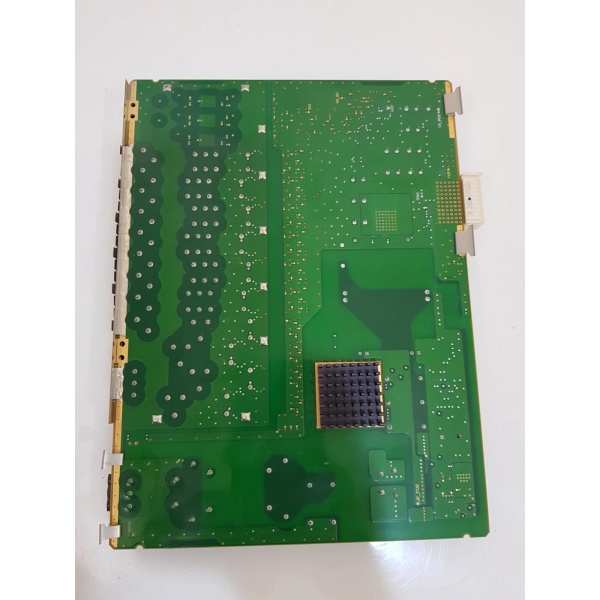
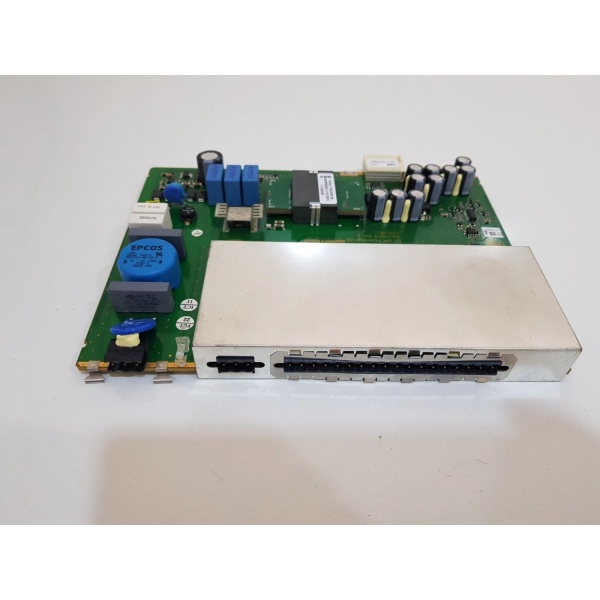
Description
Hard-Numbers: Technical Specifications
- Input Voltage Range: 115V AC to 230V AC (±15%)
- Input Frequency: 50Hz / 60Hz (±5%)
- Output Voltage: 24V DC (regulated)
- Output Current: 3A nominal
- Output Power: 72W
- Efficiency: Up to 88%
- Isolation Voltage: 1500V AC (input to output)
- Operating Temperature: -20°C to +60°C
- Storage Temperature: -40°C to +85°C
- Protection: Short-circuit, overvoltage, and overload protection
- Humidity Range: 5% to 95% (non-condensing)
- DIN Rail Mounting: 35mm standard rail
- Dimensions: 110mm × 125mm × 75mm (H × W × D)

ABB PSM03
The Real-World Problem It Solves
Every field engineer knows the pain of a brownout wiping out a PLC cabinet because someone spec’d a power supply that couldn’t ride through input transients or voltage sags. The PSM03 delivers clean, regulated 24V DC for your AC500-EC backplane and keeps the CPU alive when line voltage swings or surges in harsh industrial environments.
Where you’ll typically find it:
- Paper mill conveyor control cabinets where line voltage fluctuates from heavy motor starts
- Offshore rig control panels requiring isolated power for safety-critical I/O modules
- Power plant boiler control systems demanding continuous uptime through grid disturbances
This unit keeps your process running when the facility’s electrical infrastructure tries to kill it.
Hardware Architecture & Under-the-Hood Logic
The PSM03 sits on the AC500-EC backplane as the primary power rail for all connected modules. It’s not just a transformer—it’s a switched-mode power supply with its own control circuitry for voltage regulation and fault protection.
Internal Signal Flow:
- AC input enters through an EMI filter to suppress line noise
- Bridge rectifier converts AC to pulsating DC
- Bulk capacitor smooths the ripple after rectification
- Switching MOSFETs chop DC at high frequency (typically 50-100kHz)
- High-frequency transformer steps down voltage and provides galvanic isolation
- Secondary rectification and filtering produce clean 24V DC
- Feedback loop monitors output voltage and adjusts switching duty cycle to maintain regulation
- Protection circuits detect faults and trigger shutdown when thresholds are exceeded
ABB PSM03
Field Service Pitfalls: What Rookies Get Wrong
Don’t Skip the Grounding Bond
I’ve seen young techs leave the chassis ground floating “because it worked on the bench.” That’s asking for a ground loop or worse—a stray voltage shock when you touch the cabinet door. The PSM03 requires solid grounding to the cabinet chassis for both EMI suppression and safety.
Field Rule: Use a star washer between the mounting ear and the DIN rail, then bond the rail to cabinet ground with a 6mm² minimum copper conductor. No excuses.
Watch the Wiring Gauge on 24V Outputs
Running 24V through 22AWG wire because “it’s low voltage” is a rookie mistake that causes voltage drop under load. Your I/O modules will brown out when every solenoid fires simultaneously.
Quick Fix: Use 18AWG minimum for 24V distribution from the PSM03 terminal block to your field devices. Calculate voltage drop based on your worst-case current draw—if it’s more than 3% at 24V, go up a gauge size.
Ignore the LED Indicators at Your Peril
The red FAULT LED doesn’t just mean “something’s wrong”—it tells you if the issue is short-circuit, overload, or internal failure if you understand the blink pattern. Most techs just swap the unit without diagnosing, which means you’re fixing the symptom, not the cause.
Quick Fix: Check the fault code in the AC500-EC controller CPU’s diagnostic buffer before powering down. A persistent short circuit on an output card will fry your replacement PSM03 if you don’t find and fix the load first.
Commercial Availability & Pricing Note
Please note: The listed price is for reference only and is not binding. Final pricing and terms are subject to negotiation based on current market conditions and availability.