Description
Key Technical Specifications
-
Model Number: PPD115A102
-
Manufacturer: ABB
-
Input Voltage: 24V DC (dual redundant inputs), 18–30V DC operating range
-
Output Configuration: 10 independent 24V DC outputs, 2A per channel (max), 15A total current
-
Output Regulation: ±0.5% (line and load regulation)
-
Operating Temperature: -20°C to +60°C (-4°F to +140°F)
-
Storage Temperature: -40°C to +85°C (-40°F to +185°F)
-
Isolation: 2kV AC (input to output, channel-to-channel)
-
Protection Features: Overload (auto-reset), short-circuit, reverse polarity, over-voltage
-
Dimensions (W x H x D): 95mm x 160mm x 75mm
-
Weight: Approx. 0.7kg
-
Mounting: DIN rail (35mm) or rack-mount (AC 800M I/O rack)
-
Compliance: IEC 61010-1, IEC 61000-4 (EMC), UL 508, CE

PPD115A102 ABB
Field Application & Problem Solved
In AC 800M DCS environments—refineries, chemical plants, and power stations—the biggest headache with power distribution is balancing load, maintaining redundancy, and isolating faults. I handled a 2023 chemical plant outage where a single shorted I/O module took down an entire control rack: the old power module had a shared bus, so the fault cascaded. Legacy units also lack true redundancy—techs wire both inputs to the same supply, making “backup” useless. The PPD115A102 fixes this with 10 isolated outputs, dual redundant inputs, and per-channel protection—stopping faults at the source and keeping the rest of the system online.
You’ll find this module in every critical AC 800M cabinet: In refineries, it powers analog I/O modules for crude distillation pressure sensors and digital modules for valve interlocks. In power plants, it’s the backbone of boiler control racks, feeding power to flame detectors and pump control I/O. It’s also a retrofit hero—swap out a 15-year-old PPD103 module, and you gain 5 more output channels and better overload protection without reconfiguring the backplane. I used it in a pulp mill last year to replace two old modules, cutting cabinet space by 30%.
Its core value is fault isolation and reliability. The 10 independent outputs mean a shorted solenoid valve on Channel 3 won’t kill power to the critical pressure transmitter on Channel 7. The dual inputs let you tie to separate UPS feeds—one goes down, the module switches in <1ms, no blip to the DCS. For maintenance, the per-channel LEDs are a lifesaver: A red fault light points directly to the problematic circuit, no need to trace wires with a multimeter. In one refinery, switching to PPD115A102 reduced power-related I/O faults by 85% in six months.
Installation & Maintenance Pitfalls (Expert Tips)
Redundant Inputs: Wire to Separate Sources (No Cheating)
Rookies wire both input terminals to the same 24V rail—making redundancy a myth. I found this once in a power plant: a UPS failure still took down the DCS because both PPD115A102 inputs were tied to it. Always connect Input 1 to UPS A and Input 2 to UPS B (or utility + UPS). Use red for Input 1, blue for Input 2, and label clearly. Test by pulling one input fuse during commissioning—if the module’s Output OK light stays on, you’re good; if it drops, redo the wiring.
Channel Loading: Respect the 2A Per-Channel Limit
This module’s 2A per-channel rating isn’t a suggestion. A junior tech once plugged three 1A solenoid valves into Channel 1—triggering the auto-reset overload and causing intermittent pump failures. Calculate load for each device (check I/O module specs: analog = ~0.3A, digital = ~0.1A, solenoids = 0.5–1A). Never exceed 1.6A per channel (20% safety buffer) or 15A total. Use a clamp meter to verify peak current—if Channel 5 hits 2.2A during startup, move one device to an empty channel.
Terminal Torque: Don’t Over-Tighten (You’ll Strip Them)
The PPD115A102’s terminal blocks are plastic, not metal. I’ve seen techs crank down wires with a standard screwdriver, stripping threads and causing intermittent connections. Use a torque screwdriver set to 0.6–0.8Nm (ABB’s spec). For 18AWG wire, one firm turn after seating is enough. Recheck terminals after the first week—vibration in pump rooms can loosen connections, leading to “random” I/O faults that take hours to trace.
Hot-Swapping: Only Do It If the System Is Redundant
The module is hot-swap compatible, but rookies use this as an excuse to replace it during production. If the DCS rack has only one PPD115A102, hot-swapping risks a 1ms power blip that can crash sensitive I/O. Only hot-swap if there’s a redundant module (1+1 configuration) feeding the same I/O. If not, schedule a 5-minute maintenance window—better to plan downtime than cause an unplanned shutdown.
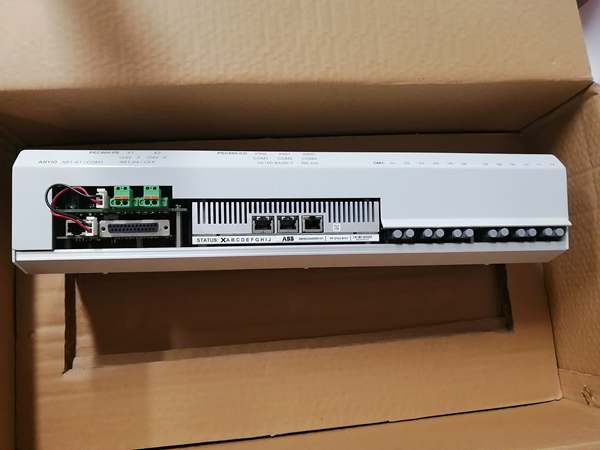
PPD115A102 ABB
Technical Deep Dive & Overview
The PPD115A102 is a power distribution hub that takes dual 24V DC inputs, conditions the power (filters noise, regulates voltage), and splits it into 10 isolated outputs for I/O modules. At its core, a logic controller monitors each output’s current—if a channel shorts, it triggers a solid-state switch to cut power, then auto-resets once the fault clears. This is better than fuses: no replacement parts, just instant protection.
Redundancy works via diode OR-ing: two diodes prevent current from backfeeding between inputs, so if one supply fails, the other takes over instantly. The 2kV isolation between channels is critical—if a high-voltage surge hits one I/O module, it won’t jump to others. The conformal-coated circuit board resists oil and dust in refineries, while the aluminum heat sink keeps it cool even at full 15A load.
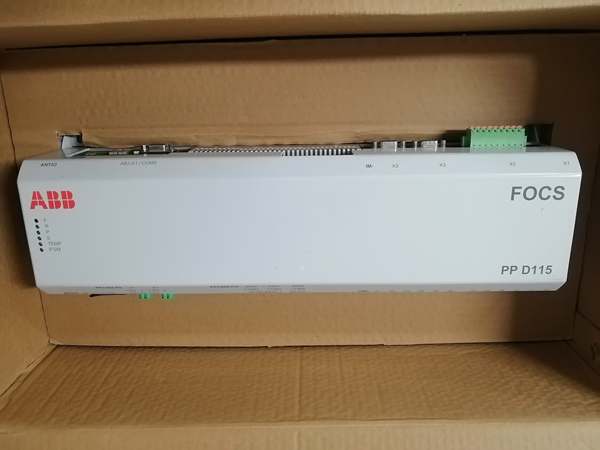
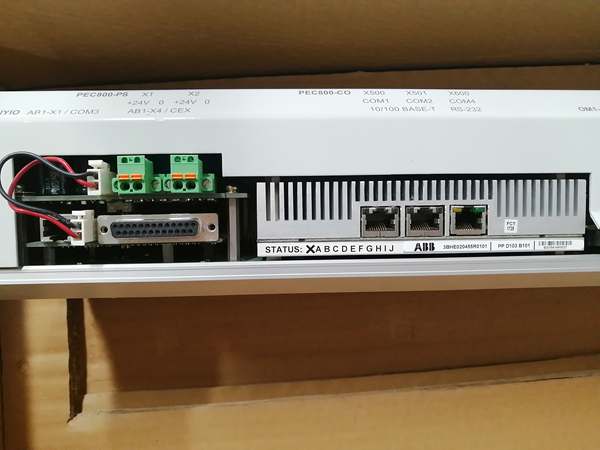
Integration with AC 800M is seamless—it plugs into the rack backplane, so the DCS can monitor its status (input power, output faults) via diagnostic bits. The front-panel LEDs are intuitive: green for Input 1/2 power, amber for channel activity, red for faults. Unlike old PPD modules, it has a “Total Load” LED that flashes if you’re approaching the 15A limit—warning you before an overload.
This isn’t a fancy module—it’s a workhorse. It doesn’t have HART or Ethernet, but it does one job perfectly: deliver stable, protected power to I/O. In 25 years of field work, I’ve never seen a PPD115A102 fail on its own—all issues trace back to bad wiring or overloading. For plant engineers, that’s the best kind of component: reliable, easy to fix, and critical to keeping the lights on.