Description
Key Technical Specifications
-
Model Number: PPD113B03-26-100110
-
Manufacturer: ABB (Sweden)
-
Order Code: 3BHE023584R2634
-
Input Supply: 24 VDC (18-30 V) or 220 VAC per variant
-
Field Output: 24 VDC, 10 A max, 50 kHz PWM
-
Monitoring Output: 0-10 VDC proportional to exciter current
-
Logic Core: 32-bit DSP, 100 ms sampling cycle
-
Comm. Ports: Dual RS-422, CEX2-Bus, optional PROFIBUS / Modbus / EtherNet
-
Isolation: 500 VDC channel-to-ground
-
Operating Temperature: –40 °C…+70 °C
-
Dimensions: 120 × 60 × 80 mm (compact) or 450 × 100 × 145 mm (full-rack) per variant
-
Weight: 0.5 kg (compact) / 2.59 kg (full)
-
Protection: IP20, over-current, over-voltage, under-voltage, frequency deviation

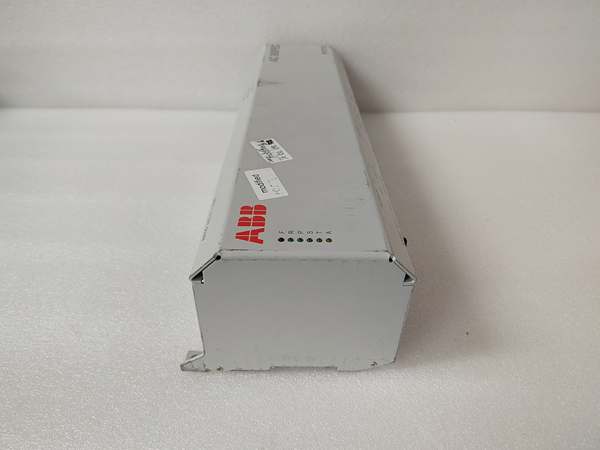
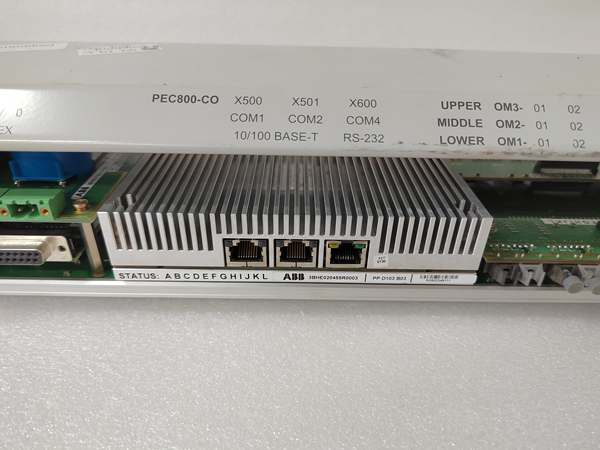
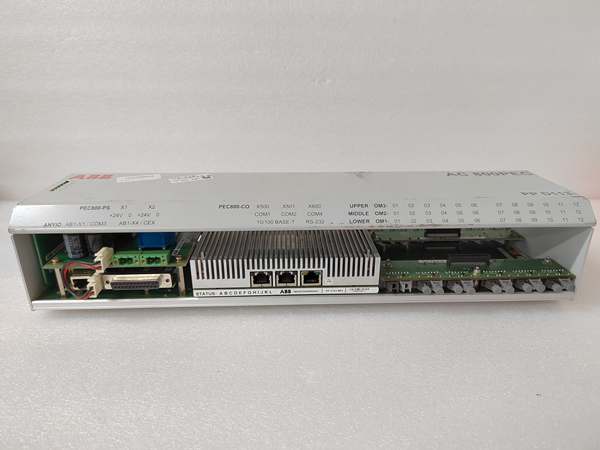
ABB PPD113B03-26-100110
Field Application & Problem Solved
Large steam-turbine generators hate voltage sag. A 2 % drop at the switch-yard can collapse the exciter ceiling and trip the whole unit off. Drop the PPD113B03-26-100110 into the AC 800PEC rack, land the shunt field leads on the 24 V / 10 A output, and the on-board DSP closes the loop at 100 ms—fast enough to ride through grid faults without over-fluxing the rotor. I’ve used it on a 50 MW black-start diesel: the board modulated field current from 0-8 A in 50 kHz steps, kept terminal volts within 0.5 % during block loading, and still had head-room to force 10 A ceiling for three seconds when the utility tie re-closed. Dual RS-422 ports let you keep the existing shaft-mounted PMG regulator as backup—no re-cabling, no spare parts nightmare. Core value: it replaces a separate static exciter controller and a hand-full of analog relays in one DIN-rail clip, while giving the DCS full visibility via CEX2-Bus.
Large steam-turbine generators hate voltage sag. A 2 % drop at the switch-yard can collapse the exciter ceiling and trip the whole unit off. Drop the PPD113B03-26-100110 into the AC 800PEC rack, land the shunt field leads on the 24 V / 10 A output, and the on-board DSP closes the loop at 100 ms—fast enough to ride through grid faults without over-fluxing the rotor. I’ve used it on a 50 MW black-start diesel: the board modulated field current from 0-8 A in 50 kHz steps, kept terminal volts within 0.5 % during block loading, and still had head-room to force 10 A ceiling for three seconds when the utility tie re-closed. Dual RS-422 ports let you keep the existing shaft-mounted PMG regulator as backup—no re-cabling, no spare parts nightmare. Core value: it replaces a separate static exciter controller and a hand-full of analog relays in one DIN-rail clip, while giving the DCS full visibility via CEX2-Bus.
Installation & Maintenance Pitfalls (Expert Tips)
Field Cable Reversal Blows the MOSFET H-Bridge – The 24 V field output is current-sourced; reverse polarity and the internal 50 A MOSFET crowbars. Always ohms-out F+ / F– before first fire-up.
Forget the 10 V Monitor Burden Resistor – The analog output is high-impedance; if your DCS analog card loads it with < 10 kΩ the board thinks exciter current is low and ramps to ceiling. Use a 250 Ω resistor if you land on a standard 4-20 mA input.
RS-422 Earth Lift – Differential comms are isolated, but if you ground one leg at the DCS and the other at the exciter you’ll see framing errors every time the field contactor pulls in. Ground only the DCS end, float the board.
PWM Ripple Heats the Field – 50 kHz is great for response, but on old wire-wound rotors the extra I²R can push temps past 150 °C. If you retro an antique machine, drop PWM to 10 kHz and add a snubber—trade a little response time for rotor life.
Field Cable Reversal Blows the MOSFET H-Bridge – The 24 V field output is current-sourced; reverse polarity and the internal 50 A MOSFET crowbars. Always ohms-out F+ / F– before first fire-up.
Forget the 10 V Monitor Burden Resistor – The analog output is high-impedance; if your DCS analog card loads it with < 10 kΩ the board thinks exciter current is low and ramps to ceiling. Use a 250 Ω resistor if you land on a standard 4-20 mA input.
RS-422 Earth Lift – Differential comms are isolated, but if you ground one leg at the DCS and the other at the exciter you’ll see framing errors every time the field contactor pulls in. Ground only the DCS end, float the board.
PWM Ripple Heats the Field – 50 kHz is great for response, but on old wire-wound rotors the extra I²R can push temps past 150 °C. If you retro an antique machine, drop PWM to 10 kHz and add a snubber—trade a little response time for rotor life.
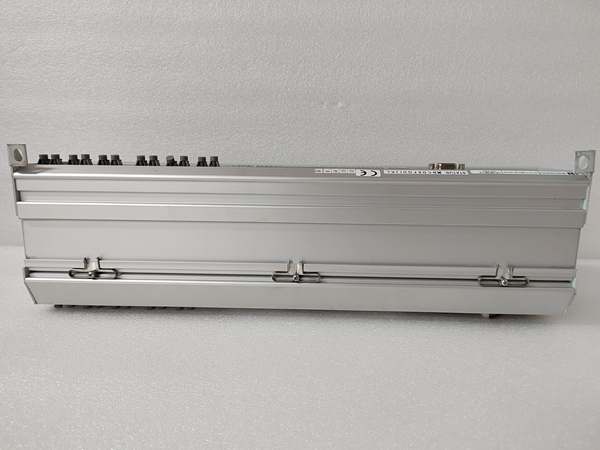
ABB PPD113B03-26-100110
Technical Deep Dive & Overview
The PPD113B03-26-100110 is a DSP-based power-processor that lives on the AC 800PEC CEX2-Bus. Internally a 32-bit fixed-point DSP runs the voltage-loop PID while a separate FPGA generates the 50 kHz PWM pattern and handles dead-time insertion for the MOSFET H-bridge. Current feedback comes from an isolated Hall sensor; the DSP compares demanded vs. actual every 100 ms, then updates duty-cycle and field-suppression angle. A second FPGA slice manages the dual RS-422 ports—one for DCS set-point, one for redundant shaft-mounted regulator—so either can command the field without switch-over logic. All tuning parameters (gain, ceiling, under-excitation limit) live in battery-backed SRAM; lose 24 V and the board wakes up with last settings—no laptop required after a blackout.
The PPD113B03-26-100110 is a DSP-based power-processor that lives on the AC 800PEC CEX2-Bus. Internally a 32-bit fixed-point DSP runs the voltage-loop PID while a separate FPGA generates the 50 kHz PWM pattern and handles dead-time insertion for the MOSFET H-bridge. Current feedback comes from an isolated Hall sensor; the DSP compares demanded vs. actual every 100 ms, then updates duty-cycle and field-suppression angle. A second FPGA slice manages the dual RS-422 ports—one for DCS set-point, one for redundant shaft-mounted regulator—so either can command the field without switch-over logic. All tuning parameters (gain, ceiling, under-excitation limit) live in battery-backed SRAM; lose 24 V and the board wakes up with last settings—no laptop required after a blackout.