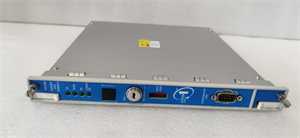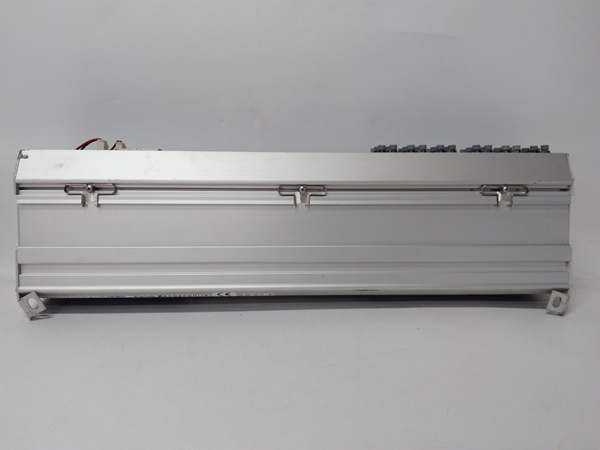
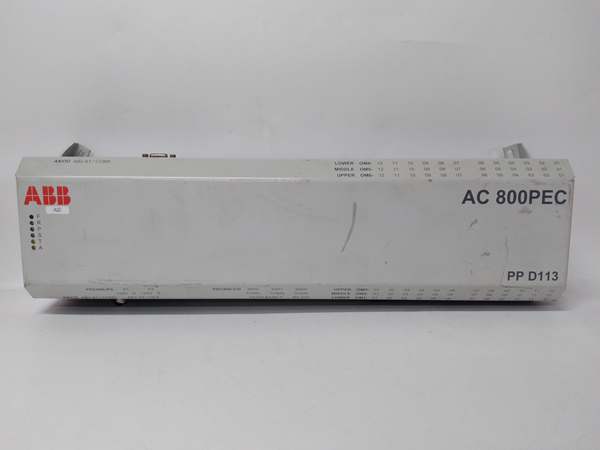
Description
Key Technical Specifications
- Model Number: PPD103B101 3BHE020455R0101
- Manufacturer: ABB
- Compatible Systems: ABB AC 800M DCS, Compact Control Builder (CCB), industrial I/O racks
- Input Voltage: 24V DC (redundant dual inputs), 18–30V DC operating range
- Output Channels: 8 independent 24V DC outputs (2A per channel, 10A total maximum)
- Output Voltage Regulation: ±0.5% (line and load regulation)
- Operating Temperature: -20°C to +60°C (-4°F to +140°F)
- Storage Temperature: -40°C to +85°C (-40°F to +185°F)
- Isolation: 2kV AC (input to output, channel-to-channel)
- Protection Features: Overload protection (auto-reset), short-circuit protection, reverse polarity protection
- Dimensions (W x H x D): 90mm x 160mm x 75mm
- Weight: Approx. 650g
- Mounting: DIN rail (35mm) or panel-mount (compatible with standard control cabinets)
- Compliance: IEC 61010-1 (electrical safety), IEC 61000-4 (EMC), UL 508
- Status Indicators: Power (PWR, per input), Output Activity (per channel), Fault (RED)
- Redundancy: Hot-swappable compatible (for redundant system configurations)
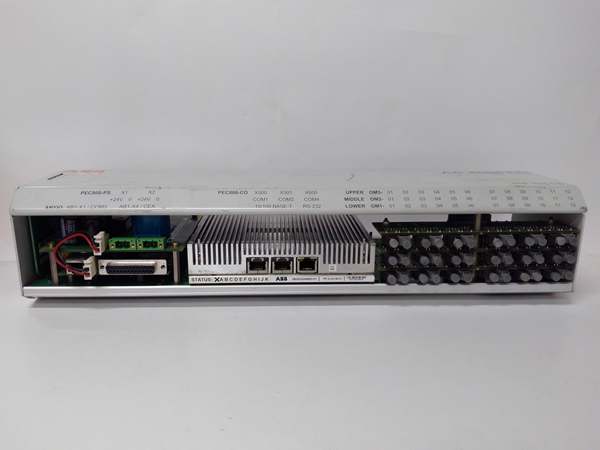
ABB PPD103B101 3BHE020455R0101
Field Application & Problem Solved
In industrial control environments—refineries, power plants, and chemical plants—the biggest challenge is delivering stable, redundant power to critical I/O modules and control system components. Legacy power distribution modules lack redundancy, suffer from poor overload protection, or have limited output channels, leading to control system failures, unplanned downtime, or cascading equipment damage if a power fault occurs. This module solves that by combining redundant input design, multi-channel protected outputs, and seamless DCS integration—ensuring uninterrupted power to I/O systems even during single power source failures.
You’ll typically find this module installed in ABB DCS control cabinets, powering I/O modules (analog, digital, communication) in critical process loops. In refineries, it supplies power to valve positioner control modules and pressure transmitter interfaces in distillation units. In power plants, it’s used in boiler control cabinets, distributing power to flame detection sensors and pump control I/O. It’s also a staple in chemical plant reactor control systems and pulp mill digester control racks, where reliable I/O power is critical to process safety and consistency. For retrofits, it replaces outdated single-input power modules, adding redundancy and protection without requiring cabinet rewiring—saving time and reducing downtime risk.
Its core value is reliability and fault tolerance. The redundant dual inputs ensure power continuity if one supply fails, while the per-channel overload and short-circuit protection prevents a single faulty I/O module from taking down the entire power bus. The tight voltage regulation (±0.5%) ensures sensitive I/O components receive stable power, avoiding data corruption or module malfunctions. For plant operators, this translates to fewer control system outages, faster fault isolation (via per-channel status LEDs), and reduced maintenance costs—critical in industries where even a 10-minute downtime can cost tens of thousands of dollars.
Installation & Maintenance Pitfalls (Expert Tips)
Redundant Input Wiring: Use Separate Power Rails
Rookies often wire both redundant inputs to the same power supply rail, defeating the redundancy feature. A single supply failure will still take down the module. Connect each input to independent 24V DC power supplies (e.g., Supply A and Supply B in a 1+1 redundant system). Use color-coded wiring (red for Supply A, blue for Supply B) to avoid confusion, and verify input voltage on both terminals with a multimeter before powering up—this ensures true redundancy.
Overloading Output Channels: Respect Per-Channel Limits
Each output is rated for 2A, but technicians frequently daisy-chain high-current devices (e.g., relays, solenoids) onto a single channel. Overloading triggers the auto-reset overload protection, causing intermittent power drops to critical I/O. Calculate the total current draw of connected devices (sum of I/O module power requirements) and never exceed 2A per channel or 10A total. For high-current loads, use an external power booster—overloading is the #1 cause of premature module failure in the field.
Reverse Polarity: Don’t Mix Up Positive/Negative
The module has reverse polarity protection, but repeated reverse wiring (positive to negative terminal) degrades the internal protection diode over time. This leads to permanent damage or intermittent power faults. Always check the terminal markings (+ for positive, – for negative) before wiring. Use a multimeter to confirm polarity of the power supply before connecting—this takes 30 seconds and prevents costly module replacements.
Neglecting DIN Rail Mounting Torque
Rookies often mount the module loosely on the DIN rail, relying on the rail’s spring clip to hold it in place. Vibration in industrial environments (e.g., near pumps, motors) loosens the module, causing intermittent power connections or terminal damage. Use the provided mounting screws to secure the module to the rail, tightening to ABB’s spec (1.5–2Nm). This ensures mechanical stability, especially in high-vibration areas like power plant turbine halls.
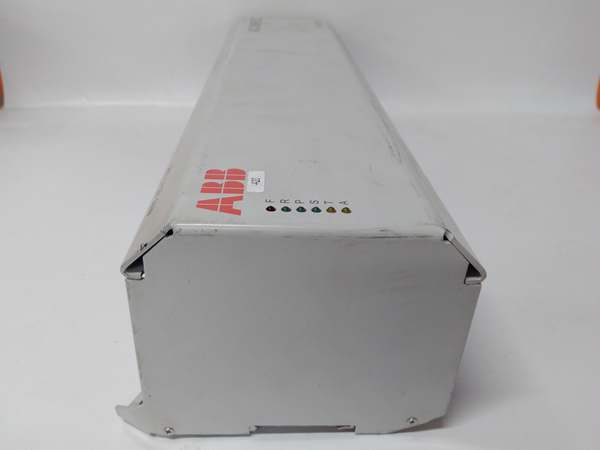
ABB PPD103B101 3BHE020455R0101
Technical Deep Dive & Overview
The ABB PPD103B101 3BHE020455R0101 is a ruggedized power distribution module designed to deliver stable, redundant power to industrial control system I/O components. At its core, it acts as a filtered, protected power hub: accepting dual redundant 24V DC inputs, conditioning the power (filtering noise and regulating voltage), and distributing it to 8 independent output channels for I/O modules and peripheral devices.
The module’s redundant input design is a critical feature: internal circuitry automatically switches to the active input if one supply fails, with no interruption to output power. This is essential for high-availability control systems, where even a momentary power gap can cause process upsets. The 8 independent outputs each include overload and short-circuit protection—if a channel is overloaded or shorted, it shuts down temporarily (auto-resetting once the fault is cleared) without affecting other channels.
Internally, a switching regulator maintains precise output voltage (±0.5% regulation) regardless of input voltage fluctuations or load changes, ensuring sensitive I/O modules (e.g., analog input modules with 16-bit resolution) receive clean, stable power. Noise filtering circuitry reduces electromagnetic interference (EMI) from the power supply, preventing signal corruption in nearby communication modules. The 2kV isolation between inputs, outputs, and channels prevents ground loops and protects against voltage transients, common in industrial electrical systems.
Integration with ABB DCS systems is seamless—its compact DIN rail design fits into standard control cabinets, and the per-channel status LEDs provide at-a-glance visibility for troubleshooting (a lit LED confirms power to the channel, while a fault LED alerts to overloads or short-circuits). The module is hot-swappable in redundant configurations, allowing replacement without shutting down the control system—critical for 24/7 operations.
Overall, this module is a workhorse for industrial power distribution: it prioritizes reliability, fault tolerance, and ease of integration, delivering the stable power needed for critical control system I/O. Its rugged design and protective features make it ideal for harsh industrial environments, while its redundancy ensures uninterrupted operation—key for maintaining process safety and efficiency.